
Protecting sensitive data is no small task, especially when your current data loss prevention tool feels more like a burden than a solution. Many businesses are actively searching for a Symantec DLP alternative that offers stronger endpoint protection, better cloud security integration, and smarter data classification without the steep learning curve. Using AI to categorize data has changed how companies approach information security, making it easier to detect policy violations, monitor sensitive files, and prevent data breaches. This article breaks down 7 Symantec DLP alternatives that can genuinely strengthen your data security strategy.
If sorting through feature lists and vendor comparisons feels overwhelming, Numerous' spreadsheet AI tool gives you a faster way to organize and evaluate your options. You can use it to compare data protection platforms side by side, track key features like network monitoring, content inspection, and compliance reporting, and make a clearer decision without spending hours on research. It turns a messy evaluation process into something you can actually act on.
Table of Contents
Why Businesses Look for Symantec DLP Alternatives
The Hidden Cost of Choosing the Wrong DLP Platform
7 Symantec DLP Alternatives for Better Data Security
The 30-Minute Workflow to Evaluate Symantec DLP Alternatives
Compare Symantec DLP Alternatives Faster With Numerous
Summary
Businesses rarely begin searching for a new data loss prevention platform because their current tool has failed dramatically. The search usually starts with growth, as cloud adoption, remote endpoints, and expanding SaaS environments outpace what legacy architectures were built to handle. Over 80% of enterprise data now resides in cloud environments, according to Nightfall AI's research, which means solutions originally designed around on-premises network monitoring increasingly create blind spots rather than close them.
False positives are one of the most expensive and least visible problems in enterprise data protection. Research from Nightfall AI found that 60% of organizations cite high false-positive rates as a top challenge with legacy DLP tools, and Cyberhaven's analysis found that up to 70% of security alerts go uninvestigated due to alert fatigue. When analysts stop trusting their alert queues, the platform appears to provide protection rather than actual risk reduction.
The financial stakes of getting DLP wrong are significant and concrete. According to the IBM Cost of a Data Breach Report, cited by Forcepoint, data breaches cost organizations an average of $4.45 million in 2023. The Fortinet Insider Risk Report adds important context: 85% of data loss incidents are caused by employee negligence or mistakes rather than malicious intent, which means effective platforms need to be tuned for nuance and behavioral context, not just raw volume.
The right DLP platform is not the one with the most features. It is the one that fits how an organization actually moves data, manages compliance, and operates day-to-day. Deployment complexity deserves to be evaluated as a hard requirement, not an afterthought. According to Forcepoint, 60% of organizations take more than six months to deploy Symantec DLP, which signals that scalability and administrative overhead are not hypothetical concerns but lived operational realities.
Structured requirements gathering before vendor comparison is the single most reliable way to shorten a DLP evaluation. Teams that define what sensitive data they protect, where it resides, and which regulatory frameworks apply (e.g., GDPR, HIPAA, PCI DSS) before opening vendor documentation consistently produce cleaner shortlists. Organizations that moved to cloud-native DLP solutions reported a 30% reduction in policy management time, according to Forcepoint, but that benefit only materializes when policy administration overhead was identified as a requirement in the first place.
No single DLP platform is the right fit for every environment. Microsoft Purview makes the most sense for organizations already running Microsoft 365. Trellix and ManageEngine Endpoint DLP Plus are stronger choices when endpoint and device control are the central concern. Digital Guardian's behavioral monitoring layer adds coverage that pure policy-enforcement tools cannot match for organizations handling highly regulated data.
Numerous' spreadsheet AI tools help security teams run structured DLP comparisons directly in Google Sheets or Excel, using AI to organize vendor criteria, flag gaps against defined requirements, and maintain a repeatable evaluation framework without having to rebuild the process each time a new platform enters consideration.
Why Businesses Look for Symantec DLP Alternatives
Security requirements don't stay still. As organizations add employees, cloud services, and business applications, the data protection policies they built two or three years ago begin to show gaps they didn't anticipate. The search for a Symantec DLP alternative rarely begins with dissatisfaction. It begins with growth. The pattern surfaces consistently across industries: a company deploys a DLP solution that fits its needs at the time, only to watch those needs shift faster than the platform can keep up. According to Nightfall AI's comprehensive DLP research, over 80% of enterprise data now resides in cloud environments, outpacing the coverage that legacy DLP architectures were originally designed to provide. When sensitive data lives across SaaS platforms, remote endpoints, and hybrid infrastructure simultaneously, a solution built around on-premises network monitoring starts creating blind spots rather than closing them.
Why Operational Complexity Becomes the Real Obstacle
The failure point is usually not a single missed threat. It's the accumulating weight of policy management, alert triage, compliance reporting, and endpoint monitoring all running through systems that weren't designed to scale together. Security teams end up context-switching between incident response, DLP tuning, and audit preparation, which slows every function without improving any of them. 60% of organizations cite high false-positive rates as a top challenge with legacy DLP solutions, meaning analysts spend significant time chasing alerts that lead nowhere instead of investigating real exposure.
AI-Powered Compliance Workflows
Most teams handle this by adding manual review layers and building workarounds inside spreadsheets or ticketing systems. That approach feels manageable at first, but as data volumes grow and compliance requirements expand across frameworks such as GDPR, HIPAA, and PCI DSS, those workarounds become a maintenance burden in their own right. Numerous' spreadsheet AI tools offer a different path: instead of building fragile manual processes outside your security stack, teams can use AI directly inside spreadsheets to categorize sensitive data types, flag policy gaps, and organize compliance evidence without switching platforms or learning new infrastructure.
What Actually Drives the Evaluation Process
The critical difference between organizations that evaluate DLP alternatives strategically and those that react to a crisis is timing. Teams that start comparing data loss prevention platforms before a compliance audit or breach investigation tend to make cleaner decisions because they're evaluating against current requirements rather than scrambling to fill an immediate gap.
Effective evaluation means comparing content inspection depth, network traffic analysis, cloud application coverage, user behavior analytics, and regulatory reporting capabilities side by side, not just checking whether a platform has the right certifications.
DLP Needs Ongoing Review
Compliance expectations also keep moving. Regulations evolve, audit standards tighten, and what satisfied an assessor two years ago may not satisfy one today. Organizations that treat DLP evaluation as a one-time decision rather than an ongoing strategic review tend to find themselves behind, not because they chose the wrong platform initially, but because they stopped asking whether the platform was still the right fit. But here's what most evaluation frameworks miss entirely, and it's the part that ends up costing the most.
Related Reading
The Hidden Cost of Choosing the Wrong DLP Platform

Choosing the wrong DLP platform does not announce itself with a dramatic failure. It accumulates quietly, in the form of hours spent managing alerts that lead nowhere, policies that require constant adjustment, and compliance reports that take longer to produce than they should.
Where the Real Overhead Hides
The failure point is usually not a single misconfiguration. It is a structural mismatch between how a platform was designed and how your security team actually works. According to the Fortinet Insider Risk Report, 85% of data loss incidents are caused by employee negligence or mistakes rather than malicious intent, which means your platform needs to be tuned for nuance, not just volume. A solution that cannot distinguish between a careless mistake and a genuine threat will flood your queue with noise, and noise has a cost that compounds every single week.
When DLP Alerts Stop Working
The Cyberhaven Blog reports that alert fatigue from false positives contributes to analyst burnout, with up to 70% of security alerts going uninvestigated. That number should stop you cold. When the majority of alerts are ignored because teams have learned, through painful experience, that most are irrelevant, your DLP platform is no longer protecting data. It is generating the appearance of protection while real risks move through the gaps.
Automate the Manual Review Layer
Most teams handle this by adding more manual review steps, assigning someone to triage alerts each morning, and building workarounds into their workflow. The familiar approach feels productive because effort is visible. But as policy complexity grows and data environments expand across endpoints, cloud storage, and collaboration tools, that manual layer becomes unsustainable.
Teams using tools like Numerous find a different path: instead of building parallel manual processes to compensate for platform gaps, they use AI directly within the spreadsheets and workflows they already use, automating the categorization and organization work that otherwise consumes hours without adding security value.
What Operational Fit Actually Means
The critical difference between a DLP platform that works and one that quietly drains your team is not found in the feature comparison matrix. It shows up in how much cognitive load the platform adds to daily operations. A data loss prevention solution that requires continuous policy tuning, generates high administrative overhead, or lacks intelligent data discovery forces your security team to spend time managing the tool rather than managing risk.
That is not a minor inconvenience. It is a direct reduction in your organization's ability to respond to the threats that actually matter, whether you are evaluating a Symantec DLP alternative, a cloud-native endpoint DLP solution, or a unified data protection platform built for hybrid environments. The platforms worth serious evaluation are the ones that reduce friction at the operational level, not just at the demo stage. And knowing which ones actually deliver on that promise requires looking past vendor claims entirely.
Related Reading
7 Symantec DLP Alternatives for Better Data Security
Choosing the right data loss prevention platform is not about finding the longest feature list. It is about finding the platform that fits how your organization actually moves data, manages risk, and operates day-to-day. That distinction matters more than most vendor comparisons will tell you. According to the IBM Cost of a Data Breach Report, data breaches cost organizations an average of $4.45 million in 2023. That number is not just a financial warning. It is a signal that the cost of misalignment between your DLP platform and your actual environment is not theoretical. It shows up in incident response hours, regulatory exposure, and recovery cycles.
1. Forcepoint DLP
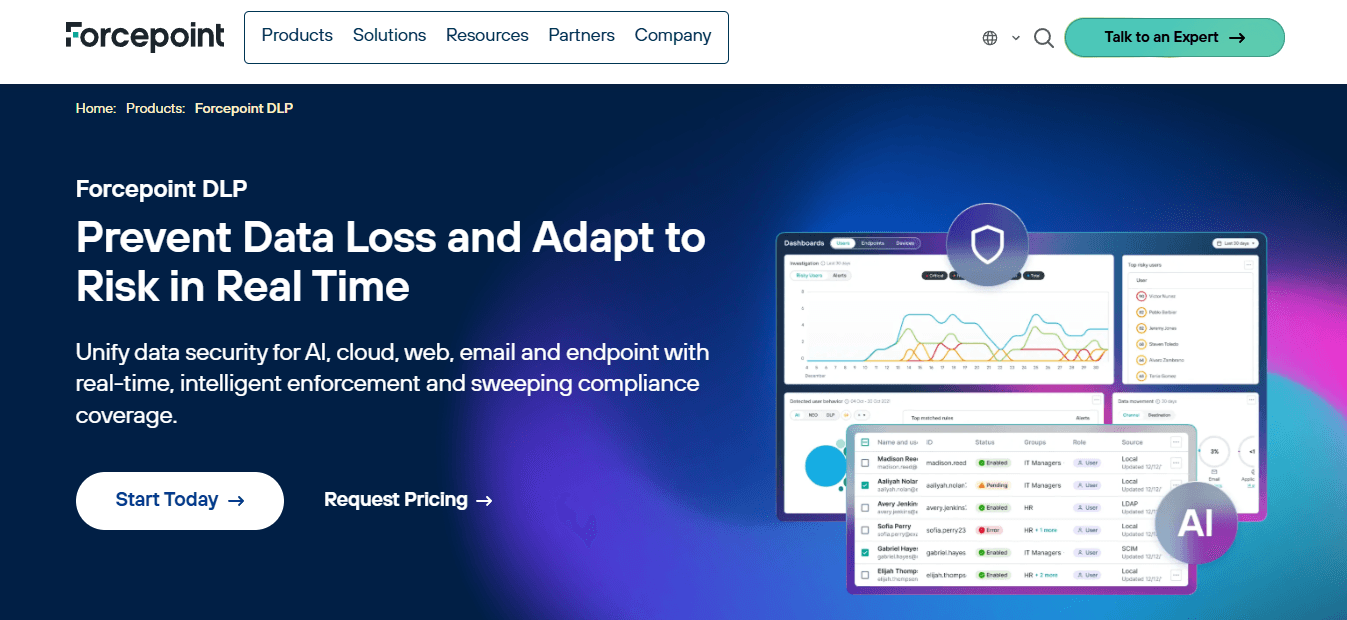
Forcepoint DLP protects sensitive data across endpoints, networks, cloud services, and email through centralized policy management. Organizations dealing with multi-environment complexity tend to choose it because it provides security teams with a single control plane rather than four separate consoles. The breadth of coverage is the point, not a side benefit.
2. Microsoft Purview
The critical difference with Microsoft Purview is context. It is not just a DLP tool sitting inside Microsoft 365. It combines data classification, insider risk management, compliance management, and information protection into one interconnected system. For organizations already running Microsoft 365, that integration removes an entire category of operational friction that standalone DLP tools create.
3. Trellix DLP
The failure point for many endpoint-focused security programs is device control. Trellix DLP addresses this directly through endpoint monitoring, removable device control, and content inspection built specifically for organizations where data leaves through physical ports, not just cloud uploads. If your threat model centers on endpoints, Trellix is worth serious attention.
Most teams handle platform evaluation by:
Pulling vendor documentation
Running demos
Comparing feature grids in spreadsheets
That process works until the spreadsheet grows to 40 rows, and the differences between platforms start to blur. Numerous let teams use AI directly inside Google Sheets or Excel to categorize, compare, and summarize platform capabilities at scale, without switching tools or building complex infrastructure. When evaluation speed matters, keeping the work inside familiar workflows removes a surprising amount of friction.
4. Digital Guardian
Digital Guardian sits in a different category than most alternatives. It combines endpoint DLP with behavioral monitoring and threat detection, so it does two jobs simultaneously: protecting data and watching for patterns that precede a breach. Organizations handling regulated data, think healthcare, defense, or financial services, tend to choose it because the visibility it provides goes deeper than policy enforcement alone.
5. Safetica
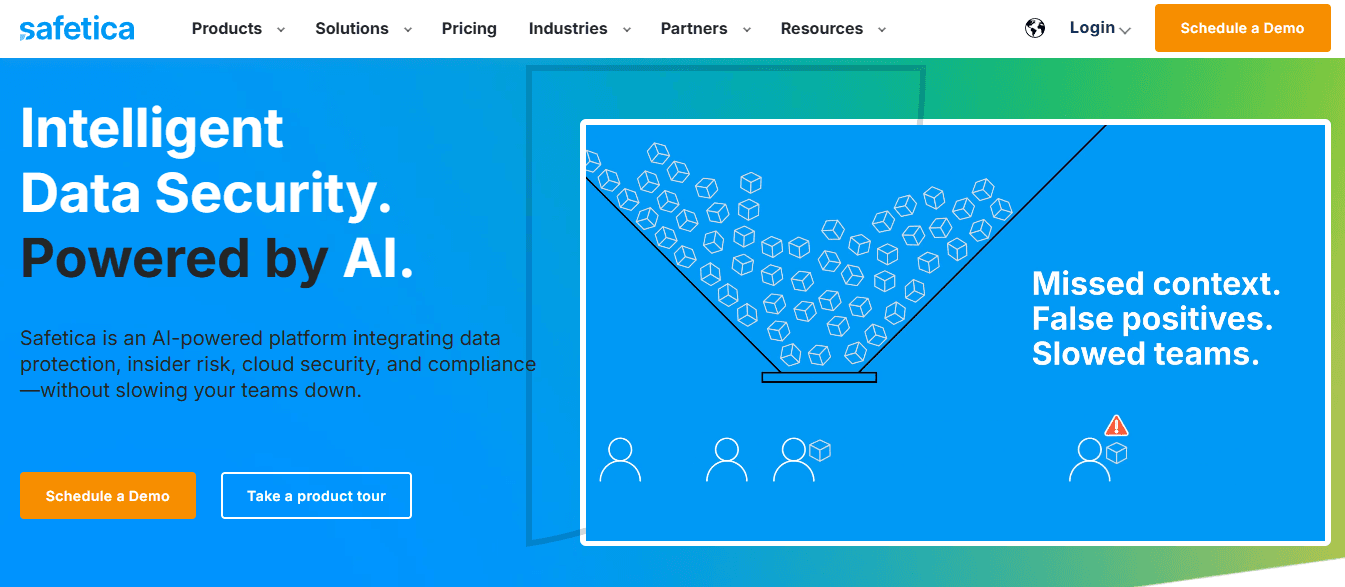
The same issue that drives enterprise teams toward Forcepoint drives smaller organizations toward Safetica: coverage without complexity. Safetica offers user activity monitoring, data protection, risk analysis, and incident investigation in a package designed for straightforward deployment. For small and mid-sized businesses that need real DLP capability without a dedicated security operations team to run it, that simplicity is not a compromise. It is the right fit.
6. ManageEngine Endpoint DLP Plus
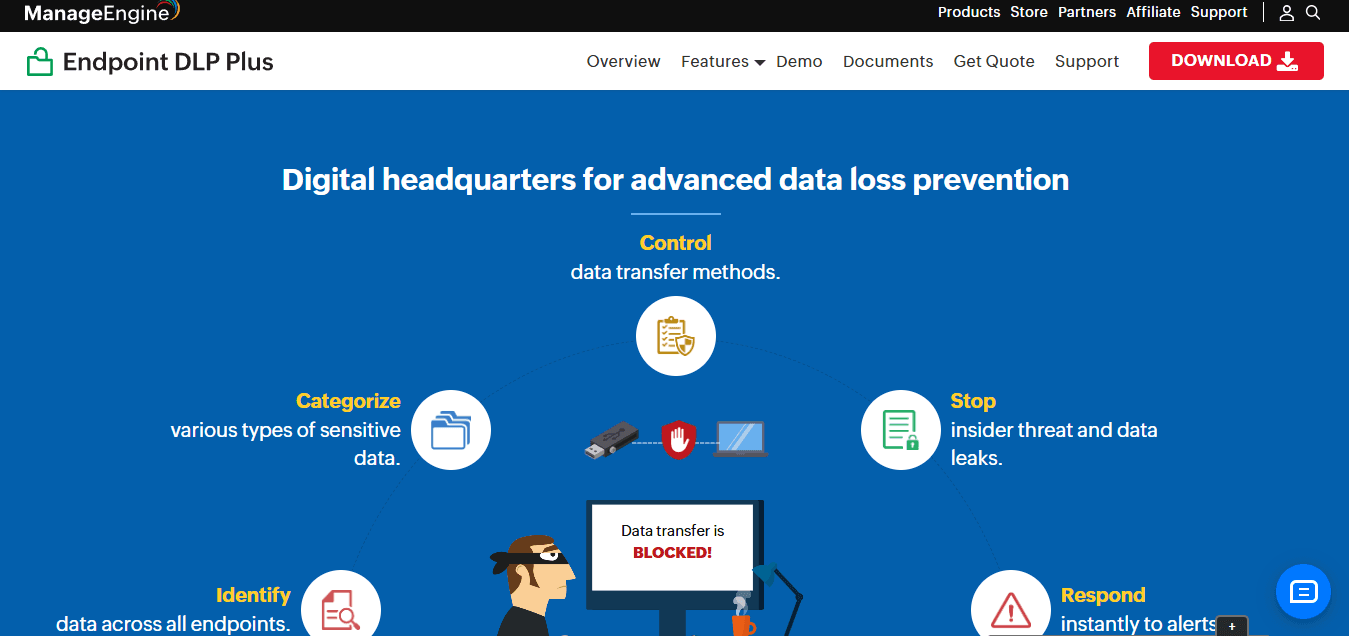
When we look at organizations focused specifically on endpoint and device security, ManageEngine Endpoint DLP Plus consistently emerges as a practical choice. It handles data discovery, device control, content inspection, and policy enforcement with detailed reporting built in. The reporting capability matters because it makes endpoint activity auditable, which is exactly what compliance-driven teams need.
7. Endpoint Protector
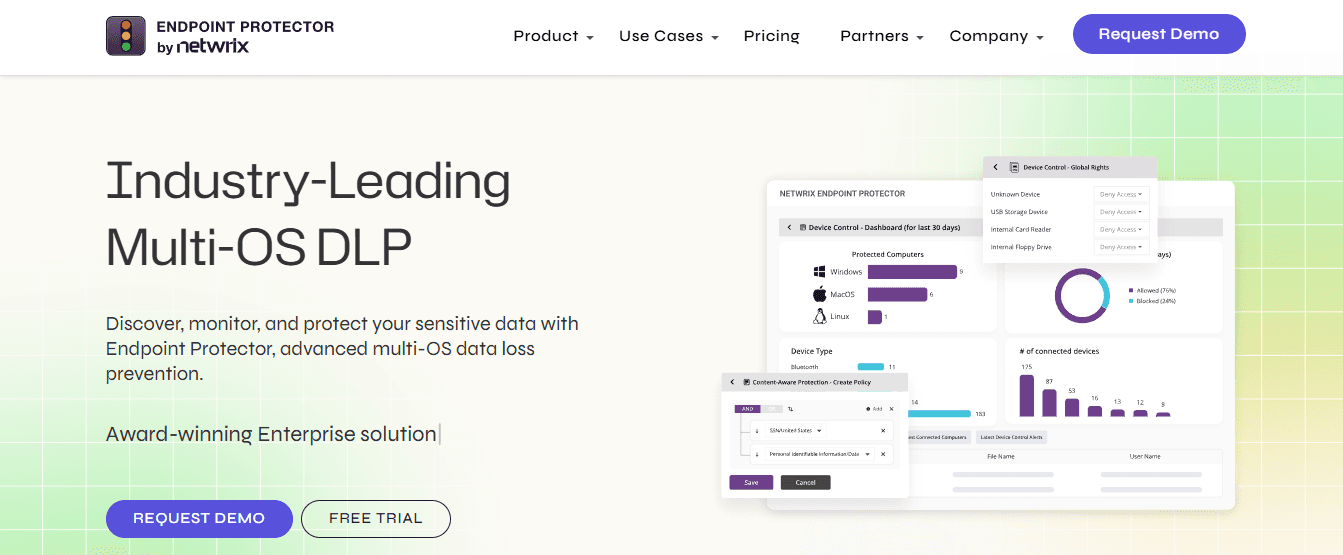
The pattern that makes Endpoint Protector distinct is cross-platform consistency. Windows, macOS, and Linux environments each handle data movement differently, and most DLP tools are built with one operating system as the primary target. Endpoint Protector delivers content-aware protection and device control across all three, which makes it the logical choice for organizations running mixed infrastructure.
Matching Platform to Environment
UnderDefense's research on DLP solutions found that 83% of organizations experienced more than one data breach, suggesting that single-layer protection strategies are not holding up. The platforms above each approach that problem differently:
Some through breadth of coverage
Some in-depth endpoint visibility
Some through integration with existing ecosystems
The right choice depends on where your data actually lives and how it actually moves.
Match Platforms to Your Needs
The old workflow of choosing based on feature lists and discovering the gaps after deployment is expensive in both time and exposure. The more reliable path is to define your requirements first, then evaluate platforms against those specific constraints rather than against each other in the abstract.
If your organization runs primarily on Microsoft 365, Purview is the obvious starting point. If endpoint security is the central concern, Trellix or ManageEngine should be prioritized. If you are protecting highly sensitive regulated data across a complex environment, Digital Guardian's behavioral monitoring layer adds coverage that pure policy-enforcement tools cannot match.
Choose Fit Over Feature Bloat
Smaller organizations should resist the pull toward enterprise platforms that require enterprise-level resources to operate. Safetica exists precisely because comprehensive data protection does not require a ten-person security team to maintain. Operational fit is a legitimate selection criterion, not a concession.
The right platform reduces your exposure without multiplying your administrative burden. That is the standard against which to hold every alternative, regardless of where it lands on a feature comparison grid. But knowing which platform fits is only half the problem. The harder part is figuring out how to get there without spending three weeks in evaluation limbo.
The 30-Minute Workflow to Evaluate Symantec DLP Alternatives
Separating requirements gathering from vendor comparison is not a productivity trick. It is the difference between a three-week evaluation spiral and a focused thirty-minute framework that surfaces the right shortlist before you ever open a vendor's pricing page.
Define Your Data Protection Requirements First
Before any platform comparison begins, you need to answer three questions with specificity:
What sensitive data are you protecting?
Where does it live?
What risk are you actually trying to reduce?
Start With Security Requirements
Customer records
Financial data
Employee information
Intellectual property
Regulated information
Each carries a different exposure profile. A cloud-native SaaS company protecting customer PII under GDPR has almost nothing in common, from a requirements standpoint, with a healthcare provider managing HIPAA-covered records across on-premises endpoints. Treating them the same way is where evaluations go wrong before they even start. The failure point is usually skipping this step entirely. Security teams land on vendor websites, read feature comparison grids, and start scheduling demos before they have written down a single requirement. The result is a process that feels thorough but produces a shortlist shaped by marketing rather than need.
Identify Compliance and Security Requirements Before Comparing Features
Once you know what data you are protecting, the next five minutes should focus on the regulatory and operational constraints that will immediately eliminate platforms that cannot serve your environment.
GDPR
HIPAA
PCI DSS
Each demands specific controls around data residency, access logging, and policy enforcement. Insider risk monitoring, endpoint protection, and cloud security requirements further narrow the field. This step does not require a lengthy audit. It requires honest answers about what your environment actually demands. The same issue arises across organizations of all sizes: teams compare endpoint DLP capabilities without first confirming whether their primary risk is endpoint-based at all. If your sensitive data flows primarily through Microsoft 365 and collaboration tools, a platform optimized for removable device control solves a problem you do not have.
Compare Core DLP Capabilities Against Your Requirements, Not a Generic Checklist
With requirements defined, platform comparison becomes a filtering exercise rather than a feature race. Evaluate data discovery, content inspection, policy enforcement, endpoint monitoring, incident management, and reporting capabilities only in the context of what you actually need.
According to Forcepoint's Best DLP Software in 2026 blog, organizations evaluating DLP alternatives report a 30% reduction in policy management time when they move to cloud-native solutions, which matters most when policy administration overhead was identified as a requirement during the first phase. The best platform is not the one with the most features. It is the one that addresses your organization's specific risk profile without creating new operational burdens.
Evaluate Deployment Complexity as a Hard Requirement, Not an Afterthought
Most teams treat deployment and integration review as a late-stage concern, something to sort out after a vendor is already shortlisted. That sequencing is expensive. Deployment complexity should be evaluated at minute fifteen, not after a proof-of-concept has already consumed three weeks of engineering time.
Review cloud deployment support, on-premises capability, hybrid environment compatibility, Microsoft 365 integration depth, SIEM connections, and administrative overhead as concrete criteria. A platform that requires agent rollouts across every managed endpoint, traffic rerouting, and a dedicated administrator to maintain policy configurations is a different operational commitment than one that deploys through a cloud console with native integrations already in place. The right question is not whether a platform can integrate with your stack. It is how much friction that integration introduces on day thirty, not just day one.
Simplify Vendor Comparisons
Most teams manage this review by pulling together notes from browser tabs, vendor PDFs, and shared documents, then synthesizing them into a comparison that the whole team can act on. That process works until the number of platforms grows past three or four, at which point the synthesis step becomes its own project. Numerous let teams run structured AI-assisted comparisons directly inside Google Sheets or Excel, using a simple =AI function to process vendor criteria, flag gaps against defined requirements, and organize outputs without leaving the spreadsheet. The comparison stays in the workflow rather than becoming a separate deliverable.
Review Scalability and Management Before Finalizing Any Shortlist
A DLP platform that fits today's environment but cannot scale with your organization's growth is a migration project waiting to happen. Evaluate policy administration workflows, automation capabilities, audit reporting depth, user management, and future scalability as a unit, not as separate line items.
60% of organizations take more than six months to deploy Symantec DLP, which means scalability concerns are not hypothetical. They are the lived reality of teams that selected a platform without fully accounting for what growth would demand of their administrative capacity.
Automation capabilities deserve particular attention here. A platform that requires manual policy updates every time a new data category is added or a new cloud application enters the environment will consume the security team's bandwidth at exactly the moments when that bandwidth is most scarce.
Shortlist on Fit, Not on Features
The goal of the final comparison phase is not to crown a winner. It is to eliminate platforms that do not meet your defined requirements and to create a shortlist of two or three candidates for deeper evaluation. Security coverage, compliance support, ease of management, integration flexibility, vendor support quality, and total cost of ownership should all factor in, but only after the earlier phases have already done the heavy lifting of eliminating poor-fit solutions.
A common pattern is to evaluate every Symantec DLP alternative equally, regardless of whether each can address the specific risks you identified at minute zero. That approach does not produce better decisions. It produces longer evaluations using the same shortlist you would reach in a third of the time with structured requirements gathered up front.
What Changes When You Use a Structured Framework
The before picture is familiar: reviewing vendor websites without a requirements anchor, comparing features without context, treating every platform as a legitimate candidate regardless of fit, and watching a software evaluation stretch on for weeks without producing clear direction.
The after picture is different in one specific way. The time reduction does not come from evaluating fewer platforms. It comes from evaluating platforms with defined requirements already in hand, which means every comparison question has a reference point and every elimination decision has a documented rationale. Faster decisions are a byproduct of better structure, not of cutting corners. And that structured clarity is only the beginning of the changes that occur once the right framework is in place.
Compare Symantec DLP Alternatives Faster With Numerous
That structured foundation changes what evaluation actually looks like in practice. Most security teams rebuild their comparison process from scratch each time a new vendor enters the conversation, copying feature lists into fresh spreadsheets, renaming columns, and re-entering criteria they defined three vendors ago. The repetition is not thorough. It is friction wearing the shape of diligence.
Spreadsheet AI tool removes that rebuild cycle. Teams bring their vendor research, compliance criteria, and evaluation categories into a single spreadsheet, then use AI directly within that environment to organize, compare, and group platform capabilities without switching tools or starting over. The result is a repeatable evaluation system, not a one-time exercise, which means that each additional DLP platform you assess takes less time than the last. Start with one vendor comparison today. Build the framework once, then let it work across every alternative you evaluate.