
You're spending hours studying, yet the information seems to slip away days later. While everyone talks about ChatGPT for learning, the truth is that specialized AI tools designed for education, knowledge retention, and skill development often deliver better results. If you're searching for the best AI alternatives to ChatGPT that actually improve how you learn, this article reveals seven powerful AI tools that can help you absorb information faster and remember it longer within just 30 days.
One tool worth exploring is Numerous's Spreadsheet AI Tool, which transforms how you organize and interact with learning materials directly inside your spreadsheets. Instead of jumping between multiple platforms to track your progress, quiz yourself, or analyze study patterns, you can use this AI-powered solution to create personalized learning systems that adapt to your pace.
Table of Content
Why Students and Knowledge Workers Struggle to Learn Faster and Retain More
The Hidden Cost of Relying on Passive Learning to Remember More
Summary
Employees forget 70% of what they learn within 24 hours, according to eLearning Industry research, and the problem isn't a lack of effort or motivation. The issue is that most people spend their time consuming information through reading, highlighting, or watching lectures without ever forcing their brains to retrieve that information independently.
Recognition during study sessions creates a false sense of mastery that disappears when the material is no longer visible. A study involving 180 students found that passive methods, such as rereading, produced significantly weaker long-term retention than active retrieval practice.
Most students still report using passive study methods even though research consistently shows these methods don't boost performance. The common study habit (rereading and highlighting) feels better before the test, but performs worse after it. When learners rely on passive study and then forget, they typically respond by adding even more input, which creates mental overload without building durable memory.
Practice testing and spaced repetition consistently outperform rereading across different learners and tasks, yet few people structure their learning around these methods. Research shows that 62% of knowledge workers struggle to retain information from training programs even when they felt confident during the session.
Structured learning systems that combine capture, simplification, retrieval, application, and review create faster retention than scattered study sessions. According to LinkedIn Learning's Workplace Learning Report, 94% of employees would stay at a company longer if it invested in their learning and development, underscoring the critical role of organized learning workflows in both retention and long-term engagement.
Numerous's Spreadsheet AI Tool addresses this by letting users structure learning workflows directly in spreadsheets, turning passive notes into quizzes, spaced repetition trackers, and retrieval exercises that force recall at the right intervals.
Why Students and Knowledge Workers Struggle to Learn Faster and Retain More

The problem isn't effort or intelligence. Students and knowledge workers struggle because they spend most of their time consuming information and almost none of it building the ability to recall that information later. Reading feels productive. Highlighting feels like progress. But recognition isn't the same as retrieval, and that gap is where most learning collapses.
Passive Consumption Creates the Illusion of Mastery
Most people learn by reading notes, watching lectures, or highlighting pages. This feels like work because time passes and material gets covered. But the brain treats passive exposure differently from active retrieval. You can recognize a sentence on a page and still fail to explain it from memory an hour later.
According to eLearning Industry, employees forget 70% of what they learn within 24 hours. That's not a motivation problem. That's a process problem. When you never force your brain to recall information, you're building familiarity, not memory.
Understanding in the Moment Disappears Without Structure
A lot of people assume that if they understand something once, they know it. That assumption breaks the moment the explanation disappears. In the moment, the topic feels clear because the context is right there. Close the book or end the lecture, and that clarity often vanishes. What felt like mastery was just short-term comprehension supported by external cues.
The issue isn't grasping the concept. The issue is retrieving it later without help. Research from the Instructure National State of Learning and Readiness Report shows that 62% of knowledge workers struggle to retain information from training programs, even when they felt confident during the session.
Mental Overload Replaces Organization With Noise
Trying to cover too many chapters, too many ideas, or too many resources in one sitting creates cognitive overload. Instead of organizing knowledge into clear, retrievable chunks, people keep adding more input. The brain stores that session as noise rather than structure. You finish feeling tired, not confident.
When students try to cram everything at once, or professionals attempt to absorb entire courses in a weekend, they're working against how memory actually consolidates. The effort is real. The retention isn't.
Rereading Replaces Retrieval, so Forgetting Repeats
Many learners revisit material, but they do so by rereading rather than testing recall.
That creates a cycle:
Read
Forget
Reread
Forget again
Learning stays stuck at the exposure stage. Retention improves when the brain is forced to reconstruct information from memory, not when it passively recognizes it on a page. Without that retrieval step, people restart the same learning process over and over, never moving from familiar to usable.
Tools like Numerous's Spreadsheet AI help break this cycle by letting teams structure learning workflows directly in spreadsheets, turning passive content into active retrieval systems. Instead of rereading notes scattered across documents, you can build quizzes, spaced repetition trackers, and prompt-based exercises that force recall at the right intervals.
Most Learners Lack a Repeatable System for Turning Input Into Memory
The real issue isn't laziness. It's the absence of a system. Most people collect information but never consistently simplify it, quiz themselves on it, connect it to prior knowledge, or review it at the right time. Without a system, every new topic feels like starting from zero. That's what makes learning feel slow. When you capture, simplify, retrieve, and revisit information in a structured way, you learn faster and retain more. That's not theory. That's how memory works.
But knowing what to do and actually doing it consistently are two different challenges, especially when the tools you're using weren't built for this kind of workflow.
Related Reading
The Hidden Cost of Relying on Passive Learning to Remember More

Passive learning feels productive because it requires minimal effort and creates immediate recognition. But recognition is not recall. When you reread notes, watch lectures, or highlight pages, you're training your brain to recognize information when it's visible rather than retrieve it when it's absent. That gap is where retention collapses.
According to a study involving 180 students, passive methods such as rereading produced significantly weaker long-term retention than active retrieval practice. The issue isn't that passive learning gives zero value. The issue is that it trains the wrong skill for the context where you actually need the knowledge.
Why Passive Methods Feel Convincing
Passive learning creates a false sense of mastery because the material feels clear while you're consuming it. You follow the explanation, recognize the terms, and think, "Yes, I understand this." That feeling is persuasive. But understanding in the moment is not the same as being able to reconstruct that understanding later without help. When you close the book or end the video, the scaffolding disappears.
What felt like comprehension was often just short-term clarity supported by external cues. You weren't testing whether you could independently produce the knowledge; you were confirming that you could follow along while someone else produced it for you.
The Mechanism Behind Weak Retention
Passive methods keep the answer visible, so the brain does less work reconstructing the idea from memory. But exams, client meetings, writing, and real-world problem solving require the opposite; you must produce the knowledge without the page, video, or notes sitting in front of you. Research on retrieval practice shows that repeated retrieval, not repeated exposure alone, strengthens later retention.
When learners practice pulling information back from memory during study, they're rehearsing the same mental process they'll need later when they must recall it independently. That's why retrieval builds stronger memory than rereading the same chapter three times.
The Hidden Cost: More Input, Less Memory
When learners rely on passive study and then forget, they often respond by adding even more input.
Read again.
Watch another video.
Highlight more notes.
Go through the chapter one more time.
That feels like fixing the problem, but it usually just extends the cycle. Cognitive Load Theory shows that unnecessary information and too many interacting elements can overwhelm working memory and interfere with learning. The hidden cost of passive learning isn't just poor recall. It's mental overload without durable memory. You finish the session feeling tired and not confident because the brain spent energy processing volume rather than organizing retrieval pathways.
What Works Instead
Practice testing and spaced repetition consistently outperform rereading and highlighting across different learners and tasks. The same research notes that most students still report using passive methods, even though those methods don't boost performance. That means the common study habit is often the weaker one, not because learners are lazy, but because the easiest method usually feels better before the test, even though it performs worse afterward.
Tools like Numerous let teams turn passive content into active retrieval systems by structuring learning workflows directly in spreadsheets.
Active Retrieval Frameworks
Instead of rereading scattered notes:
You can build quizzes
Spaced repetition trackers
Prompt-based exercises that force recall at the right intervals
Transforming consumption into practice
The real issue isn't effort or intelligence. It's the method. When you reread, highlight, and review without retrieval, you create the feeling of progress without strong memory. When you retrieve, space, and revisit information on purpose, you give the brain the exact practice it needs to retain more. That's what makes improvement realistic, not aspirational.
But knowing which methods work and actually building a system around them are two different challenges.
7 AI Tools to Learn Faster and Retain More in 30 Days
1. Numerous AI
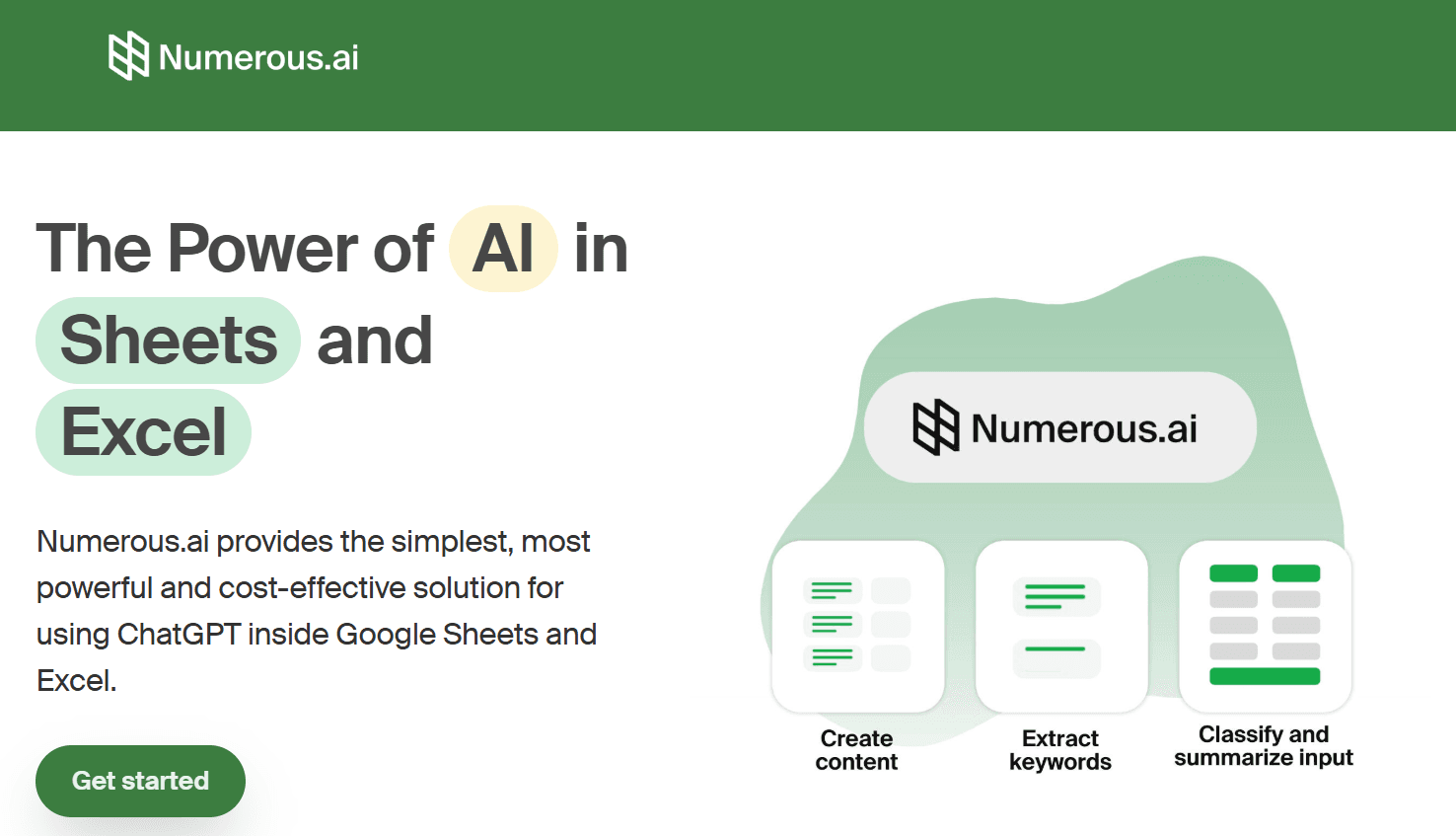
Numerous AI tools work within spreadsheets and are built to help users categorize, extract, summarize, and generate text at scale. It also supports study-focused workflows where AI formulas turn long notes into recall questions, practice MCQs, structured summaries, flashcards, and mistake logs inside Google Sheets or Excel.
This is useful when your problem is not finding information, but structuring it. Instead of leaving notes in long paragraphs, you can turn them into a system:
Topic
Key concept
Recall question
Model answer
Weak point
Next review date
That matters because retention improves when information is broken into smaller units and reviewed on purpose.
The Persistent Practice Engine
In a 30-day learning plan, Numerous helps you build the system you keep returning to. It is strong for learners who want to turn messy notes into review material fast, create practice questions from class notes, track weak areas over time, and build a repeatable revision sheet instead of restarting every week.
The structured nature of spreadsheets, combined with AI capabilities, creates an ideal testing ground for learning new AI skills and developing organizational AI competencies through collaborative experimentation.
2. NotebookLM
NotebookLM is Google's AI-powered research assistant. It lets you upload sources like PDFs and websites, then generate study guides, briefing docs, and source-grounded outputs from those materials. Google highlights its use for mastering subjects and creating tailored study materials from your sources.
The Accelerated Source Synthesis
NotebookLM helps when you are drowning in source material. Instead of rereading everything from the beginning, you can use it to extract key ideas from class notes or articles, generate study guides from your actual materials, ask questions based on those materials, and reduce the time spent searching for what matters. That cuts down the first stage of learning: sorting and filtering.
Over 30 days, NotebookLM helps you build a faster understanding from source-heavy material. It is especially useful for textbook chapters, lecture notes, reports, and research-heavy topics. It shortens the time between "I have too much to read" and "I know what I need to learn first."
3. Quizlet
Quizlet offers AI-powered study tools, including flashcards, practice tests, summaries, essay prompts, and adaptive study features designed to help learners study faster and retain more. Quizlet positions its Learn mode as built on principles of learning science and personalized study.
The Recognition-to-Recall Bridge
Quizlet helps turn passive notes into active review. That is important because one of the biggest retention problems is staying stuck in input mode. With Quizlet, you move into self-testing, recognition plus recall, repeated exposure to weak terms, and shorter review sessions that feel more focused.
In a 30-day period, Quizlet is useful for daily repetition. It helps learners who need to memorize definitions, formulas, concepts, processes, and key facts. It is not just about seeing the material again. It is about interacting with it enough times that recall gets easier.
4. ChatGPT
ChatGPT now includes Study mode, which OpenAI says can guide understanding with Socratic-style questions, break concepts into simpler sections, check understanding with open-ended prompts and feedback, and work with uploaded PDFs or images. OpenAI also added interactive visual explanations for core math and science concepts.
The Interactive Socratic Tutor
ChatGPT is strong when your problem is not just remembering, but actually understanding. It can help you simplify difficult concepts, explain topics at different levels, ask follow-up questions, generate examples, and test your understanding, rather than just give you notes. That makes it useful for moving from confusion to clarity.
Over 30 days, ChatGPT helps you remove bottlenecks faster. Instead of being stuck on one concept for hours, you can use it to clarify the hard part, create recall questions, rehearse explanations, and turn weak topics into short review drills. It works best when you use it as a tutor, not just an answer machine.
5. Khanmigo
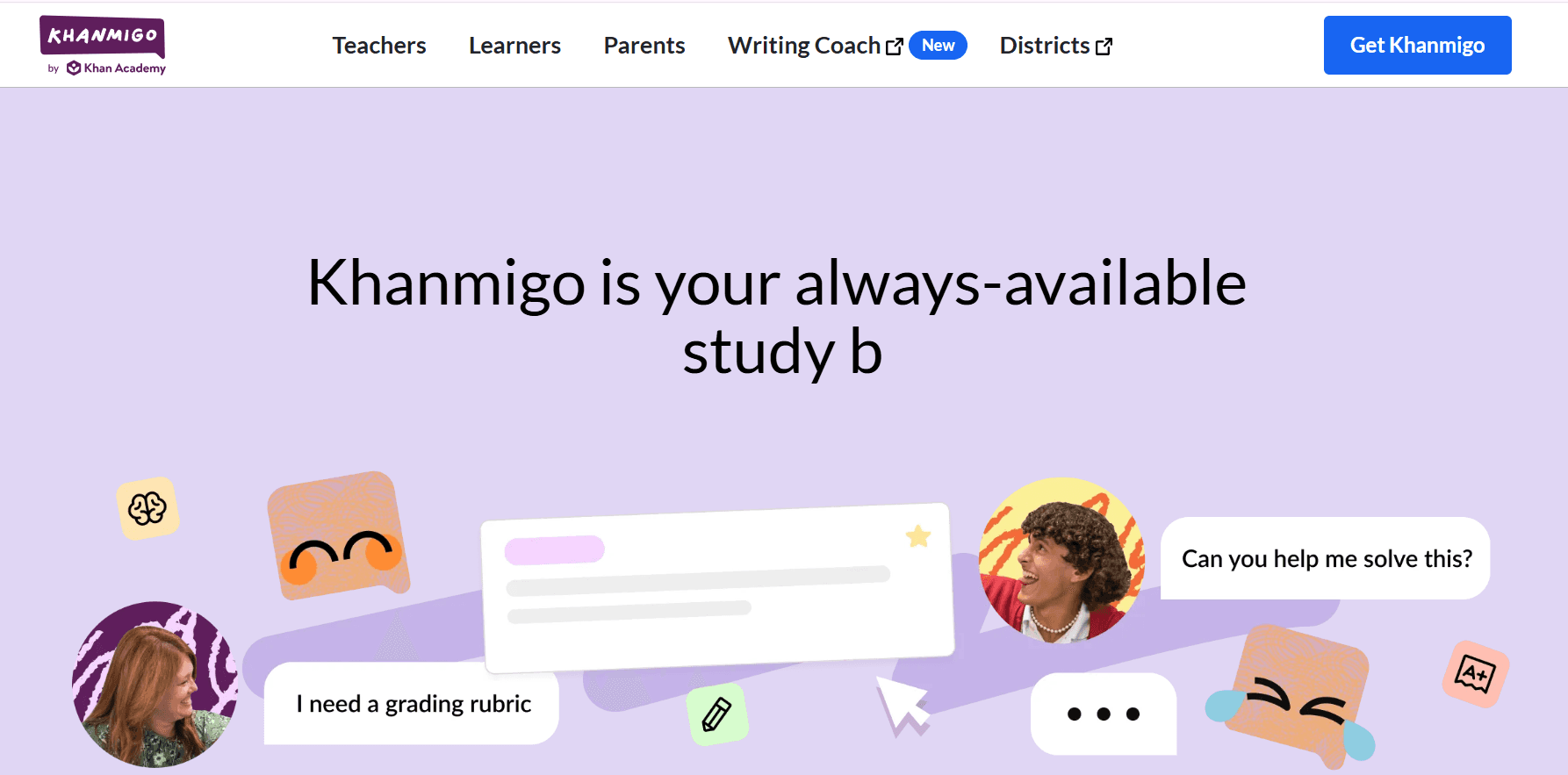
Khanmigo is Khan Academy's AI-powered tutor and teaching assistant. Khan Academy describes it as a guided learning tool that not only gives answers but also helps learners work toward them. Khan also says it is free for educators, while learner access is offered through Khanmigo accounts.
Khanmigo is helpful when you need guided practice rather than just explanations. Many learners understand something when they read it, but fail when they have to solve it on their own. Khanmigo helps close that gap by pushing learners through the reasoning process.
In a 30-day improvement plan, this helps with subjects where performance matters more than summary: math, science, problem-solving, and structured academic work. It supports retention because the learner is doing more of the mental work, not less.
6. Notion AI
Notion AI can summarize notes and docs, extract key points and action items, rewrite content, and help organize information inside the same workspace where you already keep your notes. Notion also offers AI Meeting Notes that transcribe and summarize meetings inside the workspace.
The Workspace Continuity System
Notion AI is strong for turning scattered information into a usable learning system. That matters because many learners do study, but they do not organize what they learned in a way that makes future review easy. Notion AI helps you clean up messy notes, pull key points from long pages, turn notes into structured summaries, and keep learning material in one place.
In a 30-day learning cycle, Notion AI helps with consistency. Instead of creating new notes every time and losing track of them, you build a workspace that supports capture, summary, review, and revision. That makes it easier to come back to the same material without starting over.
7. Anki
Anki is a flashcard tool built around spaced repetition. Its system is designed to show you difficult material more often and easier material less often, so your review time goes where it matters most. Anki also supports syncing across devices, media in cards, and large decks, which makes it useful for long-term study systems.
The Adaptive Retention Engine
Anki helps when your problem is not exposure, but forgetting. Many learners have already read the material. The issue is that they do not come back to it in a way that strengthens recall. Instead of rereading notes from the beginning every time, you turn what you learned into cards and review them on a schedule that adapts to your memory.
Anki's spaced repetition system is based on SuperMemo-style scheduling, and its newer FSRS option is designed to estimate forgetting more accurately so you can remember more material in the same amount of time. That helps you revisit information before it disappears, spend less time on what you already know, focus more time on weak areas, and build stronger recall instead of passive familiarity.
The Long-Term Retention Engine
In a 30-day learning plan, Anki is strong for retention-heavy subjects where information must remain accessible over time, not just feel familiar once. It works especially well for:
Exam revision
Definitions and key concepts
Formulas and processes
Language learning
Any topic that depends on repeated recall
Anki tracks performance, and its leech system can tag cards you repeatedly forget, which makes weak points easier to identify and fix instead of silently repeating the same mistakes.
But having the right tools is only half the challenge, and often the easier half.
The 30-Day Faster Learning and Retention Workflow

The challenge is not learning more tools. The challenge is using the right tools in the right sequence. Most learners treat AI as a collection of separate apps rather than as stages in a single workflow. That creates redundancy, confusion, and wasted time.
A 30-day learning system works when each tool handles one specific job at the right moment:
Capturing information
Simplifying it
Testing recall
Tracking weak points
Applying knowledge
Reviewing strategically
Days 1–3: Capture and Simplify the Material
The first problem is not memorization. The first problem is overload. You have lecture notes, textbook chapters, PDFs, videos, scattered highlights, and half-finished summaries. When material stays messy, review becomes random. You cannot retain what you have not structured.
Use NotebookLM or ChatGPT to break long materials into key ideas. Pull out the main concepts, definitions, and explanations. Remove extra wording and keep only what needs to be learned. This is not about understanding everything yet. This is about reducing the noise so the next stage becomes possible.
Once simplified, organize everything into a table. Include topic, concept, summary, recall question, answer, and weak area. This creates a single source of truth instead of scattered files. When the material is simplified early, the rest of the month becomes easier.
Days 4–7: Turn Notes Into Retrieval Material
Many people stop at summaries. That is where retention breaks. Summaries help you understand what you read, but they do not always help you recall it later. This week is where you convert passive notes into active review.
Turn notes into flashcards, short-answer questions, MCQs, and mistake logs. Move memory-heavy material into Anki or Quizlet. Keep each card or question focused on one idea. Avoid copying full paragraphs into flashcards. The goal is not to recreate the textbook. The goal is to create a retrieval prompt that forces your brain to reconstruct the answer.
This is where learning shifts from exposure to memory. Instead of asking, "Did I read this?" you start asking, "Can I bring it back without looking?" That is the real test of retention.
Days 8–14: Start Daily Recall and Weak-Point Tracking
By this stage, the issue is no longer understanding everything. The issue is keeping it alive. Most forgetting occurs when learners wait too long to revisit new material. Short, repeated recall is what keeps information accessible.
Review flashcards daily in Anki or Quizlet. Use ChatGPT or Khanmigo to explain anything you keep missing. Track what you got wrong, what keeps repeating, and what needs another review. Mark concepts by confidence level:
Strong
Weak
Unclear
Centralized Retention Infrastructure
Weak areas should not stay hidden. When you track them, you stop wasting equal time on everything. You spend more time where forgetting is actually happening. That is what speeds up improvement. According to LinkedIn Learning's Workplace Learning Report, 94% of employees would stay at a company longer if it invested in their learning and development, underscoring the critical role of structured learning systems in retention and engagement.
Most people organize their learning materials across multiple apps, documents, and note-taking tools. As the volume grows, so does the friction. You spend more time searching for where you saved something than actually reviewing it. Platforms like Numerous let you structure the entire workflow inside a spreadsheet, turning notes into quizzes, tracking weak points, and scheduling reviews in one place. Instead of jumping between tools, you build a system that scales with your learning goals.
Days 15–21: Apply What You Know
Retention gets stronger when information is used, not just reviewed. Many learners can remember a definition but still struggle to use it in context. That is why this week should move beyond recall alone.
Use ChatGPT or Khanmigo for practice questions, mock explanations, worked examples, and scenario-based questions. Try teaching the concept back in your own words. Use Notion AI to clean and organize what you learned from practice. Add new weak points back into your tracking system.
The application exposes a shallow understanding. It shows whether the idea is actually usable, not just familiar. That is where real learning sharpens.
Days 22–30: Review Smarter, Not Longer
At this stage, many learners panic and reread everything. That usually creates stress, not stronger memory. The better approach is targeted review.
Sort weak topics first. Review missed flashcards in Anki or Quizlet. Use NotebookLM to revisit only the parts of the source material tied to your weak areas. Use ChatGPT to generate a final self-test from everything covered. Keep reviews short, focused, and repeated.
The last part of the month should not feel like starting over. It should feel like tightening the system you already built. That is what makes the 30-day process realistic.
What This Workflow Changes
Before:
You read a lot
Forget most of it
Reread from the beginning
Feel busy but not confident
After:
You simplify faster
Review with retrieval
Track weak areas
Revisit information on purpose
Retain more across the month
The difference is not effort alone. It is structured. When you capture, simplify, retrieve, apply, and review, you stop learning the same thing repeatedly.
But knowing the workflow and actually executing it consistently are two very different challenges.
Related Reading
Learn Faster and Retain More in 30 Days With Numerous AI
The problem is not the information. The problem is the process. If learning still feels slow and retention still feels weak after trying different methods, the issue is not effort. The issue is that you are still treating your notes as files to read rather than as systems to work from. You need a place to turn scattered content into structured review, weak areas into tracked patterns, and passive notes into active retrieval.
Put your notes into Numerous AI. Turn them into:
Summaries
Recall questions
Flashcards
Mistake logs
The Scalable Process Infrastructure
Organize weak areas in one sheet. Track what you keep missing. Review the right material at the right time. That is it.
No more scattered notes across apps.
No more passive review that feels productive but builds nothing.
No more relearning the same topic again and again because you never built a system to hold it.
In 30 days, you will have clearer study material, stronger recall, a better review system, and a faster way to learn and retain more. Open Numerous AI, turn your notes into a learning system, and start reviewing smarter today. Better learning is not about studying harder. It is about using a better process. Numerous AI give you that process.
Related Reading
Otter.ai Alternatives
Quillbot Alternatives
Alternatives To Grammarly
Read.ai Vs Otter.ai
Best Apps For Essay Writing
Notion Ai Alternatives