
Struggling students often search for the best AI alternatives to ChatGPT when they need quick homework help, but many discover these tools work better alongside specialized study apps designed specifically for learning. The truth is, generic AI chatbots can provide answers, but they don't always teach the skills needed to actually improve grades or build lasting study habits. This article reveals 7 homework apps that address different learning challenges, from math problem solving to time management, giving you practical tools to boost your study results within 30 days.
While exploring these apps, you'll also want to consider how you organize and track your progress across different subjects and assignments. Numerous's Spreadsheet AI Tool helps you create custom study trackers, grade calculators, and progress charts directly within your spreadsheets, making it easier to see which study methods are actually working for you.
Table of Content
Summary
Homework completion does not equal learning when students treat assignments as tasks to submit rather than opportunities to build understanding. Stanford research shows that 56% of students report homework as their primary source of stress, largely because they focus on appearing competent rather than using mistakes as feedback.
Students spend an average of 2.5 hours per night on homework, according to the National Center for Education Statistics, yet without structured systems to translate effort into memory, those hours rarely translate into lasting improvement. Manual homework creates false confidence because notes and formulas stay visible during completion, which helps finish the task but never forces independent retrieval.
Effective homework apps address different bottlenecks in the learning process rather than just providing answers. Tools like Khanmigo guide students through reasoning rather than giving solutions, Photomath breaks down where mathematical methods fail, and Quizlet converts completed assignments into active recall practice.
The 30-day improvement workflow moves from organizing scattered work (days 1 through 5) to converting homework into reusable study material (days 6 through 10), then testing recall without notes (days 16 through 20), and finally tightening weak spots with targeted review (days 26 through 30).
Targeted review based on tracked weak areas outperforms panic-driven cramming at the end of study periods. Students who sort their mistakes by topic, filter by question type, and review only material that still feels uncertain spend less time on already-mastered content and more time closing actual performance gaps.
Numerous's Spreadsheet AI Tool addresses this by letting students organize homework into structured tracking systems with columns for subject, mistake type, and review dates, then using AI formulas to generate summaries, extract weak patterns, and create recall prompts directly within their spreadsheets.
Why Students Struggle to Improve Study Results With Homework Alone

Students often struggle to improve their study results with homework alone because homework is usually treated as something to finish, not something to learn from. That creates completion without real improvement. When the goal becomes submission instead of understanding, students miss the feedback loop that turns effort into progress.
Homework Becomes a Task to Submit, Not a Tool to Learn
Most students approach homework with one main goal: finish it and turn it in. They rush through questions, look for the fastest answer, focus on getting it done before the deadline, then move on immediately after submission. That helps with completion. But it does not always help with understanding. When homework becomes a box to tick, students may finish the work without actually strengthening the skill behind it.
According to Stanford University research, 56% of students report that homework is their primary source of stress, and much of that stress comes from treating assignments as high-stakes deliverables rather than low-stakes practice. The pressure to appear competent creates panic when they don't understand something immediately, leading them to fear punishment or failure rather than viewing it as part of the learning process.
They Confuse Getting Answers Right With Actually Learning
Many students believe: "If I completed the homework and got most of it right, I understand the topic." That is where the problem starts. Sometimes the student got the answer right because the example looked familiar, the notes were open, the formula was already in front of them, or they followed a pattern without fully understanding it. So the homework feels successful in the moment. But later, during a test or recall session, the same topic feels difficult again. The issue is not always doing the homework. The issue is whether the student can still explain or solve it later without help.
Students set unrealistic expectations for themselves:
Understanding everything after one lecture
Never making mistakes on homework
Always getting perfect scores
That creates fear-based learning rather than understanding-based learning.
They Spend More Time Finishing Work Than Reviewing Mistakes
Many students put all their effort into completing the assignment. But once it is done, they rarely go back to ask:
What did I get wrong?
Why was it wrong?
What pattern keeps repeating?
What do I still not understand?
That means mistakes do not become feedback. They have just finished work. And when errors are not properly reviewed, students carry the same weak points from one assignment to the next. The gap between doing homework and reviewing what was learned creates a cycle where effort does not translate into improvement.
Homework is Often Disconnected From a Real Study System
Homework on its own is not always enough to improve results. That is because many students do homework without connecting it to revision, recall practice, weak-topic tracking, spaced review, or test preparation. So each assignment stays isolated. They do one worksheet today, another tomorrow, and a quiz next week. But nothing is being pulled into one system that helps them remember and improve over time.
The result is effort without a clear learning loop. The National Center for Education Statistics reports that students spend an average of 2.5 hours per night on homework, yet without a structured system to convert that time into memory and mastery, the hours feel wasted.
They Do Not Turn Homework Into Memory
Homework exposes what a student knows and what they do not know. But most students stop at completion. They do not turn homework into flashcards, mistake logs, summary notes, recall questions, or review lists. That is a major gap. Because homework should not end when the answers are submitted. It should become material for future review. Without that step, students keep doing new work without building stronger memory from old work.
The core problem is not the homework. It is not the student's effort. It is the process. When you complete homework without review, retrieval, or reflection, you finish tasks without building lasting improvement. When you use homework to spot weak areas, review mistakes, and strengthen recall, you turn assignments into better study results.
But finishing homework is only half the equation, and the other half costs more than most students realize.
Related Reading
The Hidden Cost of Doing Homework the Manual Way

Doing homework manually feels responsible, but it often creates slower progress and weaker retention than students expect. The real cost is not the time spent on one assignment. It is the repeated time spent relearning the same material later because the first attempt never became memory. That pattern turns homework into a cycle of effort without enough carryover.
Manual Homework Keeps the Answer Too Close
When students work through assignments manually, they usually keep their notes open, examples visible, and formulas nearby. That proximity helps them complete the task. But it also means they never force themselves to retrieve the method independently.
They follow steps while looking at the answer, which feels productive in the moment, but does not build the kind of recall exams demand. Tests do not ask whether you can solve a problem with support. They ask whether you can produce the answer on your own, without scaffolding.
The Confidence is Real, But it Can Mislead
Manual homework often creates a strong sense of understanding because the question patterns look familiar and the worked examples are right there. Students move through problems, check their work against the model, and feel confident. That confidence is genuine. But it does not always survive the gap between homework and testing. What felt clear during the assignment can feel uncertain three days later, when the notes are closed, and the formula is no longer in front of them.
Students Spend Time Finishing, Not Reviewing
Most students put their energy into completing the assignment, submitting it, and moving on. They rarely go back to ask which questions they missed, why they missed them, or what topic keeps appearing. So mistakes do not turn into feedback. They have just finished work. Without that review step, homework becomes a task to submit instead of material to strengthen. The effort goes into completion, not into building systems that make the next quiz easier.
Repeated Effort Replaces Lasting Memory
The hidden cost shows up as repeated work. A student spends 45 minutes on a biology assignment about cell division, submits it, and feels done. One week later, a quiz on the same topic feels difficult again. They spend another 30 to 60 minutes relearning mitosis versus meiosis because the first round never fully became memory. That is not one completed task. That is the same task, done twice, because the process did not include retrieval or spaced review.
According to the International Journal of Technology in Education and Science, 79.5% of students are required to purchase access codes for online homework systems, yet many still struggle with retention because these platforms emphasize task completion over memory-building workflows.
The real damage is not visible on a single assignment. It surfaces across weeks, when students realize they keep circling back to the same weak topics without getting stronger. But the tools students turn to next often introduce a different kind of cost, one that has nothing to do with learning at all.
Related Reading
7 Homework Apps to Improve Study Results in 30 Days
1. Numerous AI
Numerous AI capabilities are built into spreadsheets and help users:
Generate
Classify
Summarize
Extract
Transform information at scale using AI formulas
That makes it useful for turning raw homework and study notes into a structured, reusable format.
Dynamic Error Analysis Systems
A lot of students finish their homework and leave learning scattered across notebooks, screenshots, and class notes. Numerous AI help fix that. You can use it to turn homework into a system with columns like topic, question type, correct answer, mistake made, concept tested, and follow-up review date. That matters because better study results usually come from spotting patterns in mistakes, not just finishing one task at a time.
Over 30 days, Numerous AI is strong for students who want to stop relearning the same weak topics. It helps turn homework into review material, mistake logs, recall prompts, and cleaner summaries, which makes later revision faster and more targeted.
2. Quizlet
Quizlet offers:
Flashcards
Practice tests
Study activities
AI study tools, including:
AI-generated practice tests
Study guides
A PDF summarizer
An AI flashcard maker
Homework help
Quizlet also says its platform serves hundreds of millions of learners.
Active Recall and Knowledge Conversion
Quizlet is useful because homework often exposes what you do not know, but students rarely convert that into active review. Quizlet helps you turn homework into flashcards, self-tests, repeated review, and short study sessions around weak topics. That shifts homework from completion to recall.
In a 30-day period, Quizlet is strong for subjects where students need repeated exposure and active memory, not just one-time understanding. It helps students return to old homework in a format that is easier to review before quizzes and exams.
3. Khanmigo
Khanmigo is Khan Academy's AI-powered tutor. Khan Academy describes it as a tool that helps students with homework by guiding them instead of simply giving the answer, and says it is designed to prompt deeper thinking and critical problem-solving.
This matters because one of the biggest homework problems is false confidence. A student may finish the assignment but still not know how to solve a similar question on their own later. Khanmigo helps by slowing that process down and asking the student to think through the next step. That makes it stronger for real learning than answer-copying.
Over 30 days, Khanmigo can help students improve their results by pushing them toward guided reasoning, not passive completion. That is especially useful in subjects where the process matters as much as the final answer.
4. Photomath
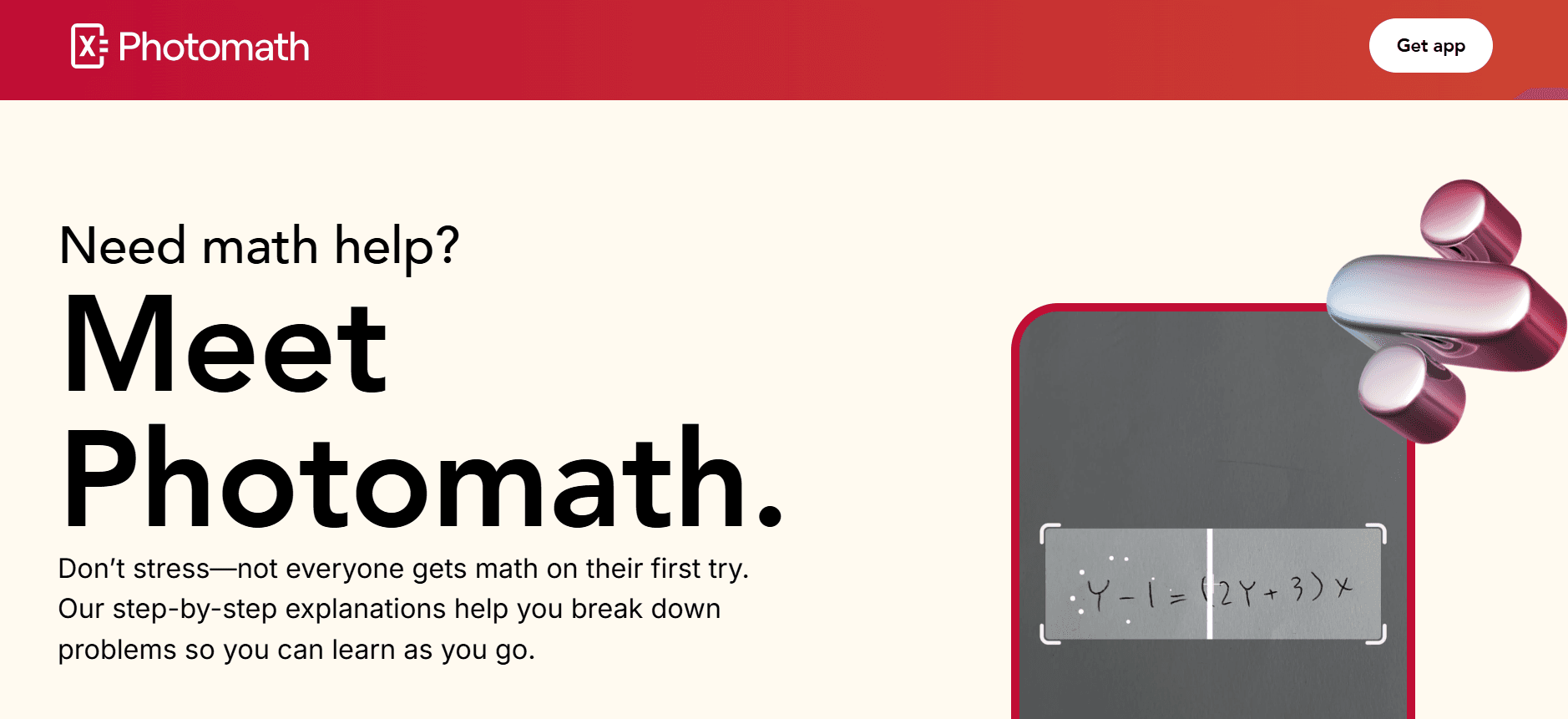
Photomath lets students scan math problems and get step-by-step explanations, with multiple teacher-approved methods and breakdowns of the "what," "why," and "how."
Photomath is useful when homework stops at "I got the answer wrong." Instead of leaving the mistake there, it helps students see where the method broke down, which step was missed, and how the problem should be approached. That makes it more useful than a plain answer key.
Over a 30-day study period, Photomath helps students improve results by using it to review error patterns, not just to check answers once. It is especially useful for turning confusing homework questions into worked examples that the student can revisit later.
5. Socratic by Google
Socratic by Google lets students enter a question and then surfaces explanations and resources to help them understand the result. Google's official help center describes features around entering a question and understanding the results.
Socratic is helpful when students get stuck across subjects and need a quicker way to understand the concept behind the homework. That matters because homework delays often occur when a single unclear question blocks the rest of the assignment. Socratic can help students move from confusion to explanation faster, especially during independent study.
Across 30 days, Socratic works best as a homework unblocker. It helps students maintain momentum, understand hard questions sooner, and reduce the time lost sitting on one problem without understanding what it is asking.
6. MyStudyLife
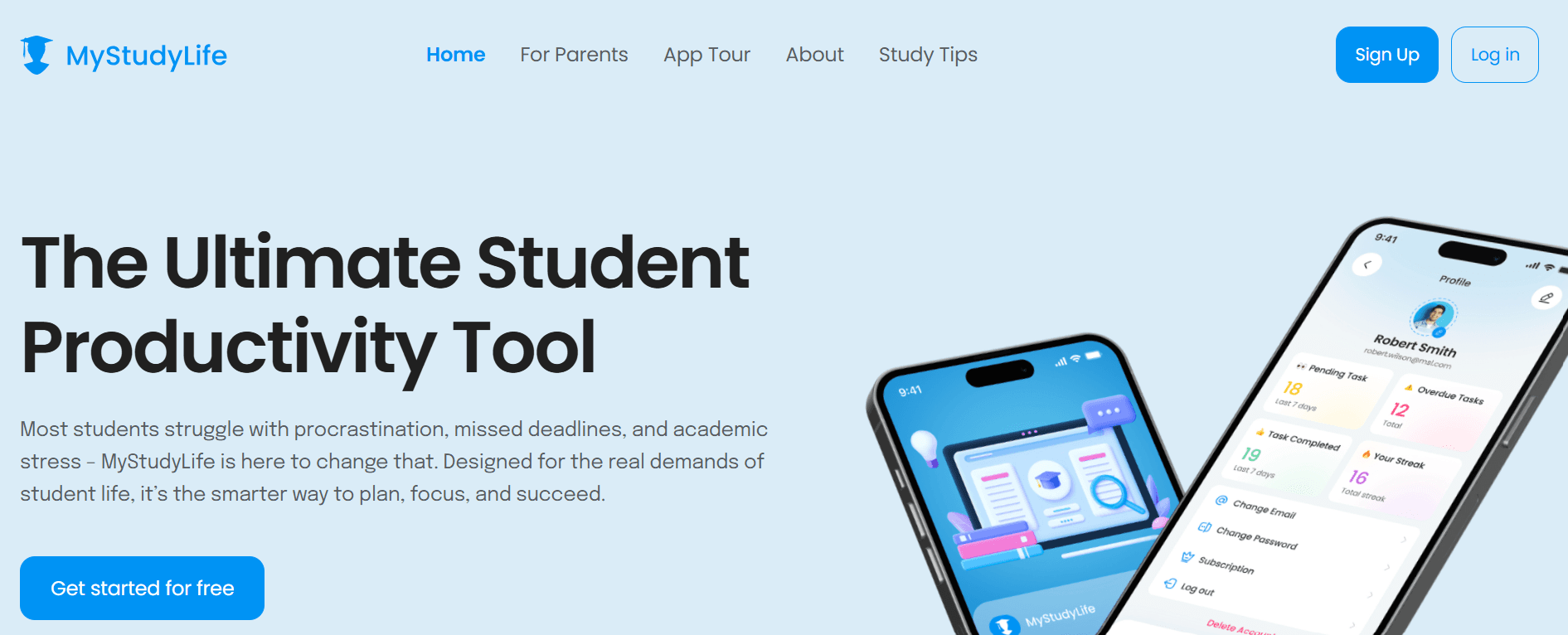
MyStudyLife is a student planner app built for:
School schedules
Homework
Exams
It offers:
Reminders
Grade tracking
A Pomodoro timer
Task management across web and mobile
And says it is trusted by millions of students
Not every homework problem is academic. Sometimes the issue is poor organization. Students forget deadlines, leave work too late, and spread their effort badly across the week. That hurts results even when they understand the subject.
MyStudyLife helps by organizing homework due dates, exam dates, daily study sessions, and workload priorities. That reduces last-minute rushing. Over 30 days, this kind of planning support can improve results because students are more likely to review earlier, space their work better, and stop treating every assignment like an emergency.
7. Grammarly
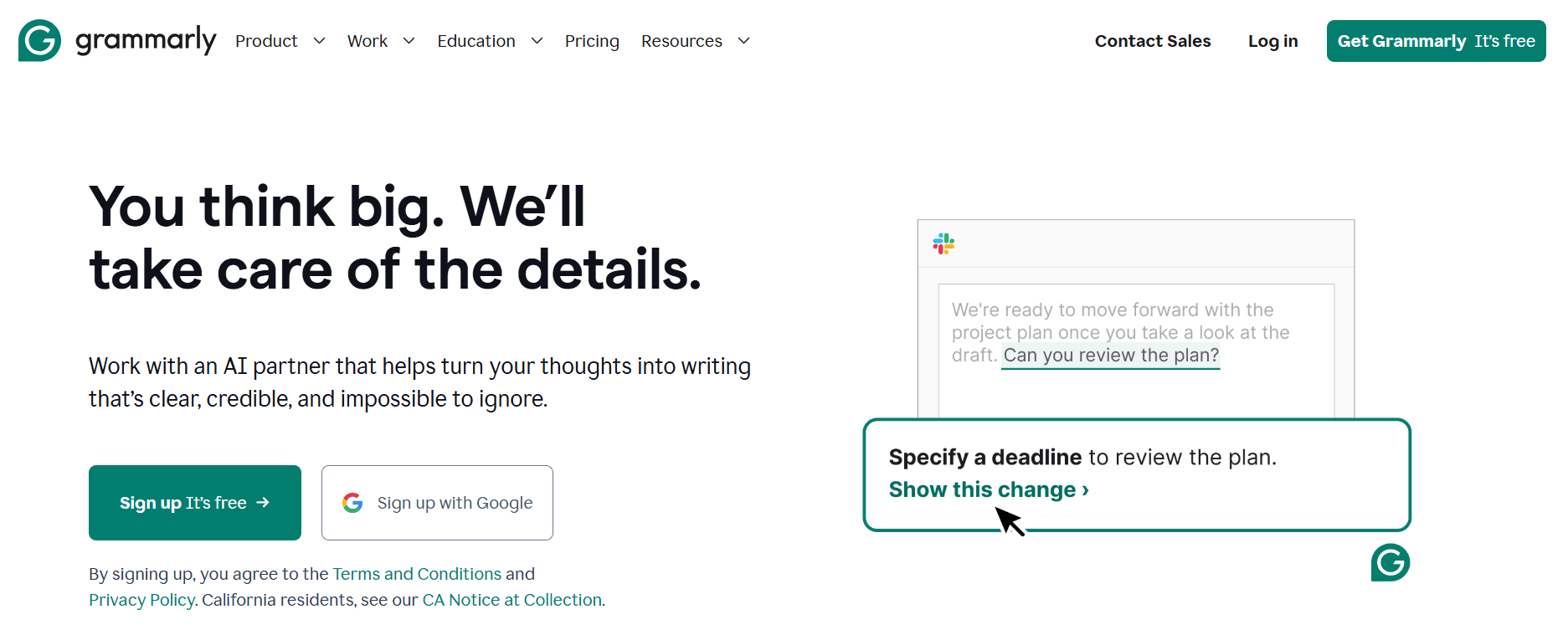
Grammarly offers AI writing support and real-time feedback for students, including help with revision, writing quality, and assignment improvement. Grammarly also offers an AI Grader that estimates how writing aligns with assignment requirements and provides personalized feedback.
Grammarly is strong for homework that depends on writing quality. A lot of students lose marks not because they have no ideas, but because their work has issues with grammar, sentence clarity, structure, delivery, and alignment with the prompt. Grammarly helps students catch those problems earlier.
Over a 30-day period, Grammarly can help improve results by providing students with faster feedback loops on written homework. Instead of waiting until graded work comes back, they can improve drafts before submission and learn from repeated writing issues across assignments.
Why do These Homework Apps Work Better Than Doing Everything Manually
Each app fixes a different homework problem. Numerous AI help turn finished homework into a study system. Quizlet helps convert homework into active recall. Khanmigo helps students think through problems rather than copy answers. Photomath helps break down math mistakes step-by-step. Socratic by Google helps explain stuck points faster. MyStudyLife helps students manage homework and review on time. Grammarly helps students improve their written assignments before submission.
That is the real shift. Students do not improve results just by doing more homework. They improve results when homework becomes feedback, review material, recall practice, and a better system.
But knowing which apps to use is only half the equation, and the real work happens when you turn those tools into a repeatable workflow.
The 30-Day Homework-to-Results Workflow

Improving study results in 30 days requires using apps in sequence, not isolation. The workflow moves from organizing scattered work to converting homework into review material, then testing recall without notes, and finally tightening weak areas before assessments. Each phase builds on the previous one, turning assignments into a system that compounds learning instead of treating each task as a separate effort.
Days 1–5: Build a Tacking System Before You Review Anything
Most students start with homework spread across notebooks, screenshots, missed corrections, and deadlines stored only in memory. That creates invisible gaps. You cannot improve what you are not measuring, and you cannot measure what you have not organized first.
Use MyStudyLife to list homework due dates, subject priorities, test schedules, and daily study blocks. This creates structure around when work happens, not just what work exists. Then create a tracking sheet with columns for subject, homework topic, question type, score or result, mistake made, concept missed, and review date. This turns finished assignments into data you can analyze later.
The goal is not perfection. The goal is visibility. Once homework stops being scattered, patterns emerge. Students stop treating every subject as equally weak and start seeing where results are actually being lost. That clarity makes the next 25 days far more efficient.
Days 6–10: Convert Completed Work Into Future Study Material
Many students finish homework and immediately move to the next assignment. That is where progress stalls. The homework already exposed weak areas, but nothing was captured for reuse. So the same confusion surfaces again during the next quiz, and the cycle repeats.
This phase turns finished work into something that keeps teaching. Convert homework into summaries, recall questions, flashcards, and mistake logs. Move key facts, definitions, and repeated weak areas into Quizlet. If the subject involves math, save missed problem types from Photomath into your review sheet with notes on where the method broke down.
Homework should not end at submission. It should become the foundation for future review sessions. That shift, from one-time task to reusable material, is what helps assignments keep improving results after they leave your hands.
Days 11–15: Close Understanding Gaps Before They Compound
By this stage, students usually know where they are struggling. The problem is not awareness. The problem is letting small confusions pile up until they become a larger performance issue during exams. A single unclear concept left unaddressed often blocks understanding in three related topics later.
Use Socratic to understand stuck questions faster, especially across subjects where you need quick explanations. Use Khanmigo to work through difficult problems step by step, focusing on guided reasoning instead of answer-copying. Use Photomath for math questions where you need to see exactly where the process broke, not just the final result. Add every repeated confusion back into your tracking sheet.
This stage prevents weak areas from becoming permanent gaps. Students who fix confusion early spend less time relearning the same material later. That creates momentum instead of repeated frustration.
Days 16–20: Test Recall Without Notes or Worked Examples
This is where the process starts producing measurable improvement. Most students reread notes and assume they understand the material. But rereading only proves familiarity, not retrieval. The real test is whether you can answer the question, solve the problem, or explain the concept without any support in front of you.
Review flashcards in Quizlet without looking at the answer first. Use your tracking sheet to review old homework errors, covering the solution until you attempt the question independently. Create mini self-tests from the topics you missed most. For writing-heavy subjects, use Grammarly to review structure and repeated writing issues from previous assignments, then rewrite sections without referring back to the original.
Recall is what proves whether learning is improving. If you can explain it from memory, you own it. If you need the notes to remember, you are still building familiarity, not mastery.
Days 21–25: Apply Knowledge in New Contexts Without Scaffolding
Students often feel confident when reviewing notes but struggle when asked to apply the same knowledge in a slightly different format. That gap between recognition and application is where many test scores drop. This phase closes that gap by forcing the application before offering support.
Redo selected homework questions without looking at notes, formulas, or worked examples. Use Khanmigo to guide you through fresh practice questions, but only after you have attempted the problem independently first. Use Photomath only after you have written out your own solution attempt. For essays or written assignments, draft your answer first, then use Grammarly to improve clarity and correctness.
The application proves whether the student actually improved or just became familiar with the material. That distinction matters more than most students realize. Familiarity fades quickly. Application builds skills that last.
Days 26–30: Tighten Weak Spots With Targeted Review
At the end of the month, many students panic and try to review everything. That creates stress without stronger results. The better move is a targeted review based on the data you have been collecting since day one. You already know which topics remain weak. You already know which question types still cause confusion. Now you focus only on those areas.
Sort your tracking sheet by weakest topics first. Review only the flashcards and problem types that still feel uncertain. Use MyStudyLife to plan final review sessions rather than cramming at the last minute. Use Socratic or Khan Academy for the last hard concepts that still need explanation. Use Grammarly to compare your current writing with earlier assignments and identify areas for improvement.
The last few days should not feel like starting over. They should feel like tightening the system you already built. That is what makes the 30-day process realistic instead of overwhelming.
The Shift From Scattered Effort to Structured Improvement
Before this workflow, homework gets finished and forgotten. Weak areas stay hidden. Mistakes repeat. Studying feels random. Results improve slowly because effort is not connected to a system that builds memory over time.
After this workflow, homework becomes review material. Weak areas are tracked clearly. Confusion gets fixed earlier. Recall improves across the month. Study results improve with structure because every assignment feeds into the next review session.
The core workflow in one sentence: organize, review, fix confusion, test yourself, revisit weak areas. That sequence stops treating homework like a one-time task and starts treating it like the foundation for better results.
Improve Your Study Results in 30 Days With Numerous AI
If homework is taking time but not improving your results, the problem is not the homework. It is the process. Homework exposes weak areas, but most students never convert that exposure into a system that builds memory, tracks patterns, or tightens recall before the next test.
The gap between doing homework and improving results stems from treating assignments as isolated tasks rather than as data that feeds a learning system. When you finish a biology worksheet, you have information about what you understood and what you missed. But without structure, that information disappears. You move to the next assignment without capturing what went wrong, which topics keep appearing, or which question types still feel uncertain.
Systemic Retrieval and Error Analysis
Numerous AI tools turn homework into a structured review system within a spreadsheet. You add columns for subject, topic, question type, mistake made, concept missed, and next review date. Then you use AI formulas to summarize notes, generate recall questions, extract weak patterns, and classify errors by topic. That shifts homework from something you submit once to something that keeps teaching you across the month.
The workflow is simple.
Put your homework into the sheet.
Use AI to turn it into summaries, mistake logs, and recall prompts.
Organize weak areas in one place.
Track what keeps going wrong.
Review the right topics before they show up on the next quiz.
Most students spend hours on homework, but never build a system that makes the second review faster than the first. They reread notes instead of testing recall. They redo problems with the formula visible, rather than forcing retrieval. They treat every study session as if it were starting from zero because nothing from the last session was saved in a reusable format.
Strategic Filtering and Performance Triage
Numerous AI fixes that make homework reusable. Once the data is in the sheet, you can sort by weakest topic, filter by question type, group by mistake pattern, and pull only the material that still needs work. That means less time reviewing what you already understand and more time tightening the areas that actually cost points.
The difference shows up in how students prepare for exams. Before using a system, revision means rereading everything and hoping the important parts stick. After using a system, revision means opening the sheet, sorting by weak topics, and reviewing only the material that still feels uncertain. That is faster, more targeted, and more effective.
Better results do not come from doing more homework. They come from using homework better. Numerous AI give you that process. Open the tool, turn your homework into a study system, and start improving your results today.
Related Reading
Otter.ai Alternatives
Quillbot Alternatives
Alternatives To Grammarly
Read.ai Vs Otter.ai
Best Apps For Essay Writing
Notion Ai Alternatives