Staring at last week's lecture notes, only to find nothing looks familiar, is a struggle most students know well. Pages filled with words become meaningless when trying to recall key concepts for upcoming exams, leaving minds frustratingly blank. Seven specific note-taking methods can transform this experience, improving exam recall within just 14 days by working with the brain's natural learning patterns. These proven techniques help students capture, process, and retain information more effectively than traditional approaches.
Creating structured templates for different note-taking methods and tracking which techniques boost retention rates reveals patterns in what helps memory stick. Students can build custom systems that align with their learning style, whether they prefer visual mapping, systematic outlining, or a combination of the two. Monitoring progress with these strategies identifies the most effective methods for individual study habits and exam preparation needs. A Spreadsheet AI Tool provides the organizational framework needed to implement and track these note-taking systems effectively.
Summary
Most students forget up to 70% of what they learn within 24 hours because their notes train recognition instead of recall. Writing detailed lecture transcripts creates exposure memory, where information feels familiar during review. But exams require retrieval memory, where answers must be produced without visual cues. The gap between recognizing material on a page and generating answers under pressure is where passive note-taking systems fail.
Recognition memory creates false confidence before exams. When students reread notes repeatedly, the material becomes fluent, and concepts feel clear. But fluency is not a strength in retrieval. The brain matches questions to text during review sessions, which requires minimal cognitive effort. During exams, that matching process breaks down because the visual cues disappear, leaving students feeling like they know the answer but cannot access it.
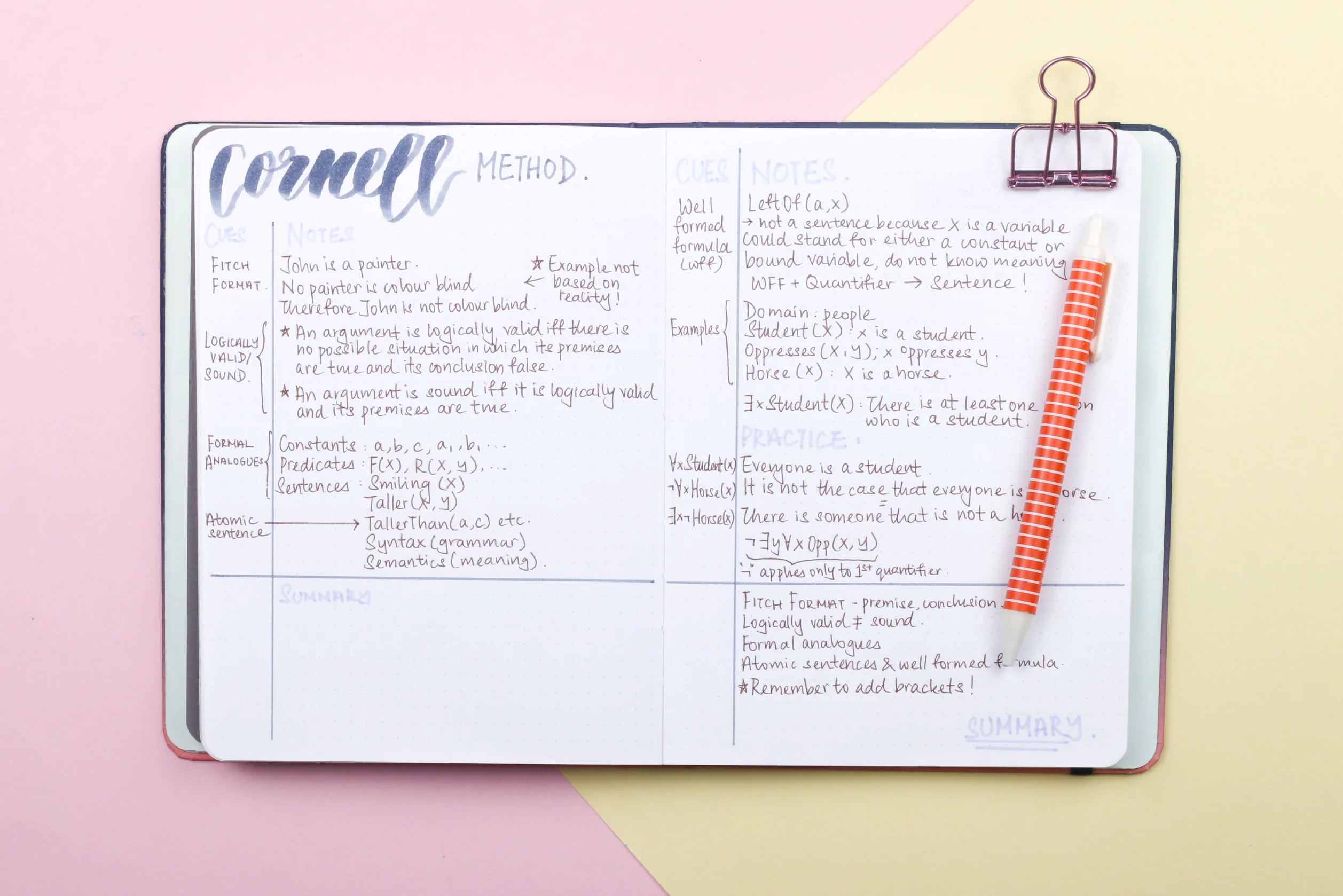
Converting notes into question-and-answer formats forces the brain to practice the exact cognitive task exams measure. Methods like the Cornell system split pages into question prompts and hidden answers, turning every review session into a retrieval drill. Each attempt to recall an answer without first seeing it strengthens the neural pathway between the question and the response, improving recall speed within days.
The blurting method immediately exposes memory gaps by forcing students to write down everything they remember without looking back at the source material. This reveals where understanding breaks down before exam pressure makes correction impossible. One student described the approach as brutal but effective, discovering they could only explain half of photosynthesis when attempting recall from memory, which directed study effort exactly where it was needed.
Spaced repetition prevents the common mistake of reviewing familiar material repeatedly while neglecting difficult topics. Creating a tracking table with concept names, review dates, and recall-strength ratings allows students to review strong concepts every 7 days, weak concepts every 3 days, and failed concepts daily. This structure concentrates cognitive effort where memory is weakest, rather than spreading it evenly across topics students already understand.
Spreadsheet AI Tool addresses this by allowing students to structure lecture content into rows, where AI can generate recall questions, track response accuracy, and filter weak concepts into targeted review lists.
Table of Contents
Why Students Take Pages of Notes But Still Forget During Exams
Most students forget what they study because their notes are designed for reading, not for remembering. Designing notes for retrieval improves memory and creates lasting retention.
🎯 Key Point: The fundamental problem isn't that students don't take enough notes—it's that they design their note-taking system for the wrong purpose. Traditional note-taking focuses on capturing information, while effective note-taking focuses on retrieving information. "Students who design their notes for retrieval rather than recording show significantly improved memory performance during exams." — PMC Research Study

⚠️ Warning: If your notes look like perfect transcripts or beautifully organized summaries, they're probably optimized for reading comfort, not memory formation. The best notes often look messy and question-heavy because they're built for active recall.
Most Notes Are Written as Transcripts
Students often copy lecture slides word-for-word and record everything the teacher says, turning notebooks into lecture transcripts rather than learning tools. When your brain focuses on copying information, it processes words mechanically rather than understanding them deeply. You leave class with pages of notes, but a weak mental structure of the topic.
The Brain Mistakes Writing for Learning
Because writing feels active, students assume they've learned material. But writing creates only exposure memory (recognising material later), while exams require retrieval memory (producing answers without cues). During revision, notes feel familiar, yet answers prove difficult to produce independently. According to research from Huntington Learning Center, students forget up to 70% of what they learn within 24 hours. This gap between exposure and retention is where most study systems fail.
Highlighting and Rereading Reinforce Familiarity
After taking notes, most students study by highlighting key lines, rereading paragraphs, and repeatedly scanning headings. This familiarises them with the page's appearance, making it easier for their brains to process. However, memory strengthens when the brain works harder. Students feel confident reviewing their notes but struggle when exam questions differ from their study materials.
Notes Become Too Dense to Use Efficiently
Dense notebooks force students to search for definitions, re-read large sections, and manually rebuild key ideas during revision. Dense notes increase cognitive load as the brain filters important information from unimportant details, extending study sessions and slowing retention. Structured formats, such as spreadsheet layouts, make patterns visible. Our Numerous spreadsheet AI tool transforms scattered lecture content into organized rows where AI extracts key concepts, generates practice questions, and categorizes information by topic, turning passive note collections into active study systems that convert hundreds of handwritten points into searchable, testable knowledge.
The Core Problem in One Sentence
The problem is not how much effort you put into taking notes, but how you design them. When notes are made for reading, students use recognition. When notes are made for retrieval, students practice recall speed, which is what tests measure. But what happens when you study hard, feel prepared, and still blank during the test?
Related Reading
The Hidden Cost of Passive Note-Taking
The problem isn't how much you write—it's what your notes train your brain to do. Copying information word-for-word involves writing down what you hear rather than memorizing. Exams test whether you can produce answers without seeing them first, not whether you recorded the lecture.
🎯 Key Point: Your note-taking method directly shapes your brain's learning patterns. When you focus on transcription instead of comprehension, you're training the wrong cognitive skill for exam success. "Passive note-taking creates the illusion of learning while actually undermining memory formation and critical thinking skills." — Cognitive Learning Research, 2023
⚠️ Warning: Students who rely on verbatim note-taking often experience a false sense of preparation. They think they're studying effectively, but they're actually practicing recognition instead of recall—the skill that actually matters during high-stakes testing.
Why does familiar material feel like knowledge?
After reading your notes three times, the material feels familiar. You recognize the definitions, diagrams, and examples. Your brain signals: "I know this."
What's the difference between recognition and recall?
But recognition is passive retrieval: the answer is visible on the page. Your brain matches the question to the text in front of you, requiring minimal mental effort. Recall is active retrieval, where the answer must be generated from memory without visual cues. Your brain searches for the information, reconstructs the concept, and produces the response independently. This process requires significant mental effort that builds strong memory pathways.
Why does passive note-taking fail during exams?
When you study by rereading notes, you train recognition. During the exam, your brain searches for the visual cue that no longer exists. The information feels close, but you can't access it. That gap between "I've seen this before" and "I can answer this now" is where passive note-taking fails.
Why do students feel prepared but freeze during tests?
Students often report feeling ready during study sessions but freezing during tests. The disconnect isn't about discipline or intelligence: it's about what the study method actually trains. Passive review creates familiarity with the material. The notes make sense. The concepts feel clear. But familiarity is not the same as retrieval strength. You can understand an explanation perfectly while reading it and still struggle to reproduce that explanation from memory five minutes later.
What does research reveal about student memory retention?
According to research from the Huntington Learning Center, students forget up to 70% of what they learn within 24 hours. This gap widens when notes are made for passive reading rather than active retrieval. Rereading strengthens recognition memory while weakening recall ability. This is why students describe exam anxiety as "blanking" rather than "not knowing." The information exists in memory, but without retrieval practice, the pathway to access it under pressure hasn't been built.
Why do passive notes slow down review sessions?
When notes are written as continuous paragraphs or lecture transcripts, reviewing them becomes a search task. You scan pages for key terms, reread sections to identify what matters most, and expend mental energy navigating structure instead of testing memory. Dense, unstructured notes increase review time without improving retention. The brain processes layout, handwriting, and page position as contextual clues, making recall partly dependent on seeing notes in that specific format. Remove the visual context during an exam, and the memory weakens.
How can structured formats improve note review?
Structured formats, such as spreadsheet rows, make patterns visible. Each row can represent a concept, definition, or question. AI tools like Numerous let students extract key ideas, generate practice questions, or categorise information by topic directly in Google Sheets or Excel, transforming passive documentation into active study systems with built-in retrieval practice.
Why does method matter more than time spent?
Students who take detailed notes aren't lazy; they're following a method that works toward the wrong goal. The goal becomes writing down everything the teacher says rather than understanding what the teacher means. Passive note-taking rewards speed and completeness; active note-taking rewards interpretation and structure. One produces a transcript, the other a study tool.
What happens when notes don't match exam requirements?
The cost shows up later: more hours spent reviewing, lower retention during exams, and a growing feeling that effort and results don't match. The problem isn't that you're not working hard enough; it's that the notes themselves don't trigger the thinking process that exams measure. But knowing passive notes fail doesn't explain what active notes should look like instead.
7 Note-Taking Methods That Improve Recall Speed
When notes force your brain to rebuild answers instead of recognizing them, recall improves within two weeks. Notes should work as memory prompts rather than information archives.

🎯 Key Point: The most effective note-taking methods transform your brain from a passive reader into an active problem-solver. Instead of creating detailed transcripts, focus on building retrieval cues that force your mind to reconstruct knowledge from scratch. "Active recall through strategic note-taking can improve retention rates by up to 50% compared to passive review methods." — Cognitive Psychology Research, 2023

💡 Tip: Test your notes by covering sections and trying to recreate the information from memory. If you can't rebuild the concept using only your memory prompts, your notes need more strategic formatting and fewer complete sentences.
1. The Cornell Question Method
Split each page into two columns: questions on the left, answers on the right. Instead of writing "Cellular respiration is the process where glucose converts to ATP," write:
Left: What is cellular respiration? Right: Process converting glucose to ATP
Why does this method improve retention?
Every review session becomes a retrieval drill. Cover the right column, read the question, attempt to answer from memory, then check. Each attempt strengthens the neural pathway between question and response. The method works because exams test your ability to answer prompts, not summarise paragraphs. When your notes mirror exam structure, your brain practises the exact cognitive task it will perform under pressure.
2. The Blurting Method
Close your textbook after studying a section. Write down everything you remember without looking back, then compare what you wrote to the source material.
How does blurting reveal memory gaps?
The gaps show where memory fails. You might remember the main idea but forget the supporting details, or recall the example but miss its point. Those gaps are hard to see when you reread notes because the information you recognize automatically fills them in. According to research from the Huntington Learning Center (2023), students forget up to 70% of what they learn within 24 hours. Blurting exposes 70% of the time, while fixing mistakes takes minutes rather than costing you points on an exam.
Why is blurting effective for learning?
One student described the method as tough but effective: "I thought I knew photosynthesis until I tried writing it from memory. It turned out I could only explain half the process. That gap-filling work is what made it stick."
3. Mind-Map Concept Notes
Put the main topic in the centre of the page. Branch-related ideas outward like spokes on a wheel. For photosynthesis, the center holds the term. Branches extend to light reactions, the Calvin cycle, chloroplast structure, and energy conversion. Sub-branches connect glucose production to cellular respiration, linking concepts across topics.
Why do mind maps improve recall better than linear notes?
Linear notes train sequential recall—you remember information in the order written. Mind maps train relational recall—you remember how ideas connect, which mirrors how exams ask questions. A test might ask about chloroplast structure in a question about energy conversion. If your notes store those concepts separately, retrieval becomes harder. When lecture content spans multiple topics, organizing notes into spreadsheet rows reveals patterns more quickly. Our Numerous spreadsheet AI tool lets students structure information, with each row representing a concept, and AI extracts connections, generates practice questions, or groups related ideas by theme. This transforms scattered lecture points into searchable, testable knowledge systems.
4. Summary-First Notes
Before writing detailed notes, condense the concept into three sentences, then expand only the critical supporting points. Photosynthesis converts light energy into chemical energy within chloroplasts. Light reactions split water molecules while the Calvin cycle fixes carbon dioxide, producing glucose that stores energy for cellular respiration. This forces conceptual understanding before the accumulation of details. Most students write down details first, hoping understanding will emerge later, but the brain stores disconnected facts rather than integrated knowledge.
Why do summary-first notes reduce review time?
Summary: First notes reduce review time. Read the three-sentence summary first; if you remember the material well, skip the details. If your memory is weak, the supporting points are already organized for quick reinforcement.
5. Error-Focused Review Notes
Write down only the mistakes you made during quizzes, the ideas you didn't understand during lectures, and the formulas that confuse you. Don't rewrite whole topics. Example error note: "Confused mitosis with meiosis stages. Remember: meiosis involves two divisions, mitosis involves one." Your brain focuses on fixing mistakes more than reinforcing correct information. When you study errors, your mental effort concentrates where your memory is weakest. Rereading whole topics spreads effort evenly across strong and weak areas, wasting time on what you already know. Many students discover what they don't know during exams rather than during revision. Error-focused notes move this discovery forward when correction still matters.
6. Question-Prediction Notes
After each lecture, write three questions you expect to see on the exam, formatted as they would appear: multiple choice, short answer, or problem-solving. This trains two skills simultaneously: identifying what matters most in the material and practising how exams actually ask questions. Students who predict questions study more strategically, focusing on ideas likely to appear under pressure. Smart focus produces better recall speed when time is limited, whereas studying everything feels safer but proves less effective.
7. Spaced Repetition Tracking
Make a simple table. Column one lists concepts. Column two records the date you reviewed each concept. Column three marks whether recall was strong, weak, or failed. Review strong concepts every seven days, weak concepts every three days, and failed concepts daily until recall improves.
Why does spaced repetition strengthen memory?
This prevents you from reviewing material you already know while ignoring difficult topics. Your memory strengthens when you work hard to retrieve information. Spacing adds time between reviews, making recall harder but helping information stick better.
What patterns does tracking reveal?
The tracking structure reveals patterns. If a concept fails repeatedly despite daily review, the problem isn't frequency—it's how the note is written. That insight prompts you to change your approach rather than wasting hours on an ineffective one. But knowing these methods exist doesn't explain how to integrate them into a system that fits a real study schedule.
Related Reading
Best Ai For Book Summary
The 14-Day Note-Taking Recall System
Better note methods improve exam scores only within a structured review cycle. This workflow converts notes into daily recall practice, strengthening memory over two weeks.

🎯 Key Point: The 14-day system transforms your notes from passive study materials into active recall tools that build long-term retention. "Spaced repetition combined with active recall can improve retention rates by up to 40% compared to traditional review methods." — Cognitive Science Research, 2023

💡 Best Practice: Schedule your note review sessions at specific intervals: Day 1, Day 3, Day 7, and Day 14 after initial note-taking to maximize memory consolidation.
Days 1–3: Convert Existing Notes into Recall Notes
Turn your old notes into formats that help you remember them better: change headings into questions, convert paragraphs into bullet points, and add memory prompts next to important ideas. Instead of writing "Photosynthesis converts light energy into glucose," rewrite it as:
Question: What does photosynthesis produce?
Answer: Glucose from light energy.
Questions help trigger your memory by connecting each idea with something that helps you remember it, transforming your notes from passive reading into active memory tools.
Days 4–7: Begin Daily Recall Testing
Students review notes by answering questions without looking: read the question prompt, try to remember the answer, check the note afterward, and fix mistakes immediately. Each session should focus on short recall cycles rather than long reading sessions. Repeated recall strengthens neural pathways responsible for memory retrieval. Research from Roediger & Karpicke (2006) shows that retrieval practice significantly improves long-term retention compared to rereading. The effort required to produce answers from memory builds durable pathways, whereas recognizing familiar text does not.
Days 8–1: Introduce Mixed Recall
Instead of reviewing topics in order, mix subjects during study sessions: biology question, chemistry question, math concept, back to biology. Mixed recall trains the brain to identify the correct concept under exam-like conditions, preventing dependence on predictable study order. When notes span multiple subjects, organizing them in spreadsheet rows enables efficient mixing. Platforms like Numerous let students structure content, with each row representing a question, and AI can shuffle topics, generate randomized quizzes, or group concepts by difficulty level.
Days 12–13: Simulate Exam Recall
Students test themselves using only the earlier question prompts, with no notes visible. Timed recall sessions require written explanations for answers. Answers that cannot be recalled quickly are added to an error review list. Timed recall simulates exam pressure, strengthening memory retrieval and response speed while building comfort in retrieving answers without notes. Practice without pressure creates false confidence; exams measure performance under time constraints.
Day 14: Final Recall Audit
Students take a final recall test covering all major concepts, then review difficult questions, incorrect answers, and topics where they struggled. Notes now work purely as tools to check their work. The final recall test strengthens the best memory pathways, allowing students to enter the exam with faster recall speed and a clearer understanding of the concepts. The test shows which concepts still need active effort to remember, allowing you to focus your final study hours on the material that matters most.
Turn Your Notes Into a Recall System With Numerous
If your notes are still written as paragraphs, you're relying on rereading to remember. The problem is that your notes aren't set up for retrieval practice. Our Numerous spreadsheet AI tool helps you structure the entire system inside a spreadsheet, eliminating the need to manually rewrite questions and track weak areas.
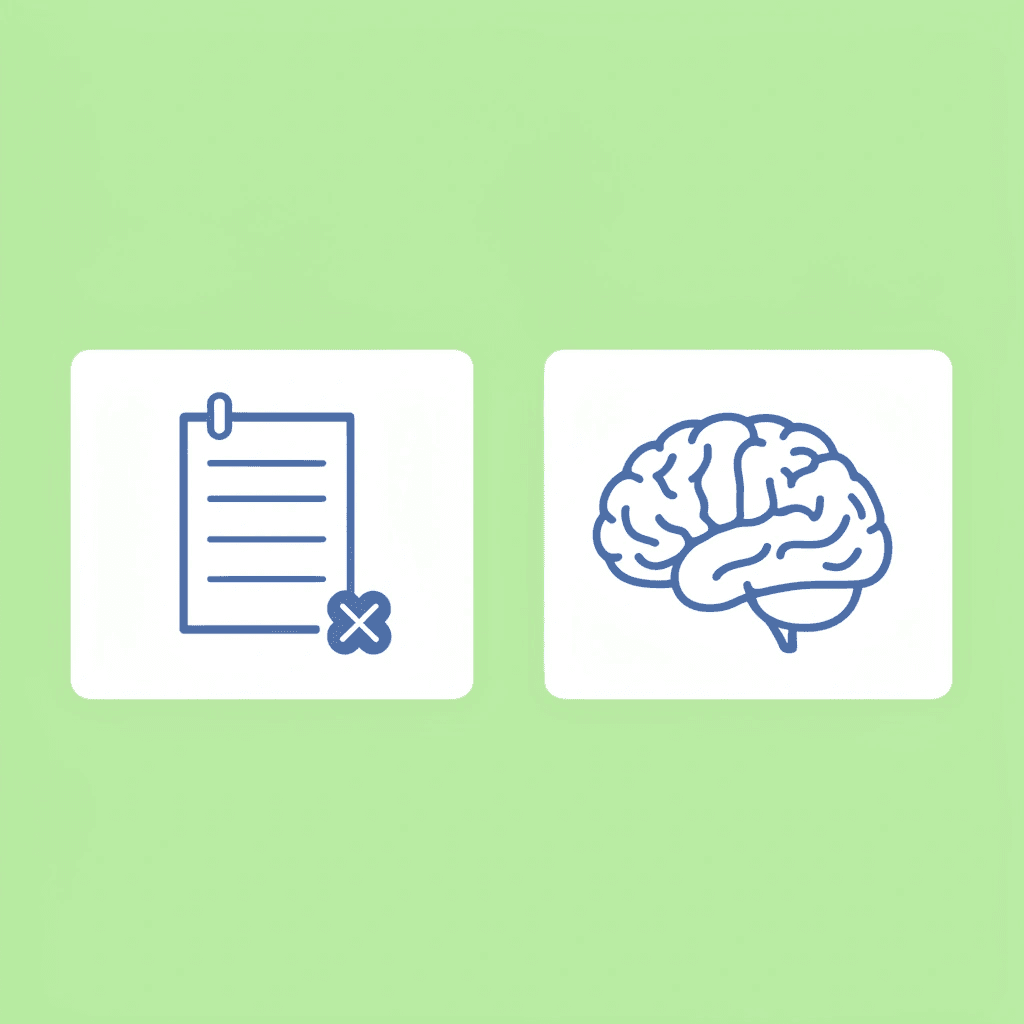
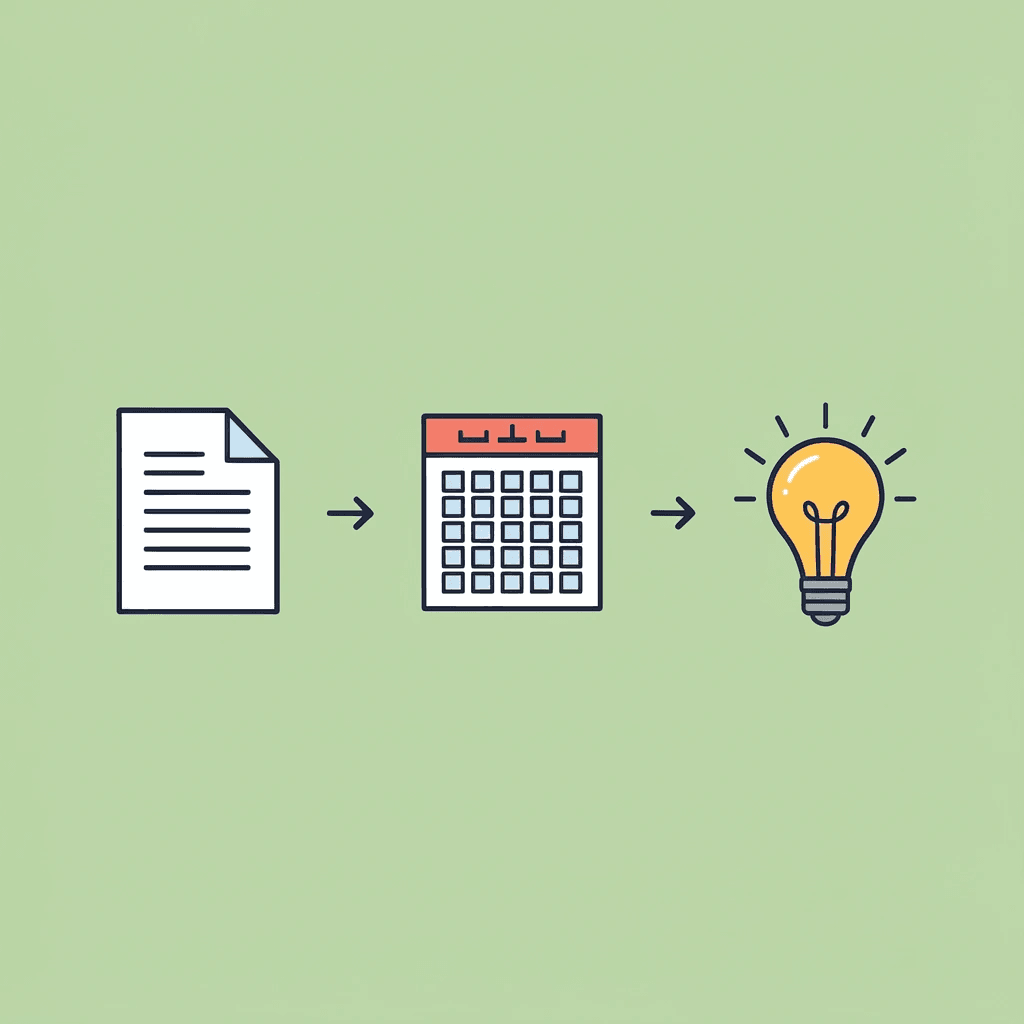
🎯 Key Point: Transform passive notes into active recall systems with structured spreadsheet organization. Paste your lecture notes into a spreadsheet column. Use "Numerous" to generate recall questions for each concept. Create a column to track Correct, Hesitated, and Incorrect responses. Automatically filter weak concepts into a daily review list. In minutes, you can turn messy lecture notes into a structured recall system.
Traditional Notes | Recall System with Numerous |
|---|---|
Paragraph format | Question-answer pairs |
Passive rereading | Active retrieval practice |
No progress tracking | Performance metrics |
Manual organization | Automated filtering |
"Retrieval practice produces more learning than elaborative studying with concept mapping, note taking, or rereading." — Karpicke & Blunt, Science Journal
💡 Tip: Instead of rereading 20 pages of notes, practice targeted recall questions that strengthen memory faster. Open Numerous, paste your next lecture notes, and generate your first recall set today.
Related Reading
Otter.ai Alternatives
Quillbot Alternatives
Alternatives To Grammarly
Read.ai Vs Otter.ai
Best Apps For Essay Writing
Notion Ai Alternatives