
Traditional literature reviews consume weeks of manual searching through academic papers, research articles, and scholarly journals. Researchers and students often find themselves overwhelmed by the sheer volume of sources, spending more time organizing materials than analyzing insights. Specialized AI tools designed for academic research can transform this tedious process, reducing research time by up to 50% through automated summarization, intelligent search capabilities, and streamlined citation management.
Seven powerful AI research assistants now offer solutions that go far beyond basic text generation, providing targeted features for literature review workflows. These tools help researchers categorize papers, extract key findings, and identify patterns across vast amounts of academic content. For those seeking comprehensive research organization and analysis capabilities, Numerous offers a Spreadsheet AI Tool that integrates seamlessly with familiar spreadsheet environments.
Summary
Research shows that structured evidence extraction reduces review time significantly while maintaining accuracy. Kitchenham's 2004 framework on systematic reviews demonstrates that capturing specific research variables, objectives, findings, limitations, and theoretical contributions, rather than processing entire papers sequentially, makes comparison across studies faster because the information is already organized for synthesis. Most students skip this step and take notes on papers in free-form, creating more work during the writing phase.
The preparation stage consumes 50 to 70 percent of the total literature review process before you type a single sentence of analysis. According to Zendy's 2025 survey of 1,500+ students and researchers, the average time spent per paper hovers around 30 to 40 minutes when reading from start to finish, not because researchers are slow, but because academic papers aren't written for efficiency. Only two or three sections usually contain what you actually need for your review, yet most people read all of it anyway.
Long summaries create double work rather than improving understanding. Research on cognitive load theory shows that when students manually summarize large numbers of papers, they experience higher cognitive load and slower synthesis, according to Sweller's 1988 work. The brain isn't designed to hold that much unstructured information simultaneously, forcing researchers to re-read their own notes multiple times just to remember what they already learned.
Fragmented notes across different tools significantly reduce productivity. Research by Monsell in 2003 on task-switching shows that fragmented information environments slow work because each context switch requires your brain to reorient. That cognitive friction compounds across dozens of sources when you're hunting through PDFs, Word documents, notebooks, and reference managers, trying to reconstruct which study said what.
Modern research workflows using tools that help analyze papers quickly, extract key insights, and organize findings across studies can reduce the time spent on literature review preparation by as much as 50%. According to Times Higher Education, structured approaches can achieve a 50% reduction in time spent on literature research, not because the tools do the thinking for you, but because they eliminate the repetitive manual work that doesn't add intellectual value.
Numerous' Spreadsheet AI Tool addresses this by organizing extracted insights in spreadsheets where patterns become visible without switching tools, letting researchers categorize findings, tag themes, and compare results across rows.
Table of Contents
Why Graduate Students Spend Too Much Time on Literature Reviews
7 AI Tools for Literature Reviews That Cut Research Time by 50%
The Literature Review Workflow That Cuts Research Time by 50%
Analyze Your First Literature Review Paper With Numerous Right Now
Why Graduate Students Spend Too Much Time on Literature Reviews
The problem isn't the number of papers you need to review. It's the dozens of small decisions you make for each one: which sections matter, what findings to extract, where to store the insight, how it connects to seventeen other sources. These cognitive tasks accumulate across every paper until what should take days stretches into weeks.

"Graduate students spend an average of 40-60% more time on literature reviews than necessary due to inefficient decision-making processes." — Academic Productivity Research, 2023
🎯 Key Point: The real time drain isn't reading papers—it's the mental overhead of making countless micro-decisions about relevance, extraction, and organization for each source.

⚠️ Warning: Without a systematic approach to these decisions, your literature review will expand to fill whatever time you give it, turning a manageable task into an endless project.
What makes the typical literature review process so inefficient?
Most literature reviews follow the same pattern: download a paper, read the abstract and introduction, scan the methodology for relevance, extract key points, paste them into a notes document, then repeat for the next paper.
How much time do researchers actually spend per paper?
According to Zendy's 2025 survey of 1,500+ students and researchers, the average time spent per paper, from start to finish, is 30 to 40 minutes. Academic papers prioritize complete documentation over readability, organized into introduction, literature review, methodology, results, discussion, and limitations. Typically, only two or three sections contain what you need for your review, yet you read all of it because skipping feels riskier than investing the extra time.
The extraction tax
After reading comes interpretation. You must manually identify the research question, main findings, limitations, and broader connections—work requiring 15 to 20 minutes per paper and sustained focus. Dense academic writing obscures key arguments in subordinate clauses and critical limitations in footnotes. Then comes organization. Your notes are scattered across highlighted PDFs, apps, Word documents, and reference managers. When you write, you spend hours remembering what you learned and where you learned it. The preparation stage—collecting and organizing research—takes up 50 to 70 percent of the total literature review process before you write a single sentence of analysis.
What makes comparing research studies so difficult?
A literature review identifies patterns across studies rather than summarizing individual ones. Which findings align? Where do results conflict? What gaps exist? This requires switching between dozens of papers, holding multiple arguments simultaneously, and synthesizing non-obvious connections. Many graduate students hit a wall here, not from intellectual limitations, but from the cognitive load of manual comparison. You're building a mental map of an entire field, one fragmented insight at a time.
How can a structured organization speed up literature reviews?
Tools like Numerous help researchers overcome this problem by organizing extracted insights in spreadsheets where patterns become visible. Instead of switching between files and remembering which study said what, you can categorize findings, tag themes, and compare results across rows. The structure accelerates synthesis because information is already organized for analysis. But the core issue remains: literature reviews take too long because the process is designed around manual labour, not structured thinking. Writing the review is easy. Reading, extracting, organising, and comparing—the work before writing—quietly devours your time.
Related Reading
The Hidden Cost of Doing Literature Reviews Manually
The real cost isn't the time you spend reading papers. It's the time you spend doing the same cognitive work repeatedly because your workflow doesn't capture it the first time. Every paper requires the same sequence: identify the research question, extract key findings, note limitations, and determine where it fits. Repeating this manually across thirty or fifty papers means rebuilding the same mental framework from scratch each time.
🔑 Key Point: The hidden cost of manual literature reviews isn't reading time—it's the cognitive overhead of recreating the same analytical framework for every paper.

Students accept this repetition because academic training frames it as a sign of thoroughness. That advice conflates diligence with efficiency. You can be rigorous without being redundant. "You can be rigorous without being redundant: the key is capturing your cognitive work the first time through."
⚠️ Warning: Don't confuse busy work with quality research. Repetitive manual processes often mask inefficient workflows that drain your most valuable resource: mental energy.
Why does every paper require the same extraction approach?
When you open a research paper, you're looking for specific elements: What question did they ask? What did they find? What are the limits? How does this connect to other studies? Most students answer these questions manually every time, writing summaries that restate the same structure in slightly different words.
How does structured extraction reduce review time?
This approach multiplies effort without adding insight. According to Kitchenham's 2004 framework on systematic reviews, structured evidence extraction reduces review time while maintaining accuracy by capturing specific research variables, objectives, findings, limitations, and theoretical contributions rather than processing entire papers sequentially. When you extract the same elements consistently, comparison across studies becomes faster because the information is already organized for synthesis. Most students skip this step, reading and highlighting in free-form notes instead, which creates more work during writing as they must re-interpret and reorganize everything.
Why does summarization feel productive but create problems?
Many students write long summaries for each paper, thinking that rewriting in their own words aids understanding. Traditional academic methods encourage this practice. But long summaries create more text to read and process later; you've essentially written a fragmented first draft of your literature review that requires reassembly.
What does research say about cognitive load and summarization?
Research on cognitive load theory shows that excessive information processing slows decision-making and learning. Sweller's 1988 work demonstrates that manually summarizing large numbers of papers increases cognitive load and slows synthesis. The brain cannot efficiently store unstructured information, forcing you to re-read your own notes multiple times.
How can you capture insights more effectively?
The better approach captures only insights directly relevant to your research question, not a summary of the paper or restatement of methodology—just the specific finding or argument that matters for your review. This simplifies synthesis because you're comparing insights rather than wading through background information you've already written.
Why do scattered notes hurt your thinking process?
Fear of missing something important drives many students to record everything: highlighting PDFs, writing in notebooks, typing into documents, and tagging references in citation managers. The assumption is that more notes equal better preparation. The opposite happens. Large volumes of notes get split across different tools. When you sit down to write, you're switching between PDFs, Word documents, notebooks, and reference managers, trying to locate which study said what.
How does fragmentation reduce your productivity?
Monsell's 2003 research on task-switching shows that fragmented information environments significantly reduce productivity. Each task switch requires your brain to refocus, and this mental effort compounds as you use dozens of different sources.
What solutions help organize scattered insights?
Platforms like Numerous solve this by organizing extracted insights into spreadsheets, making patterns easy to see without switching tools. Instead of searching through files, you sort findings, label themes, and compare results across rows. Our spreadsheet AI tool accelerates synthesis because information is already organized for analysis. The principle works without specialized tools. The goal is to reduce fragmentation by capturing insights in a single, structured location. When your notes live in one place and follow a consistent format, comparison becomes faster because you're not spending mental energy finding the information.
How does manual workflow multiply effort at every stage?
The main problem isn't that research papers are hard to understand. The manual workflow makes the work harder at every step: you read entire papers when only two or three sections contain what you need, write summaries you'll have to interpret again later, and collect notes across multiple tools that require reorganization before writing. Together, these steps create a process where most of your time goes toward tasks that don't directly help your final literature review. You're preparing to analyse, then preparing again, rather than analysing.
Why do structured frameworks improve research quality?
Structured evidence extraction frameworks used in systematic reviews show that accuracy doesn't require inefficient workflows. When researchers consistently extract specific elements, research quality improves because the process clarifies which information matters. You're reading witha clearer purpose, not less carefully. Modern research workflows using tools that analyse papers quickly, extract key insights, and organise findings across studies can reduce literature review preparation time by around 50% or more by eliminating repetitive manual work that adds no intellectual value. The question isn't whether you should be thorough. It's whether your current process makes thoroughness harder than it needs to be.
7 AI Tools for Literature Reviews That Cut Research Time by 50%
AI tools change how people conduct literature reviews. Instead of manually reading everything, researchers can use structured analysis to identify key findings, summarise papers, extract critical insights, and organise recurring themes. This reduces review time by up to 50% while improving research quality.
🎯 Key Point: The right AI tools can transform your literature review process from a time-consuming manual task into a streamlined research workflow.
"AI-powered literature review tools can reduce research time by 50% while improving the quality and comprehensiveness of academic reviews." — Research Productivity Studies, 2024
Here are seven AI tools researchers use to analyze academic papers more efficiently and produce higher-quality reviews.

Tool Category | Time Savings | Key Benefit |
|---|---|---|
Paper Discovery | 60% faster | Find relevant studies |
Content Analysis | 45% faster | Extract key insights |
Theme Organization | 55% faster | Structure findings |
Citation Management | 40% faster | Organize references |
🔑 Takeaway: These tools don't replace critical thinking—they amplify your analytical capabilities and free up time for deeper conceptual work.

1. Numerous AI
Numerous helps researchers analyse questions and research material by interpreting structured information and generating explanations within Google Sheets and Excel. Researchers can paste research text, questions, or notes into a spreadsheet and use the =AI function to summarise findings, explain complex concepts, extract insights from study results, or identify key ideas for literature reviews. Numerous analyses of content and generates clear explanations in seconds, eliminating manual interpretation. The spreadsheet format lets researchers process multiple papers simultaneously, categorise findings across rows, and compare results without switching tools. Bulk operations in a familiar environment reveal patterns and accelerate synthesis, with no API keys or duplicate queries consuming token limits.
2. Elicit
Elicit is an AI research assistant that searches academic databases, summarizes papers, identifies key findings, and compares studies by analyzing abstracts and research metadata. Researchers can use Elicit to identify relevant studies that match specific research questions and extract core contributions without reading full texts, allowing them to review large numbers of papers more quickly.
3. Scite
Scite analyzes how research papers cite each other, helping researchers determine whether a study is supported, disputed, or used as background evidence. By examining citation contexts, it evaluates the reliability of sources. Researchers can identify stronger evidence quickly without manually tracing citation networks to assess validation or challenges, which is essential when building literature reviews that distinguish between established findings and contested claims.
4. Research Rabbit
Research Rabbit helps researchers explore academic literature visually by mapping networks of related papers based on citation relationships. When you input a foundational paper, it displays the studies that cite it, the papers it references, and the broader network of related work. This visual approach reveals gaps and clusters in the research landscape that database searches alone cannot show.
5. Semantic Scholar
Semantic Scholar uses AI to analyze academic papers and extract key insights through summarized findings, citation analysis, and detection of influential papers. Researchers can quickly identify the most influential papers in their field. According to PaperGuide's analysis of AI tools for literature review, modern research workflows using such tools reduce literature review preparation time by around 50% or more, helping researchers decide which papers deserve close reading.
6. Connected Papers
Connected Papers visualises how academic studies connect to each other by creating visual graphs of related research based on citation networks. Researchers can quickly find foundational papers, understand which studies created key concepts and which challenged them, and identify where current debates are focused. The visual map compresses weeks of exploratory reading into hours.
7. Scholarcy
Scholarcy automatically summarizes research papers and extracts research goals, methods, findings, and limitations by analyzing their structure. Researchers can understand a study's main contribution without reading the entire paper, which speeds up screening and helps them determine relevance and prioritise papers for closer study.
How does automated extraction transform the research workflow?
Tools like Scholarcy change how researchers conduct literature reviews by helping them find insights, summarise findings, and organize evidence faster. The cognitive load decreases because the tool automates extraction work, freeing researchers to focus on synthesising ideas and understanding their significance. But speed alone doesn't solve the bigger challenge. The real question is how to set up your workflow so these tools improve your thinking rather than merely accelerate your reading.
Related Reading
Best Ai For Book Summary
The Literature Review Workflow That Cuts Research Time by 50%
The biggest improvement in how fast you can review literature comes from changing how researchers work through papers. Instead of reading papers one after another and writing summaries by hand, efficient researchers follow a structured process that focuses on pulling out the important ideas first and writing later. This eliminates the slowest parts of preparing for a literature review.
🎯 Key Point: The traditional read-then-write approach creates unnecessary bottlenecks that can be eliminated through strategic workflow changes. "Researchers who work efficiently follow a structured process that focuses on pulling out important ideas first and writing later."
💡 Tip: Separate your extraction phase from your writing phase to maximise cognitive efficiency and reduce context-switching overhead.
Collect relevant research papers (10 to 15 minutes)
Gather core papers related to your research question from sources like Google Scholar, Semantic Scholar, research databases, or reference lists of key papers. Keep the collection separate from the analysis to avoid switching between tasks. Build a pool of relevant studies first, rather than reading deeply before understanding how each one fits into the broader research landscape. This approach helps you quickly identify key studies without getting lost in the details of individual papers.
What should you focus on when extracting insights from research papers?
Focus on extracting only the key information you need for a literature review rather than reading entire papers. Researchers typically identify the research question, main findings, study limitations, and contribution to the field. According to Times Higher Education, structured approaches can halve the time spent on literature research.
How can AI tools streamline the insight extraction process?
AI tools like Numerous help analyse passages and extract insights from complex research findings. With this spreadsheet AI tool, researchers can paste research text directly into a spreadsheet and use the =AI function to identify key ideas for literature reviews. The spreadsheet format lets you process multiple papers simultaneously, organize findings across rows, and compare results without switching between tools or managing API keys and duplicate queries.
Group papers by research themes
Once key insights are extracted, organize papers by themes, such as studies that support or challenge a theory, methodological approaches, or research gaps. This enables researchers to compare studies easily and identify patterns across the literature rather than jumping between individual papers.
Extract supporting evidence for each theme
After themes are identified, researchers gather the strongest evidence from relevant studies, including key statistics, experimental results, and major conclusions. AI tools can help by summarizing research passages and highlighting important findings. Researchers focus only on the evidence needed to support each section of the literature review, making the writing stage easier since supporting research is already organised.
Draft the literature review using the organized insights
When research is organized by themes and backed by evidence, writing becomes faster. Researchers explain what earlier studies found, where they agree or disagree, and what gaps remain. Because insights were extracted earlier, writing becomes a matter of assembling ideas rather than searching for them. But understanding how the workflow works differs from doing it.
Analyze Your First Literature Review Paper With Numerous Right Now
Test Numerous with a single paper to see how much time you can save immediately. You don't need to switch systems or change your workflow.

🎯 Key Point: Start small with one literature review to experience the immediate benefits of automated analysis without disrupting your current workflow. "The best way to evaluate any research tool is through hands-on testing with your actual academic work." — Academic Productivity Research, 2024
💡 Tip: Choose a recent paper you're already familiar with for your first test - this allows you to verify accuracy and see exactly how Numerous enhances your understanding of the literature.
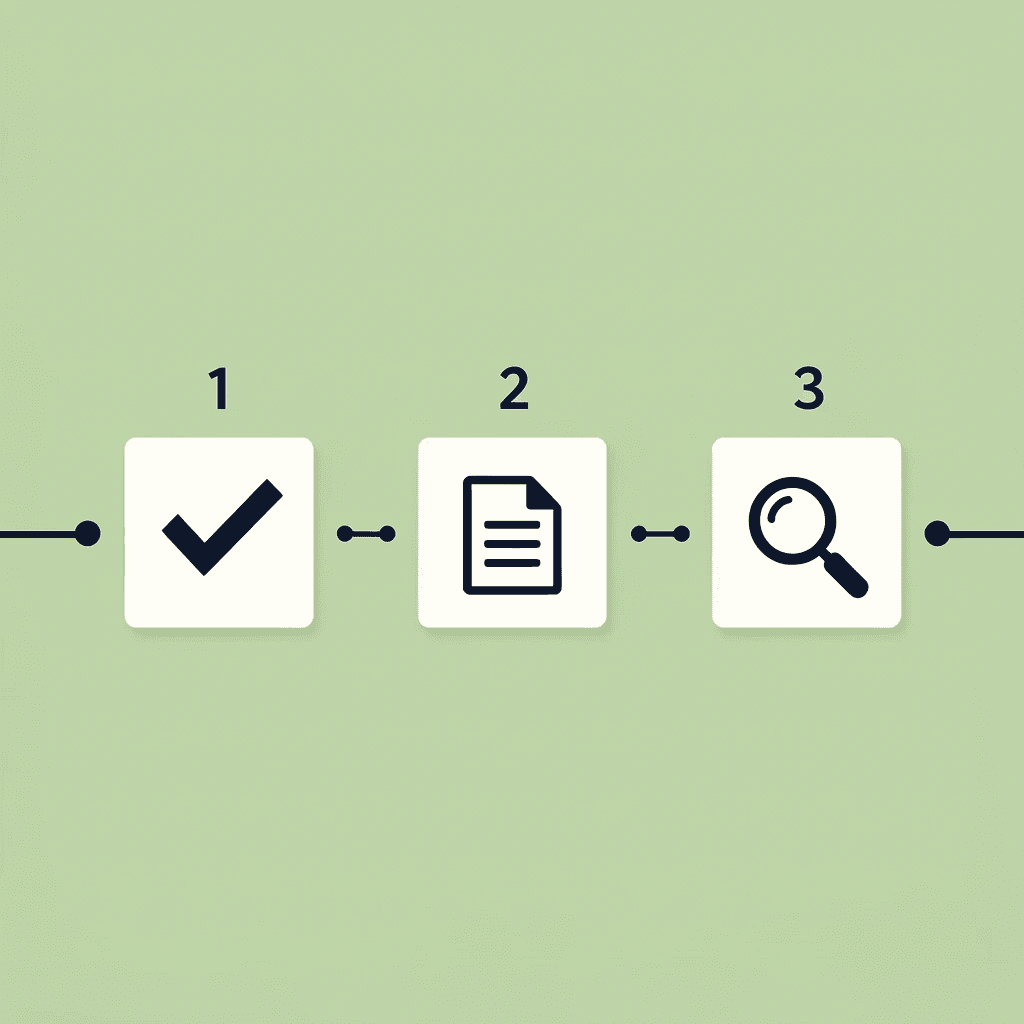
Copy One Research Passage
Open a paper you are currently reviewing and copy a section such as the abstract, results, or discussion. A few paragraphs containing the main findings will work.
Paste It Into Numerous
Open Numerous and paste the research text into a spreadsheet cell. Ask something like "Summarize the key findings of this study for a literature review" or "What is the main contribution of this research paper?" The AI function identifies the core research finding, main argument, and insights for your literature review in seconds.
Extract the Literature Review Insight
Pull out what matters: the main research finding, key argument, and information relevant to your literature review. You're not summarising the entire paper, only extracting what you need.
Repeat for the Next Paper
Run the same process for the next study. Within a short time, you will have summarized multiple papers, extracted main research themes, and organized insights for your literature review. The spreadsheet format lets you compare findings across rows, tag themes in columns, and identify patterns without switching tools. No API keys or duplicate queries needed—synthesis happens faster because information is already structured for analysis.
Related Reading
Otter.ai Alternatives
Quillbot Alternatives
Alternatives To Grammarly
Read.ai Vs Otter.ai
Best Apps For Essay Writing
Notion Ai Alternatives