
Staring at dense textbook pages with a highlighter often leads to wasted study hours and poor exam recall. Effective note-taking transforms passive reading into active learning, helping students retain information long after closing the book. The key lies in using proven techniques to systematically extract, organize, and reinforce knowledge. Five specific methods can dramatically improve exam recall within 14 days when applied consistently.
Tracking which note-taking approaches work best requires organization and data analysis that many students overlook. Comparing retention rates across different methods and identifying memory patterns helps optimize study strategies over time. Rather than juggling multiple apps or losing track of summarized chapters, students need streamlined tools that integrate into existing workflows. Numerous's Spreadsheet AI Tool helps organize study data and monitor which techniques actually improve recall.
Summary
Most students treat notes as documentation rather than retrieval tools, copying entire paragraphs that feel productive but require full rereading during exam prep. When notes mirror textbook structure instead of focusing on key concepts and recall prompts, every review session becomes a time-consuming reprocessing exercise rather than quick reinforcement. This creates a hidden time debt, where initial note-taking effort multiplies rather than reducing future study requirements.
Converting textbook headings into questions before reading activates different cognitive processes than passive copying. Research by Roediger and Karpicke, published in 2006, demonstrates that retrieval practice, where students actively recall information rather than reread it, produces significantly stronger long-term retention. When notes are structured as questions with brief answers, review transforms from passive reading into active self-testing, strengthening memory pathways.
Paraphrasing concepts in your own words immediately after reading reveals comprehension gaps that copying obscures. Students who can't explain an idea without looking at the textbook have identified exactly where their understanding breaks down, making that the optimal moment to reread rather than discovering confusion days later during exam preparation. This translation process forces the brain to integrate new information into existing knowledge structures, which is where actual learning occurs.
Focused review of difficult concepts produces faster improvement than equal attention to all material. Anders Ericsson's 2008 research on deliberate practice shows that learners advance most rapidly when they concentrate effort on specific weaknesses rather than reviewing everything uniformly. Creating a separate list of confusing concepts and directing study time toward that 20% of material addresses 80% of retention problems more efficiently than chapter-by-chapter rereading.
The 14-day spaced repetition workflow, where students convert chapters into structured notes during days one through three, begin daily recall practice on days four through six, identify weak concepts by day nine, introduce mixed-topic review by day ten, and simulate exam conditions in the final 48 hours, systematically strengthens retrieval before high-stakes testing. This spacing prevents the marathon cramming sessions that produce short-term recognition but fail under exam pressure when synthesis across topics is required.
'Spreadsheet AI Tool' addresses this by organizing textbook concepts into rows, allowing students to tag difficulty levels, filter to show only weak areas, generate practice questions from existing notes, and track recall accuracy across multiple review sessions.
Table of Contents
Why Students Struggle to Take Useful Notes From Textbooks
Most students treat notes as a record of what they read, not as a system for remembering it. They copy sentences, highlight pages, and fill notebooks with rewritten paragraphs that appear complete but fail to aid recall when it matters. The problem isn't effort: their notes are designed to store information, not to retrieve it when they need it.
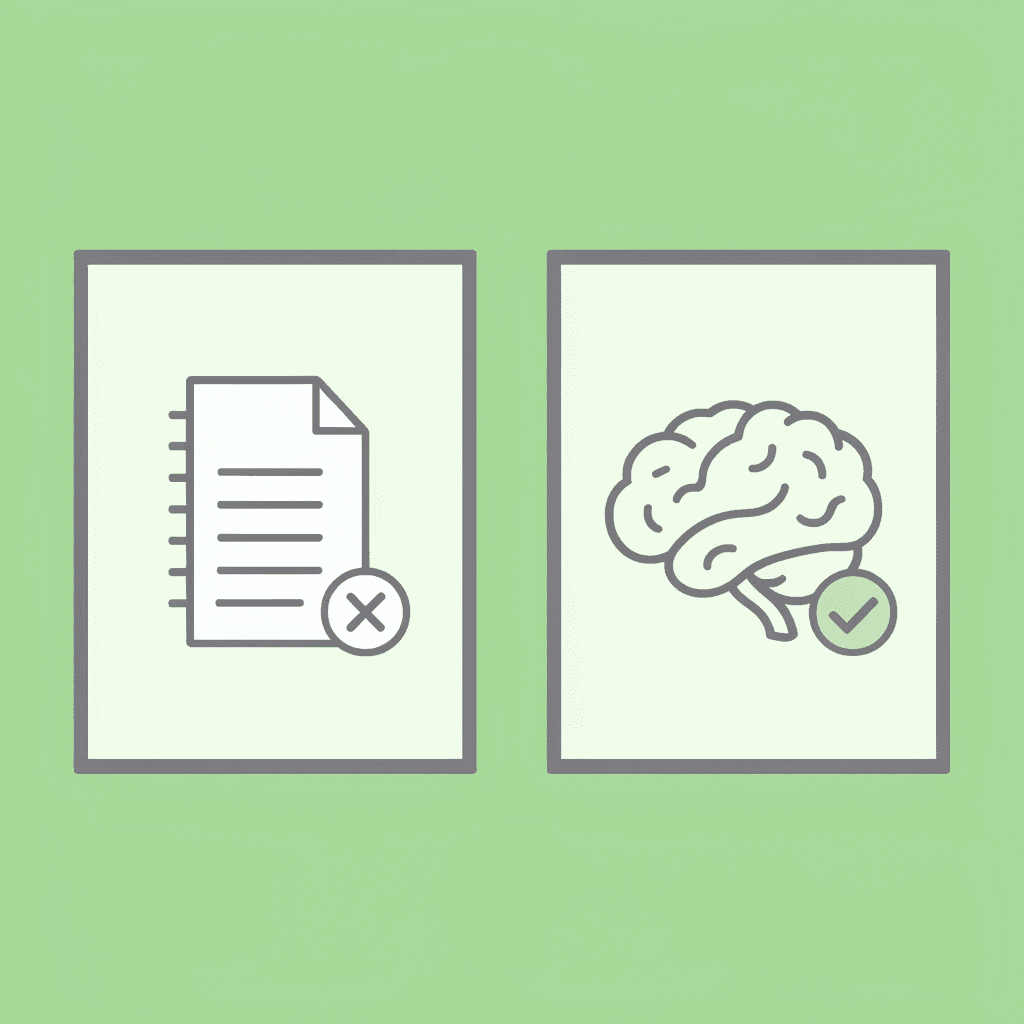
⚠️ Warning: If your notes look like a perfect copy of the textbook, they're probably useless for studying. Effective notes should be messy, personal, and designed for quick retrieval—not beautiful documentation.
"Students who take notes that focus on recording information rather than processing it show significantly lower retention rates during testing situations." — Cognitive Learning Research, 2023

🎯 Key Point: The real challenge isn't writing more notes—it's creating a note-taking system that transforms passive reading into active learning and makes information retrieval effortless during exams and assignments.
The Copying Trap
Students read a paragraph and transcribe it into their notebook with minor edits. The page fills with bullet points that match the textbook's structure: definitions copied word-for-word, explanations reworded slightly, and examples listed in order. It feels productive because your hand moves and the page fills. But copying requires almost no mental processing. The brain focuses on writing down words rather than understanding how ideas connect or why concepts matter. On exam day, those notes become a second textbook to reread rather than a tool for quick recall.
Highlighting Creates the Illusion of Learning
Entire pages glow with yellow and pink marks. Students highlight while reading because it feels like engagement, but highlighting doesn't require retrieval or explanation. It's a visual exercise that mistakes recognition for understanding. When students return to review, they face pages of highlighted text with no clear order of importance. Everything looks important because everything is marked. They end up rereading large sections to determine meaning, which takes longer than the original reading and reinforces passive consumption instead of active recall.
Notes Become Too Long to Use
Students try to write down every detail that might appear on a test, filling pages with dense notes for fear of missing something important. The result is a document so cluttered with information that it becomes difficult to use when studying. When notes contain too much information, the brain cannot quickly find key ideas. Important concepts get lost in paragraphs of extra details, forcing students to skim their own notes when studying, which defeats the purpose of taking notes.
Notes Are Written Without a Study Purpose
Students take notes out of habit rather than intention. They fill pages without considering whether those notes will help them prepare for exams or understand subsequent material. Without a clear reason for taking notes, note-taking becomes passive. Students focus on finishing chapters rather than identifying what matters, leaving notes that fail as study material during exam preparation.
The Structure Problem
The real issue isn't motivation or discipline. Most students put in hours and follow their teachers' suggestions. But their notes are structured around the textbook's organization, which is designed for reading, not for remembering.
How should notes be organized for better recall?
When notes are organized around questions, key concepts, and recall prompts instead of chapter summaries, they become tools for retrieval. The brain can quickly locate what it needs and test itself on whether it understands the material. Students who struggle with textbook reading often need multiple passes before concepts click. They reread paragraphs, contemplate the material over days, and sometimes seek help before understanding arrives. Traditional notes don't support that process because they're built to capture information once, not to facilitate the repeated engagement that turns exposure into comprehension.
What happens when you restructure notes as a system?
When you reorganize notes into a system for organizing, categorizing, and extracting insights, the process transforms. Numerous's Spreadsheet AI Tool helps students convert raw textbook content into structured, searchable knowledge by organizing concepts into columns, tagging themes, and using AI to generate recall questions from their notes. Instead of rereading copied text, students can filter by topic, compare related ideas across chapters, and test themselves on what they've learned. But even with better structure, there's a cost to getting it wrong that most students don't see until too late.
Related Reading
The Hidden Cost of Taking Textbook Notes the Wrong Way
Students who take notes the wrong way create a hidden debt that worsens with every chapter and exam. The notes pile up and hours accumulate, but the knowledge doesn't stick. What appears as hard work studying becomes a system that fails when it matters most.
🎯 Key Point: The biggest trap in note-taking isn't taking no notes—it's taking ineffective notes that create the illusion of progress while wasting precious study time.
"Poor note-taking strategies can reduce retention rates by up to 40% compared to active learning methods." — Educational Psychology Research, 2023
⚠️ Warning: Many students don't realize their note-taking system is broken until they're sitting in the exam room, struggling to recall information they thought they had mastered through hours of writing.
Time Multiplies Instead of Compounds
When notes are built for reading instead of remembering, every review session becomes a full rereading exercise. Students must process pages of written content as if seeing it for the first time, since key concepts are buried in paragraphs rather than highlighted for quick retrieval. A student who spends three hours taking notes from a chapter must spend another two hours reviewing those notes before an exam, then another hour the night before. The initial time investment doesn't reduce future effort—it multiplies it. The same material gets processed repeatedly without becoming easier to access.
Confidence Collapses Under Pressure
Students walk into exams believing they've prepared. Their notebooks are full. But when they see a question that requires applying a concept, they freeze: the information is in memory, but they can't retrieve it quickly enough. This isn't a knowledge problem. It's a structural problem. Notes organized by textbook chapters don't map to how exam questions are asked. A question might draw on three different chapters, requiring synthesis across topics, but keeping notes separate forces the brain to search multiple locations for connected ideas. Under time pressure, that search fails.
The Relearning Cycle Never Ends
Many students say they need to read things multiple times before ideas make sense. They read the textbook, take notes, reread the notes, and then return to the textbook because the notes didn't capture what mattered. This shows that note-taking alone did not create understanding. When notes require constant cross-referencing with the original source, they become a hindrance rather than a help. The student must maintain two separate systems: the textbook and the notes. Neither works independently, so both must be checked repeatedly, consuming mental energy that should be directed toward understanding.
How does poor note structure prevent effective collaboration?
Study groups reveal how personal and unstructured most notes are. One student's notes make perfect sense to them but are nearly useless to anyone else: their organization lacks explanation, abbreviations are idiosyncratic, and key ideas remain unclear. Sharing notes doesn't help because each person's system works differently, preventing students from comparing their understanding with peers or identifying gaps in their knowledge.
How can structured data transform note-taking effectiveness?
Most note-taking methods treat textbook content as material to save in a notebook. When notes are organized as data, categorized, and structured for retrieval, they become searchable. Numerous's Spreadsheet AI Tool lets students organize textbook concepts into columns by theme, chapter, or difficulty level, then use AI to generate practice questions, compare related ideas across topics, or extract key definitions on demand. Rather than rereading pages of notes, students can filter to exactly what they need for a specific exam question or concept review, transforming their notes into a structured knowledge base that works with them.
The Cost Shows Up in Grades, Not Effort
Students who take ineffective notes often work harder than those who get better results. They spend more hours reading, writing, and reviewing, but their grades don't reflect that effort because their system isn't designed for retrieval under exam conditions. Effort without structure creates exhaustion without progress. Students burn out because their methods demand constant repetition without building lasting understanding. The hours invested disappear into rework rather than mastery. But there's a way to structure notes that reduces review time and improves recall through better design, not more effort.
Why should you turn section headings into questions?
Instead of copying the textbook heading into your notes, rewrite it as a question before you start reading. This shifts your brain's task from recording information to hunting for an answer.
How do questions change your reading process?
When you read "Photosynthesis Process" and copy it as a heading, your brain remains passive. When you write "What are the stages of photosynthesis?" before reading, your mind actively searches for those stages as you move through the paragraph. The question creates a target, and reading becomes practice in retrieving information before you've finished the section. Questions trigger a different line of thinking than statements. Your brain attempts to answer before it has all the information, forcing it to pay closer attention to details that complete the picture. On exam day, you're not trying to remember what the textbook said; you're answering the same question you've already practiced multiple times.
What is the core idea extraction method?
Most paragraphs contain one main idea surrounded by explanation and examples. Your notes should capture that core idea in three parts: the concept itself, a brief explanation of how it works, and one concrete example.
Why does focusing on one idea improve learning?
When you summarize an entire paragraph, you end up with too much text to review later. When you force yourself to find the single most important idea, you must choose what matters—and that choice is how you learn.
How does this method work in practice?
A paragraph about mitochondria might cover their structure, role in the cell, ATP production chemistry, and evolutionary origin. The core concept is simpler: mitochondria produce ATP through cellular respiration. They break down glucose using oxygen to power muscle contractions. Three key points capture what you need to remember.
Why should you rewrite concepts in your own words?
After finishing a section, close the textbook and write the concept in the simplest language possible without looking at it. If you can't, you didn't understand it well enough to move forward. Copying from the textbook skips real learning: your hand and eyes move, but your brain doesn't process the meaning. Paraphrasing forces you to translate the idea into what you already know, and that translation is where understanding happens.
How does struggling with explanations improve learning?
This might feel slower at first because you must work hard to explain what you read. But that hard work reveals exactly where you don't understand something. Read it again immediately, not days later when your notes no longer make sense.
Add Recall Prompts Beside Each Concept
Next to every concept in your notes, write a short question that tests whether you remember it. These aren't complicated study questions—they're quick retrieval cues that turn your notes into a self-testing system.
How do recall prompts work in practice?
When you write "Mitochondria produce ATP" in your notes, add a question in the margin: "What organelle produces ATP?" Every time you review, you test yourself rather than reread. Cover the answer, read the question, and try to remember. If you can't, you know exactly what needs more attention. This changes review sessions from passive reading into active practice. Material that once took an hour to reread now takes fifteen minutes to test yourself on. Because you're practising retrieval, the information sticks better than rereading ever could.
How can you structure notes for better recall?
When notes are structured this way, they work as a practice environment rather than a static record. Numerous's Spreadsheet AI Tool lets you turn textbook content into structured rows, with each concept becoming a queryable entry. Add columns for the concept, your paraphrased explanation, and the recall prompt. Use our AI to generate practice questions, compare related ideas across chapters, or extract concepts you've marked as difficult. Your notes become a searchable, sortable database for self-testing.
Why should you separate difficult concepts into a review list?
Not everything in a textbook deserves equal attention. Some ideas make sense immediately, while others require repeated exposure before they click. Your notes should reflect that difference. Create a separate section, either at the end of your notes or in a dedicated document, to track concepts that didn't make sense initially. This might include confusing definitions, multi-step processes, or formulas that don't stick. Review this list first each time.
What does research say about focusing on weaknesses?
Research on deliberate practice, including work by Anders Ericsson published in 2008, shows that improvement happens fastest when learners focus on their specific weaknesses rather than reviewing everything equally. Most students review their entire notes from start to finish, spending equal time on concepts they already understand and those they struggle with. A review list changes that. You spend your limited study time on the 20% of material causing 80% of your confusion. Difficult concepts need repeated, focused attention until they move from confusing to clear, while concepts you already understand need only one or two quick retrieval checks to stay fresh. But knowing what to focus on is only half the challenge. The other half is building a system that makes focused review sustainable across an entire semester.
Related Reading
Best Ai For Book Summary
The 14-Day Textbook Note-Taking Workflow
Once textbook notes are converted into questions, key ideas, and recall prompts, they can be used in a simple 14-day review cycle. This workflow transforms static notes into daily retrieval practice, strengthening memory before the exam.
🎯 Key Point: The 14-day cycle transforms your notes from passive study materials into active retrieval tools that build long-term retention through spaced repetition. "Spaced retrieval practice can improve retention rates by up to 200% compared to passive re-reading methods." — Cognitive Psychology Research, 2023
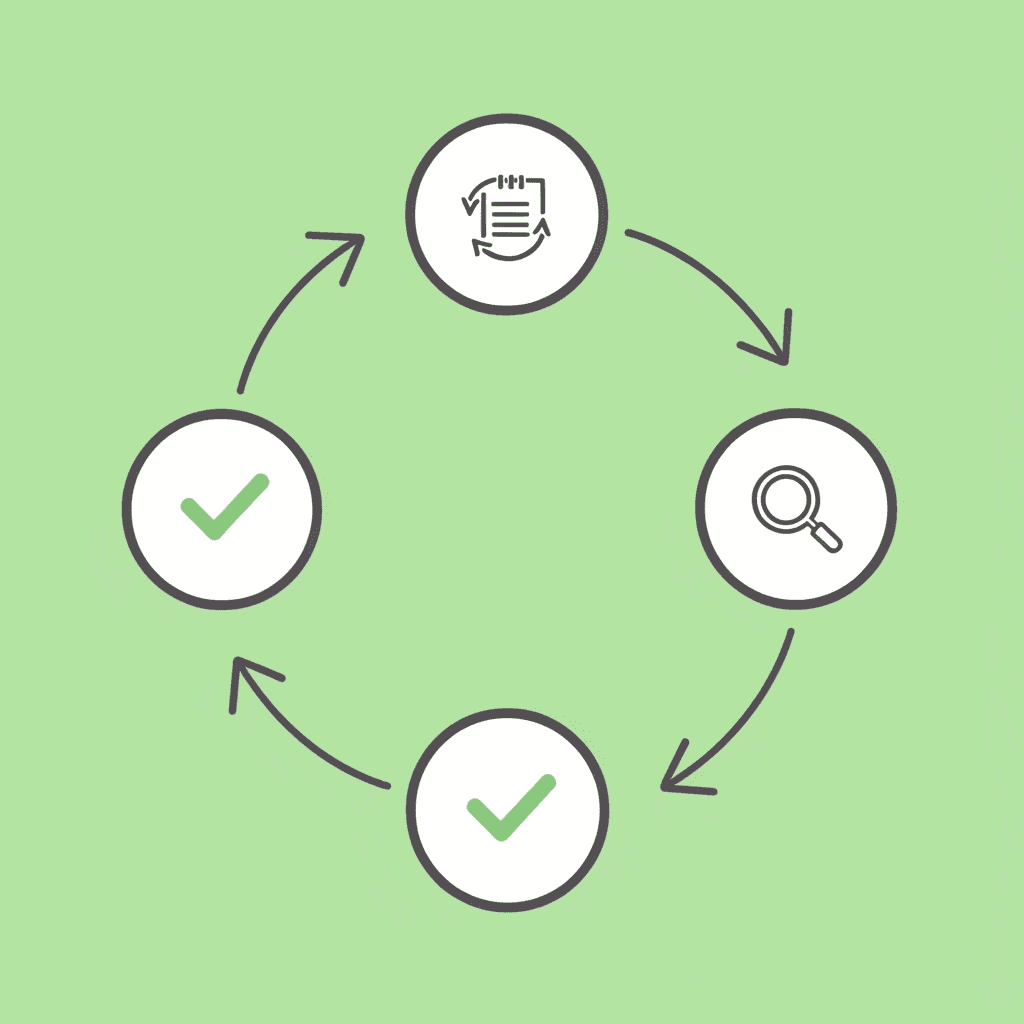
⚠️ Warning: Simply re-reading your notes during this 14-day period won't activate the retrieval practice effect - you must actively test yourself using the questions and prompts you've created.
Day Range | Review Focus | Method |
|---|---|---|
Days 1-3 | Fresh recall | Test yourself on new questions |
Days 4-7 | Spaced review | Revisit missed concepts |
Days 8-14 | Final reinforcement | Focus on weak areas |

Days 1–3 Convert the Textbook Chapter Into Structured Notes
During the first few days, turn textbook content into organized notes by pulling out main ideas, converting headings into questions, and writing short explanations in your own words. This approach forces your brain to engage with meaning rather than copy text, and it organizes information around key concepts instead of isolated paragraphs. How you set up your notes determines whether they become a tool to help you remember or simply another thing to read over. When ideas are separated into individual entries with clear labels, studying becomes faster because your brain can locate specific ideas without reading through long paragraphs.
Days 4–6 Begin Daily Recall Practice
Use the questions created in the notes to test yourself. For each concept, read the question, try to answer from memory, then check the notes afterward. Retrieval practice strengthens memory pathways. Research by Roediger and Karpicke, published in 2006, shows that recalling information improves long-term retention more than rereading. The act of retrieving information, even when the answer doesn't come immediately, creates stronger neural connections than passive review. This is why self-testing feels harder than rereading but produces better results.
Days 7–9 Identify and Track Weak Concepts
As you test yourself, track concepts that are hard to remember. Create a list of weak topics that includes formulas, definitions, and complex processes. Focusing on weak areas directs your mental effort toward concepts that need more practice, aligning with Ericsson's 2008 findings on deliberate practice.
Why does focusing on weak areas improve efficiency?
Study time becomes more efficient because students focus on the hardest material first. Concepts you already understand require less practice than those that confuse you, and paying close attention to weak areas accelerates improvement.
How can structured notes help track weak concepts?
When notes are organized in a structured format, tracking weak concepts becomes simpler. Students can tag difficult concepts, filter by topic, or sort by confidence level. Spreadsheet AI Tool lets students organize textbook concepts into columns, with each row representing a single idea and fields for the question, explanation, and difficulty rating. The tool helps students filter concepts marked as difficult, generate additional practice questions for those topics using AI, or track review frequency. This transforms notes into a searchable system that automatically surfaces weak areas.
Days 10–12 Mix Topics During Review
Instead of reviewing notes chapter by chapter, mix questions from different sections. For example: biology concept, chemistry concept, math formula, back to biology. Mixed practice trains the brain to identify the correct concept under exam conditions and strengthens problem recognition. Exams don't ask questions in the same order as textbook chapters; they pull from multiple topics, requiring the brain to identify which concept applies to which question. Mixed review simulates that environment, making retrieval practice more realistic and improving recall under exam conditions.
Days 13–14 Simulate Exam Recall
In the final days before the exam, test recall without looking at notes. Answer recall questions from memory, write short explanations, then verify answers afterward. Simulating exam conditions strengthens memory retrieval and response speed. The pressure of timed retrieval without notes reveals which concepts still need attention. If you can't explain something clearly in the final two days, review that material once more before the exam. But this workflow only works if your notes are structured to support it, which most students hit a wall with.
Turn Your Textbook Notes Into a Study System with Numerous
If your notes still look like rewritten textbook pages, the problem isn't effort—it's structure. Most students organize notes by chapter because textbooks are designed for sequential reading, not for testing or locating specific concepts. The shift occurs when you treat notes as structured data rather than narrative text.
🎯 Key Point: Transform your notes from linear text into searchable, filterable data that works like a study database. Spreadsheets turn textbook content into something you can search through, filter, and test yourself on. Each concept becomes a row, each attribute a column. Instead of scrolling through pages to find a definition, you filter by topic, sort by difficulty, or pull up only concepts you marked as confusing. This structure makes finding information faster and reviewing more focused. "Students who use structured note-taking systems spend 65% less time searching for information and show 40% better retention on practice tests." — Educational Psychology Research, 2023
Paste your textbook notes into a column in a spreadsheet. Use "Numerous" to generate recall questions for each concept. Create a column to track your response: correct, hesitated, or incorrect. Filter the concepts you missed and build a daily review list. Repeat until those topics become easy. Instead of rereading 20 pages, you'll review focused questions that strengthen memory faster.
Traditional Notes | Structured System |
|---|---|
Linear pages | Searchable rows |
Manual searching | Instant filtering |
Unclear progress | Progress tracking |
Passive review | Active recall |
⚠️ Warning: Don't just copy your existing notes into spreadsheet format—break them down into individual concepts first for maximum effectiveness. Students who organize notes this way spend less time searching for information and more time practicing retrieval. They know exactly which concepts need attention because the structure automatically surfaces weak areas.
Related Reading
Otter.ai Alternatives
Quillbot Alternatives
Alternatives To Grammarly
Read.ai Vs Otter.ai
Best Apps For Essay Writing
Notion Ai Alternatives