
Have you ever stared at a pile of appraisal data and wondered where to even begin? Sorting through property values, market trends, comparable sales, and performance metrics without a clear system is like trying to read a book with the pages out of order. Using AI to categorize data has changed how professionals handle appraisal data categorization, making it faster to organize assessment records, valuation benchmarks, and review criteria into clear, actionable groups. This article walks you through 7 appraisal data categories that can sharpen your property evaluations and performance reviews in just 30 minutes.
That kind of speed and clarity is exactly where Numerous spreadsheet AI tools earn their place in your workflow. Instead of manually sorting through rating scales, feedback data, compensation benchmarks, and performance indicators, this tool helps you organize and classify your appraisal data directly inside a spreadsheet with minimal effort. Whether you are working with employee review scores, real estate valuation data, or structured assessment reports, numerous tools provide a practical way to quickly transform raw data into meaningful categories.
Table of Contents
Why Businesses Struggle to Organize Appraisal Data Consistently
The Hidden Cost of Poor Appraisal Data Organization
7 Appraisal Data Categories for Better Reviews in 30 Minutes
The 30-Minute Workflow to Organize Appraisal Data Faster
Prepare Better Performance Reviews Faster With Numerous
Summary
Inconsistent performance data labeling is one of the most common and costly problems in appraisal management. When managers independently create their own classification terms for the same behaviors, categories like "initiative," "self-direction," and "goal achievement" all describe similar conduct but produce incomparable records across teams. A Deloitte study found that organizations without standardized performance evaluation frameworks spend up to 30% more time on administrative review tasks per cycle, time spent rebuilding sorting logic rather than evaluating people.
Poor data quality carries a measurable financial cost that most organizations never trace back to its source. IBM Think Insights reports that disorganized data costs organizations an average of $12.9 million per year. For HR teams, this shows up as managers reconstructing feedback summaries from scratch, re-sorting employee records that were never structured, and making promotion decisions from performance data they cannot fully trust.
Data workers spend a disproportionate share of their time on preparation rather than analysis. IBM Think Insights also found that data workers spend up to 50% of their time finding, cleaning, and preparing data rather than analyzing it. In appraisal workflows, that means the professionals best positioned to draw insights from performance data are using half their capacity just to make it usable before any real evaluation begins.
Organizing appraisal data into seven distinct categories before the evaluation starts makes a 30-minute review realistic. The categories, covering performance metrics, goal achievement, skills development, productivity measures, behavioral competencies, feedback and recognition, and growth opportunities, create a logical sequence that moves a review from documentation to decision without having to rebuild the structure each time.
Structured categorization is more accurate than manual sorting, not just faster. Anchor Group's workflow optimization research found that workflow automation can reduce manual data entry errors by up to 90%. That improvement reflects what happens when classification follows a defined structure rather than relying on individual judgment made under time pressure across dozens of employee records.
The compounding benefit of consistent appraisal categories only becomes visible after two or three review cycles. Patterns that were previously invisible become readable: which employees consistently exceed behavioral expectations while underperforming on output metrics, which teams invest in skills development, and where gaps exist that are not being addressed.
Spreadsheet AI tool addresses the preparation bottleneck by enabling teams to classify open-ended appraisal text, standardize feedback records, and organize employee data at scale within the spreadsheet environment they already use, without technical setup or platform switching.
Why Businesses Struggle to Organize Appraisal Data Consistently
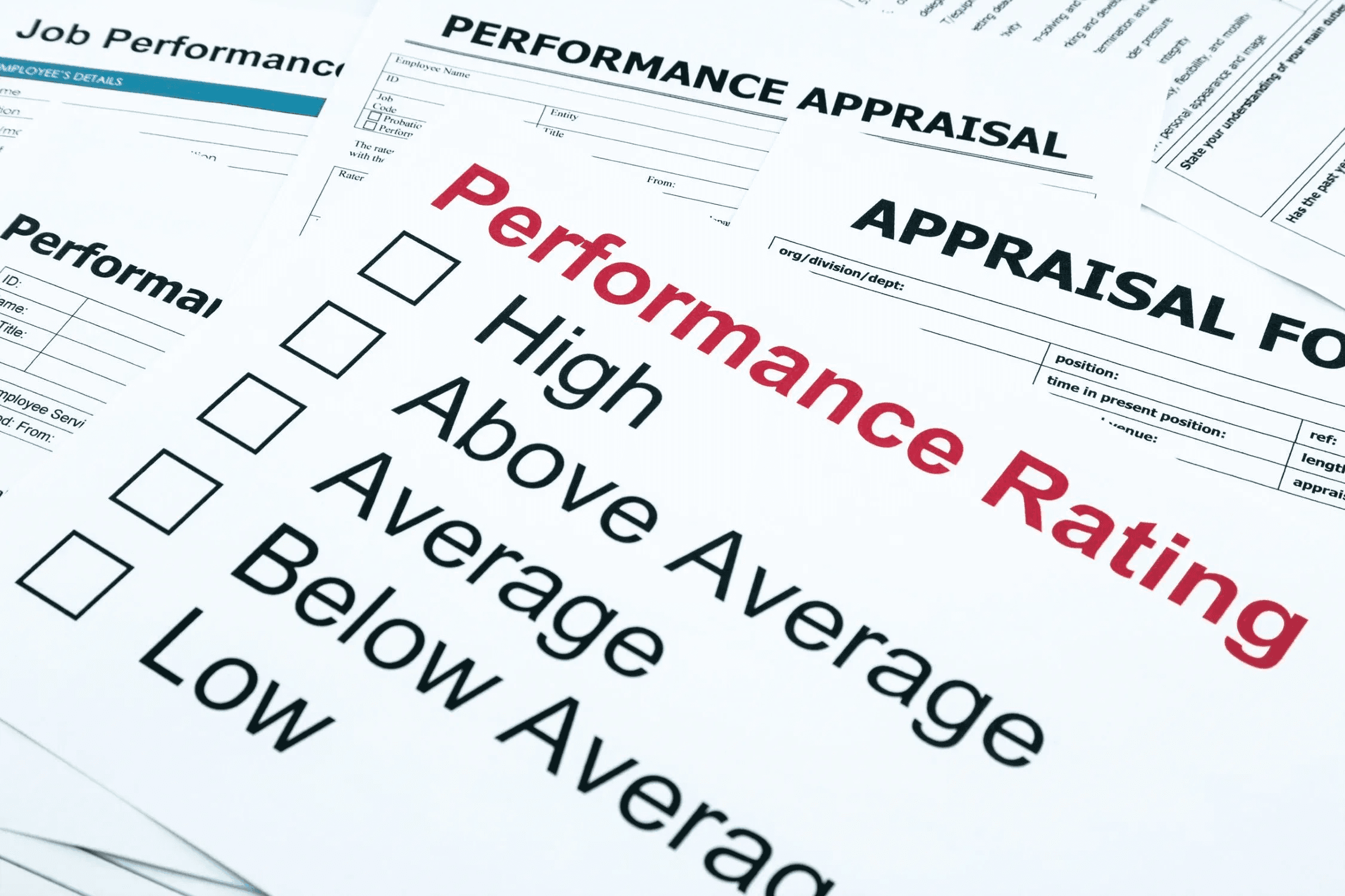
Performance review data does not grow in a straight line. It accumulates in bursts, across managers, departments, and review cycles, each person building their own informal system for sorting what they collect. The result is not one organized dataset. It is dozens of slightly different ones, all claiming to measure the same thing.
The failure point is usually taxonomy drift. When two managers independently decide how to label the same employee behavior, they rarely land on the same term. One calls it "initiative." Another files it under "self-direction." A third logs it as a goal achievement. None of them is wrong. But when HR tries to pull consistent performance classification data across teams, those small labeling differences become a structural problem. Appraisal scoring, rating scale alignment, and performance band assignments all depend on consistent input categories. Without them, comparison becomes guesswork.
The Cost of Fractured Frameworks
Most teams handle this by building shared templates at the start of each review cycle. That approach feels organized because it is familiar. But as team sizes grow and review volumes expand, those templates get modified locally, new categories get added mid-cycle, and the original structure quietly fractures. According to a Deloitte study, organizations that lack standardized performance evaluation frameworks spend up to 30% more time on administrative review tasks per cycle. That is not time spent evaluating people. That is time spent repeatedly rebuilding the same sorting logic because the system was never designed to scale.
Standardizing Data With Spreadsheet AI
The same issue surfaces in employee feedback classification and competency assessment workflows. When performance data categorization depends entirely on human judgment applied on a case-by-case basis, the process becomes manager-dependent rather than system-dependent. Teams using tools like Numerous's spreadsheet AI tool find a practical alternative: instead of rebuilding classification logic every cycle, they apply a consistent AI-powered categorization prompt directly inside their existing spreadsheet, across every row of appraisal data at once.
No API setup.
No switching platforms.
The spreadsheet stays the familiar canvas, but the grunt work of sorting open-ended review text into structured performance categories gets handled in bulk, with the same logic applied every time.
The Downstream Impact on Data Integrity
The hidden expansion effect is real, and it compounds quietly. A single misclassified competency rating feels trivial. But when that same inconsistency repeats across 40 employee records and is carried into:
Compensation benchmarking
Promotion eligibility reviews
Workforce planning reports
The downstream cost multiplies quickly. Appraisal data integrity is not just an organizational preference. It is the foundation on which every subsequent HR decision rests. When the foundation is inconsistent, every decision built on top of it carries that same instability forward.
Systemic Friction vs. Human Error
What most people miss is that this is not a people problem. Managers are not careless. They are overloaded, context-switching between evaluation forms, productivity metrics, development plan tracking, and report preparation inside a single review window. The workflow itself creates the inconsistency because it asks humans to perform repetitive classification tasks at volume without a repeatable structure underneath them. Fixing that requires changing the system, not retraining the people. And the cost of that broken system extends beyond what most organizations expect.
Related Reading
Spreadsheet Data Organization Best Practices
The Hidden Cost of Poor Appraisal Data Organization
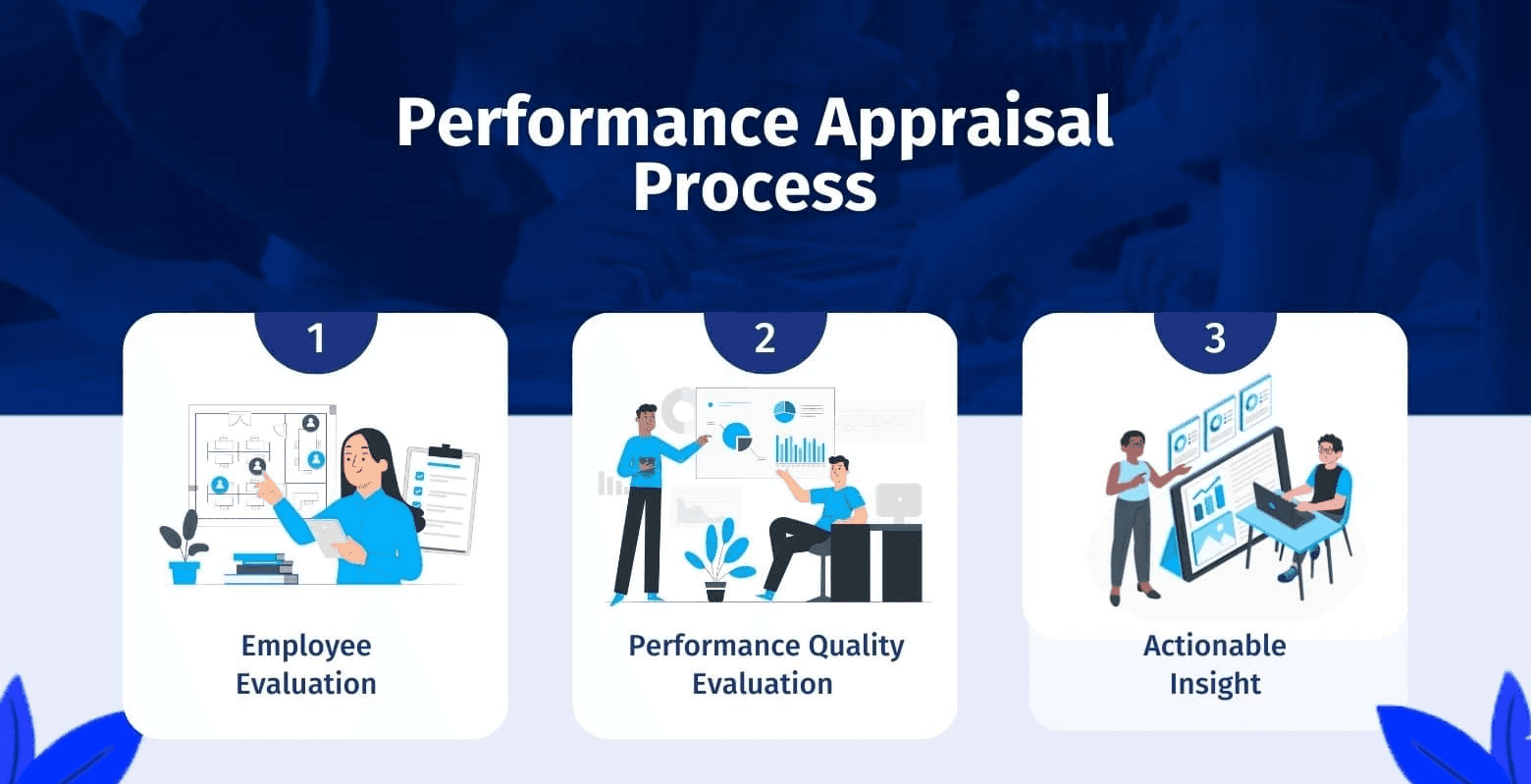
Broken systems always cost more than they appear to. We already know that inconsistent taxonomy and misaligned rating scales inflate administrative time per review cycle. But the financial damage goes beyond preparation overhead, and most organizations never trace it back to its source.
According to IBM Think Insights, poor data quality costs organizations an average of $12.9 million per year. That number sounds abstract until you map it against a performance review cycle in which managers rebuild feedback summaries from scratch every quarter, re-sort employee records that were never structured to begin with, and make promotion decisions based on performance data they cannot fully trust. The cost is not one large failure. It is hundreds of small inefficiencies compounding silently across every appraisal cycle.
Where the Real Friction Hides
The failure point is usually invisible during any single review. One manager reorganizes feedback notes, renames a competency category to match their mental model, and moves on. Multiply that across 12 managers, 3 departments, and 4 review cycles per year, and the organization has effectively built a different performance classification system for every team. Appraisal scoring becomes incomparable across units. Talent benchmarking breaks down. Development tracking loses continuity between cycles because the input categories keep shifting underneath it.
Automating the Data Preparation Layer
Most teams handle this by adding more review time. They schedule longer calibration sessions, assign HR coordinators to manually normalize data before leadership reviews it, and treat the inconsistency as a people problem to manage rather than a structural problem to fix. That approach feels responsible, but it quietly transfers the cost from the system onto the people inside it.
Data workers spend up to 50% of their time finding, cleaning, and preparing data rather than analyzing it, which means the professionals best positioned to draw insight from performance data are spending half their capacity just making it usable.
Teams find that applying AI categorization directly inside the spreadsheet environment they already use, through tools like a spreadsheet AI tool, removes that preparation layer entirely, letting managers classify open-ended appraisal text at scale without rebuilding the same structure every cycle.
What Disorganized Appraisal Data Actually Prevents
The downstream cost is not slower reviews. It is weaker performance decisions. When employee feedback classification is inconsistent, high-performer identification becomes subjective rather than systematic.
Promotion readiness assessments rely on incomplete competency tracking.
Development program assignments are made from memory rather than structured performance band data.
Organizations end up investing in talent development without a reliable map of where the gaps actually are, which means resources flow toward the loudest advocates rather than the clearest needs.
Data Built for Decisions vs. Documentation
Structured appraisal data systems do not just save time during review preparation. They make every subsequent performance decision more defensible, more consistent, and more connected to actual employee behavior over time. The gap between organizations that manage this well and those that do is not a matter of talent or effort. It is whether the underlying data infrastructure was built to support decisions or just to document them. But here is what most organizations never stop to ask: if the categories themselves are the problem, what should they actually look like?
Related Reading
7 Appraisal Data Categories for Better Reviews in 30 Minutes

Organizing appraisal data into the right categories before evaluation begins is what separates a 30-minute review from a three-hour one. The structure you build upstream determines how fast and how fairly every manager can move downstream. Categories are not administrative housekeeping. They are the actual mechanism for better decisions.
The failure point is usually not missing data. Most organizations already have enough information to run a strong performance review. What they lack is a logical structure that makes that information readable at a glance, comparable across employees, and defensible when challenged. Scattered notes, inconsistent labels, and untagged feedback all contain real signal. They just cannot be used efficiently without a framework to hold them.
1. Performance Metrics
When you separate output data from behavioral data before the review begins, evaluation becomes a process of reading rather than reconstructing.
Performance metrics
Including sales targets achieved
Customer satisfaction scores
Quality measures
Project completion rates
Give managers a concrete starting point grounded in observable results. Without this category, reviewers spend the first portion of every evaluation just trying to locate what the employee actually produced.
The difference between reviewing categorized performance data and reviewing raw notes is the difference between reading a report and writing one from memory. One takes minutes. The other takes the entire afternoon and still carries more errors.
2. Goal Achievement
Records of goal progress work differently from performance metrics.
Where metrics capture output, goal achievement captures alignment.
Whether an employee met their quarterly objectives, hit individual KPIs, or delivered on project milestones tells you something performance scores alone cannot: whether effort was directed at the right priorities.
When this category is missing, managers conflate productivity with purpose, and the two are not the same.
3. Skills Development
Training completions, certifications earned, workshops attended, and mentorship participation belong in their own category because they answer a different question.
Performance metrics tell you what happened.
Skills development tells you what is being built.
Reviewers who cannot quickly access development records end up evaluating employees only on current output, which systematically undervalues people who are growing toward higher-level contributions.
Structuring Open-Ended Development Notes
Most teams track development through a mix of HR system notes, managers' memory, and the occasional email thread. As headcounts grow and review cycles compress, that approach produces inconsistent records and incomplete conversations. Numerous teams can apply AI-powered categorization directly inside Google Sheets or Excel, sorting open-ended development notes into structured categories at scale without requiring any technical setup. The result is cleaner records before the review even starts.
Productivity Measures
The critical difference between productivity measures and performance metrics is granularity. Performance metrics capture outcomes. Productivity measures capture pace and volume:
Tasks completed per sprint
Response times
Work volume across a quarter
Utilization rates
Both matter, but they answer different questions. Keeping them separate prevents reviewers from averaging them into a single vague impression that serves no one.
Behavioral Competencies
Numbers alone do not produce a complete performance picture. Communication patterns, teamwork, adaptability, and problem-solving behaviors provide the context that explains why outcomes occurred as they did. A categorized behavioral competency section gives reviewers a structured place to record and compare conduct across employees without defaulting to gut feel or informal reputation.
According to JBI Evidence Synthesis, many systematic reviews across research domains are methodologically flawed or uninformative because the underlying data lacks structure before analysis begins. The same principle applies directly to performance appraisals: when behavioral data is unstructured, the evaluation process inherits that disorder.
Feedback and Recognition
Peer feedback
Customer recognition
Manager observations
Belong in a dedicated category because they capture what metrics cannot: the quality of an employee's relationships and contributions that do not show up in output data. When recognition records are scattered across emails and Slack threads, they rarely surface during reviews. Structured feedback categories make strengths visible by default rather than by memory.
Growth Opportunities
The final category shifts the review from backward-looking to forward-facing.
Skill gaps
Coaching opportunities
Career development plans
Training recommendations
Without a dedicated place for this information, reviews end at evaluation rather than extending into development. That is a missed opportunity every single time, because the most actionable part of any appraisal is what happens next.
Why the Sequence Matters as Much as the Categories
The seven categories above do not just organize data. They create a sequence.
Performance metrics and goal achievement anchor the factual record.
Skills development and productivity measures add depth and context.
Behavioral competencies and feedback round out the human picture.
Growth opportunities close the loop by pointing forward.
When these categories are applied consistently before evaluation begins, the review itself becomes a structured conversation rather than an improvised one.
Inverting the Evaluation Workflow
The old workflow looks like this: collect everything, search for what matters, manually organize it, then evaluate. That process puts the hardest cognitive work right before the most important decision.
The new workflow inverts it: categorize first, then review, then evaluate, then develop. The evaluation does not get easier because managers work harder. It gets easier because the structure does the heavy lifting before they arrive.
What Consistent Categorization Produces Over Time
After two or three review cycles with consistent appraisal data categories, something shifts in how organizations can use their own records. Patterns become visible.
Which employees consistently exceed behavioral competency expectations while underperforming on metrics?
Which teams show strong goal achievement but weak skills development investment?
These questions become answerable, not because more data was collected, but because existing data was organized in a way that allows comparison across time and across people.
Turning Classification Into Compounding Advantage
Better performance visibility is not a technology problem. It is a classification problem. The organizations that solve it build a compounding advantage:
Each review cycle produces cleaner data.
This makes the next cycle faster.
This frees managers to spend more time on the conversations that actually develop people rather than the paperwork that surrounds them.
And once you see how much faster a structured review actually runs, you start wondering why the process ever took as long as it did.
The 30-Minute Workflow to Organize Appraisal Data Faster

Separation is the whole game. When you stop mixing data collection with evaluation and stop rebuilding category structures from scratch each cycle, the time savings are not marginal. They compound. The 30-minute workflow below works because it treats each phase as distinct, and that distinction is what enables speed.
Minute 0–5: Define the Review Objective First
Before you open a single appraisal record, decide what this review is actually for.
A promotion decision needs different data emphasis than a development conversation.
A compensation discussion pulls different evidence than a goal alignment check.
Getting clear on the objective in the first five minutes prevents you from processing information that was never relevant to begin with. The failure point is usually skipping this step because it feels like overhead. It is not. Unclear review objectives create processing loops where managers revisit the same records multiple times, each time looking for something slightly different. Five minutes of upfront clarity eliminates that entirely.
Minutes 5–10: Gather and Standardize Before You Evaluate
Collect employee feedback
Performance metrics
Goal progress
Development activity records
Before you touch any evaluation framework. The sequence matters. Standardizing information formats before categorization means you won't have to reorganize mid-process, where most of the wasted time hides. Most teams handle this by pulling records as they evaluate, jumping between data sources and assessment judgments simultaneously. The hidden cost is that context-switching between collection and evaluation slows both tasks. Clean data before evaluation is not just a nice-to-have; it is the mechanical reason the 30-minute workflow holds together.
Native Spreadsheet AI Integration
Numerous addresses exactly this friction point. Instead of toggling between HR systems and review documents, teams can use the =AI function directly in Google Sheets or Excel to standardize open-ended feedback, flag inconsistent entries, and prepare employee records for categorization at scale, without API keys or technical configuration. The spreadsheet becomes the workspace where raw appraisal data becomes review-ready data, in the same environment the team already uses every day.
Minutes 10–15: Build the Category Structure Once
Now create the organizational skeleton:
Performance Metrics
Goal Achievement
Skills Development
Productivity Measures
Behavioral Competencies
Feedback and Recognition
Growth Opportunities
These categories are not arbitrary. They map to the decisions the review is meant to support, and they become the reusable framework for every future cycle. The critical difference between teams that speed up over time and teams that stay slow is whether they save this structure. Building it once and reusing it is what creates compounding efficiency. Rebuilding it from scratch each cycle recreates the problem you are trying to solve.
Minutes 15–20: Assign Information to Categories
This is the phase where raw employee information becomes structured, review-ready data. Assign feedback, performance records, goal updates, development activities, and recognition records to the appropriate categories. The work here is classification, not judgment.
According to Anchor Group's workflow optimization research, workflow automation can reduce manual data entry errors by up to 90%. That number reflects what happens when classification follows a defined structure rather than relying on manual sorting decisions made under time pressure. Structured categorization is not just faster; it is more accurate.
Minutes 20–25: Review Exceptions, Not Everything
The discipline here is restraint. Do not re-read every record. Review only what does not fit:
Missing information
Duplicate entries
Uncategorized feedback
Inconsistent formatting
Everything else is already where it belongs. When managers review every record at this stage, they are recreating the manual workflow they were trying to eliminate. The category structure you built in minutes 10 through 15 already did the sorting. Trusting it is part of the process.
Minutes 25–30: Build the Reusable Review System
Use the final five minutes to produce employee review summaries, performance reports, and evaluation templates, then save the entire structure. The appraisal categories, review framework, and workflow should be preserved so the next cycle starts at minute ten, not minute zero.
The goal is not one fast review. It is a review system that gets faster each time it runs. Businesses automating workflows save an average of 3.5 hours per employee per week. For HR teams running quarterly appraisal cycles across dozens of employees, that accumulation is not a small efficiency gain; it is the difference between a process that scales and one that breaks.
The Before and After Is Not About Speed
Before this workflow, the pattern looked like this: repeatedly searching through feedback, rebuilding category structures from memory, reorganizing employee records mid-evaluation, and arriving at review conversations with incomplete data. After, the pattern is a structured category set, pre-organized records, and review summaries that are ready before the conversation starts.
The time reduction does not come from moving faster through the same steps. It comes from eliminating the steps that were never necessary in the first place. Organizing appraisal data before evaluation begins is what compresses the timeline, not effort or urgency. And once you have a system that runs in 30 minutes, the next question is not how to make it faster. It is how to make it work even better at scale.
Prepare Better Performance Reviews Faster With Numerous
The workflow is already built. The categories are defined, the records are structured, and the review summaries are ready before the conversation starts. What remains is ensuring the system runs the same way next quarter and the quarter after that, without rebuilding it from scratch each time.
Teams that use Numerous as their spreadsheet AI tool no longer treat appraisal data categorization as a recurring project. They treat it as a standing process. Feedback classification, competency sorting, and performance record organization occur within the same spreadsheet environment they already use, powered by AI that runs at scale without additional setup or complexity. The workflow repeats because the structure holds.