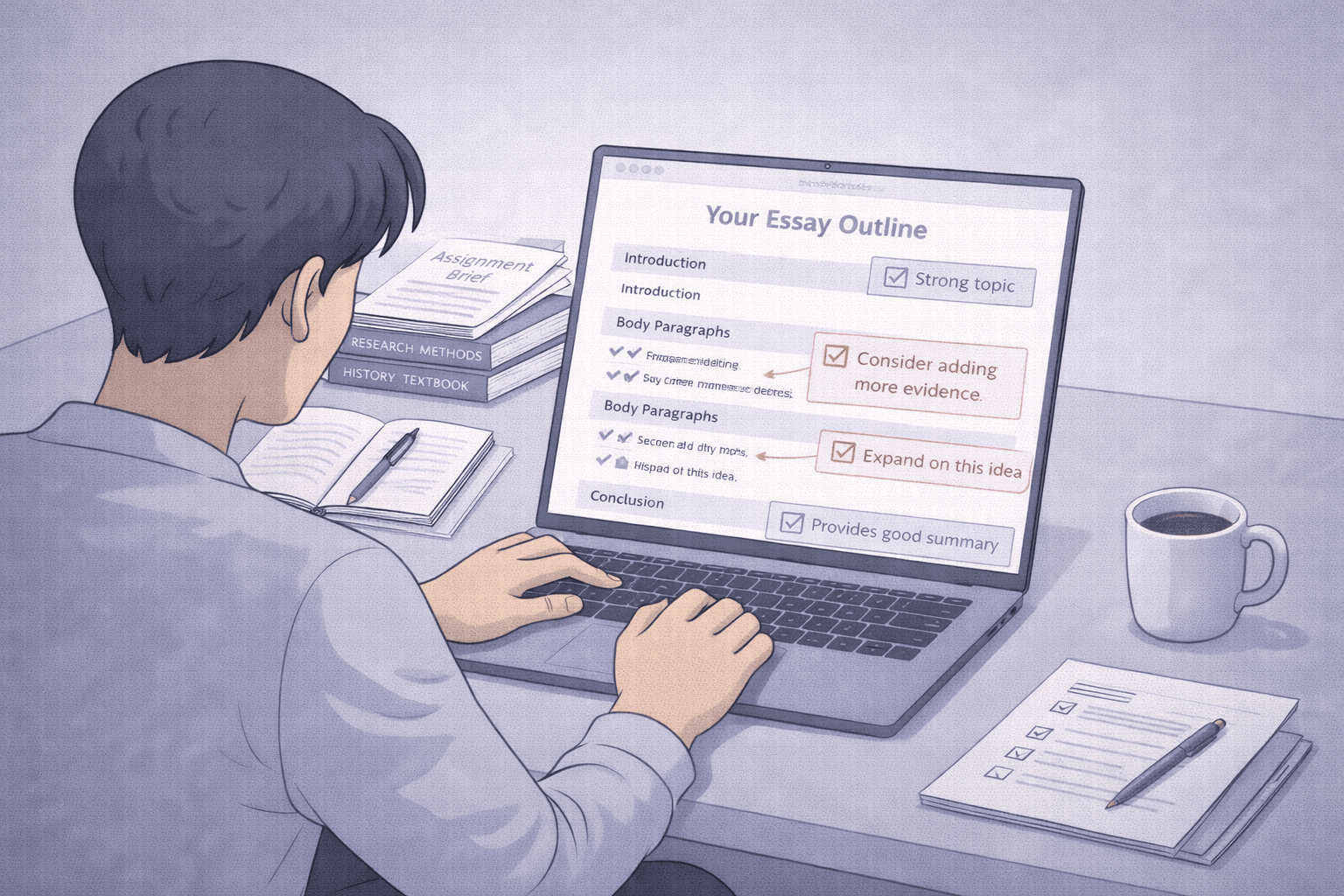
Struggling with essay assignments that seem to pile up faster than you can complete them? You're not alone. Students everywhere search for the best AI alternatives to ChatGPT, hoping to find homework apps that actually deliver results without the guesswork. This article reveals seven essay writing apps designed to boost your scores within 30 days, offering practical tools for research, drafting, editing, and citation management that transform how you approach academic writing.
While many homework helpers focus on simple question answering, Numerous's spreadsheet AI tool takes a different approach by organizing your essay research and planning in one intelligent workspace. Instead of juggling multiple platforms for note-taking, outlining, and data analysis, this tool streamlines your writing process by letting you build structured frameworks for arguments, track sources automatically, and generate insights from your research materials.
Summary
Only 27% of eighth-graders score at or above proficient in writing, according to the National Assessment of Educational Progress. The gap doesn't close by producing more drafts. It closes when students shift from completion mode to correction mode, addressing structural, analytical, and revision gaps that actually determine marks rather than simply increasing output volume.
Educators report that 72% of students lack the critical thinking skills needed for strong essays, revealing a pattern recognition gap rather than a knowledge gap. When feedback stays attached to one essay rather than shaping the next three, students repeat the same mistakes across different topics.
Most energy goes into the first draft, while revision gets treated as optional cleanup rather than essential construction. Essay scores are shaped as much by what happens after the draft as during it. Clarity improves in revision, arguments tighten in revision, and evidence gets positioned properly in revision, but students who rush or skip this phase submit readable essays that aren't strong enough to score higher.
Students write essays one by one without connecting them, making each assignment feel like starting over. Without a repeatable system, previous comments don't carry over, grammar issues recur, and structural problems resurface. Practice without a feedback loop becomes repetitive instead of corrective, turning effort into wasted motion rather than compounding improvement.
The hidden cost isn't the hours spent writing but the repeated effort that never compounds. Students can write 10 essays with the same weak thesis structure and never realize it's the bottleneck because the manual work happens too close to the answer.
Spreadsheet AI tool addresses this by organizing essay feedback into categories, tracking which errors recur across assignments, and transforming scattered teacher comments into a reusable system that builds capability into each essay rather than just checking a completion box.
Table of Contents
Why Students Struggle to Improve Essay Scores With Writing Alone

Writing more essays doesn't automatically improve scores because volume doesn't fix the underlying problems. The real issue isn't effort or output. It's whether students are addressing the structural, analytical, and revision gaps that actually determine their marks. According to the National Assessment of Educational Progress, only 27% of eighth graders scored at or above proficient in writing. That gap doesn't close by producing more drafts. It closes when students shift from completion mode to correction mode.
Completion Gets Confused With Progress
Students believe finishing an essay means they've improved. They meet the word count, submit before the deadline, and move to the next assignment. That checks the box. But checking boxes isn't the same as building capability. A student can write five essays and still lose marks for weak thesis statements, vague analysis, and poor paragraph flow if nothing in the process changes between draft one and draft five. The problem isn't laziness. It's that completion feels like achievement, so students stop before the real work begins. They treat the submitted essay as the endpoint when it should be a checkpoint.
Feedback Becomes Noise Instead of a Signal
Most students get comments on their work. But those comments rarely become a system. They read "unclear argument" or "needs stronger evidence" and try harder next time without understanding what stronger actually looks like. LaGrange Daily News reports that 72% of educators say students lack the critical thinking skills needed for strong essays. That's not a knowledge gap. It's a pattern recognition gap. When feedback stays attached to one essay rather than shaping the next three, students repeat the same mistakes across different topics. The effort stays high. The scores stay flat.
Revision Gets Rushed or Skipped Entirely
Most energy goes into the first draft. Students push to finish the introduction, fill body paragraphs, and reach the required length. Then, revision becomes a quick grammar check before submission. That's backwards. Essay scores are shaped as much by what happens after the draft as during it. Clarity improves in revision. Arguments tighten in revision. Evidence gets positioned properly in revision. When students treat revision as optional cleanup rather than essential construction, they submit readable essays that aren't strong enough to score higher. The draft got done. The essay never got better.
The Real Problem Lies in the Process
Students write essays one by one without connecting them. Each assignment feels like starting over. Previous comments don't carry forward. Grammar issues repeat. Structure problems resurface. Without a repeatable system, one essay doesn't build momentum into the next. Practice without a feedback loop becomes repetitive instead of corrective. For students managing research across multiple sources and tracking patterns in their writing, tools like Numerous AI offer a structured approach. By organizing feedback, categorizing recurring errors, and summarizing research materials in spreadsheet format, students can transform scattered comments into actionable systems without needing technical setup. That turns writing practice into measurable improvement. But here's what most students miss: the highest cost isn't the time spent writing, it's the opportunity lost while writing the wrong way.
Related Reading
The Hidden Cost of Writing Essays the Manual Way

The real cost isn't the hours spent writing. It's the repeated effort that never compounds. Students finish an essay, submit it, and move on without capturing what went wrong or what patterns keep surfacing. Three weeks later, they're making the same structural mistakes on a different topic, spending another five hours fixing problems they already encountered. That's not practice. That's repetition without retention.
Effort Doesn't Equal Improvement
Manual essay writing feels productive because it demands time and concentration. Students research for hours, draft multiple paragraphs, and revise sentences until they sound better. The effort is real. But effort alone doesn't create progress when the process stays the same. A student can write 10 essays with the same weak thesis structure and never realize it's the bottleneck. They're working hard on the wrong layer of the problem. The issue isn't laziness or lack of care. It's that manual work often happens too close to the answer. Students keep notes open, reference examples while drafting, and check their outline between paragraphs. That helps them finish the essay. But it doesn't force them to internalize what strong analysis actually looks like when the supports are removed. Exams don't ask if you can write with your notes visible. They ask if you can produce coherent arguments without them.
Completion Creates False Confidence
Students submit an essay and feel done. The assignment is complete. The word count is met. The deadline is behind them. That sense of completion feels like achievement, so they assume the skills have been transferred. But three days later, if asked to explain their thesis without the document open, many struggle to articulate it clearly. The essay got written, but the thinking behind it never became automatic. This happens because students often draft while their research and examples are still fresh and accessible. They're not retrieving knowledge. They're translating it from one format to another. That's a useful skill, but it's not the same as being able to construct an argument from memory. When the next essay arrives, they start from scratch again instead of building on what the previous assignment should have taught them.
The Hidden Cost Compounds Over Time
A biology student writes a research essay on cellular respiration. She spends six hours researching, drafting, and editing. Submits it. Gets feedback about weak evidence integration. Two weeks later, she writes another essay on genetic mutation and makes the same evidence mistakes. Spends another hour fixing what could have been avoided. A month later, during exam prep, she realizes she still can't structure evidence properly under time pressure. That's three separate efforts addressing the same gap because the first essay never became a system for improvement.
Feedback Synthesis and Systematic Revision
For students managing feedback across multiple assignments and identifying recurring issues, structured approaches make a difference. Tools like Numerous help students organize comments by category, track which errors recur across essays, and summarize revision patterns in spreadsheet format, without requiring technical setup. That transforms scattered feedback into a reusable system, so each essay builds capability instead of just checking a box. But most students never ask the question that changes everything: what if the problem isn't the writing itself, but what happens after the essay is done?
7 Essay Writing Apps to Improve Essay Scores in 30 Days
1. Numerous AI

Numerous AI tools work within spreadsheets, helping users generate, summarize, classify, and organize information using AI formulas. It positions itself as useful for students and researchers who need to clean, summarize, and categorize information inside Google Sheets and Excel. Students write essays, get feedback, and then lose the learning inside random files, notebooks, and screenshots. Numerous help fix that. You can use it to build a writing improvement sheet with columns like essay title, score, teacher comment, repeated mistake, weak paragraph type, grammar issue, and revision target for the next essay. That matters because essay scores usually improve when students track patterns rather than treating each essay as a separate task. Over 30 days, Numerous is strong for turning essay feedback into a repeatable system. It helps students organize comments, spot repeated weaknesses, generate revision checklists, and turn old essays into something useful for the next one.
2. Grammarly

Grammarly offers real-time writing feedback for students and provides essay checking support for grammar mistakes, unclear sentences, and misused words. Its student tools are designed to help improve writing and grades over time. Many students lose marks for issues that can be fixed before submission:
Grammar
Sentence clarity
Awkward phrasing
Weak delivery
Avoidable writing errors
That matters because essay scores are not only about ideas. They are also about how clearly those ideas are expressed. In a 30-day period, Grammarly helps students improve more quickly because it creates faster feedback loops. Instead of waiting until a graded essay comes back, students can catch common errors before submission and start noticing which writing problems keep repeating.
3. QuillBot
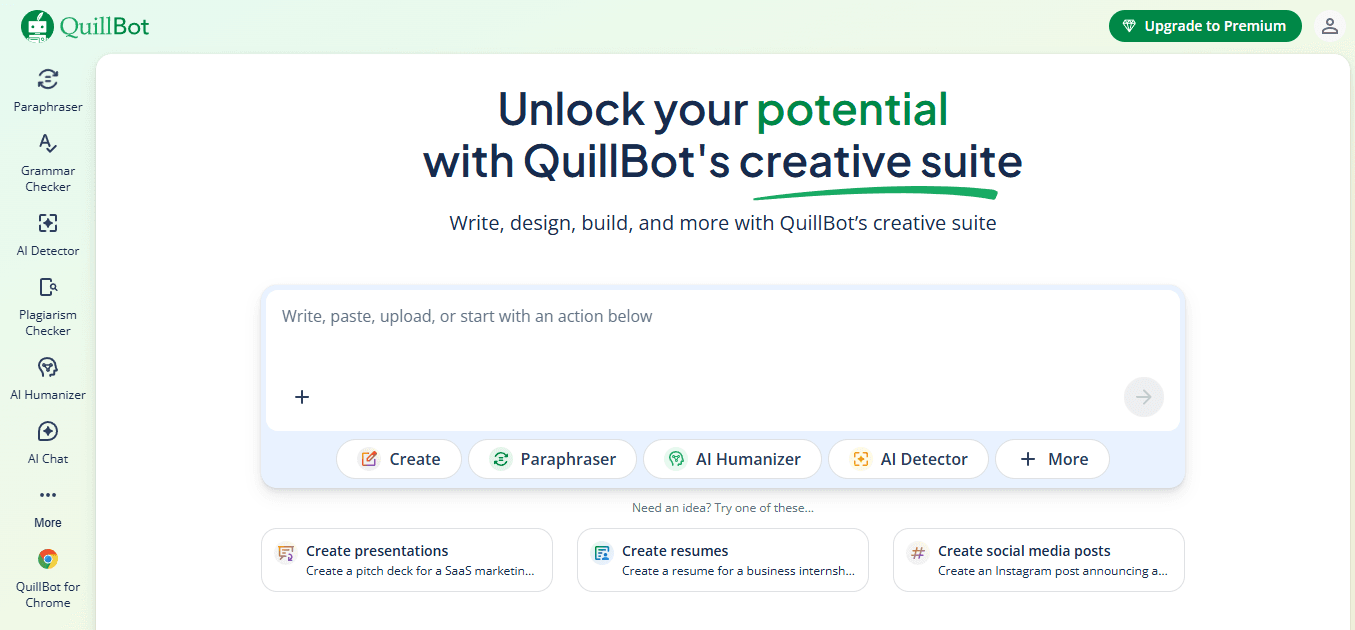
QuillBot offers a paraphraser, grammar checker, summarizer, and other writing tools designed to help users rewrite for clarity, improve fluency, and refine tone and wording. QuillBot is useful when a student already has the idea but the writing still feels weak or unclear. It can help students improve sentence flow, wording, clarity, repetition, and rough explanations. That is important because many essays lose marks when the student has no point. They lose marks because the point is expressed poorly. Over 30 days, QuillBot helps students revise more quickly and deliberately. It is especially useful for rewriting weak sentences, tightening paragraphs, and comparing better ways to express the same idea without starting the draft from zero each time.
4. Notion AI

Notion AI can summarize notes, extract key points, rewrite sections, suggest wording changes, and help organize content inside the same workspace where the student is already drafting and storing notes. Essay quality often drops before the first sentence is even written. Students may have scattered research, weak outlines, messy notes, and no clear paragraph plan. Notion AI helps bring that information together into a cleaner system, making drafting more intentional. In a 30-day cycle, Notion AI helps students improve essay scores by making planning and revision more structured. Instead of writing from scattered notes every time, students can build cleaner outlines, stronger summaries, and more organized revision pages, making each new essay easier to improve.
5. Quizlet

Quizlet offers AI study tools, flashcards, practice tests, and study guides designed to help learners review material actively instead of passively. Essay writing is not only a writing problem. Sometimes it is a knowledge problem. Students may struggle because they cannot clearly remember quotes, definitions, examples, concepts, and supporting evidence. Quizlet helps students turn essay material into active review so they can recall stronger content when writing. Over 30 days, Quizlet helps students improve scores by making it easier to remember the information that supports stronger essays. Better recall often leads to stronger argument development, better use of evidence, and less time staring at a blank page.
6. Google Docs
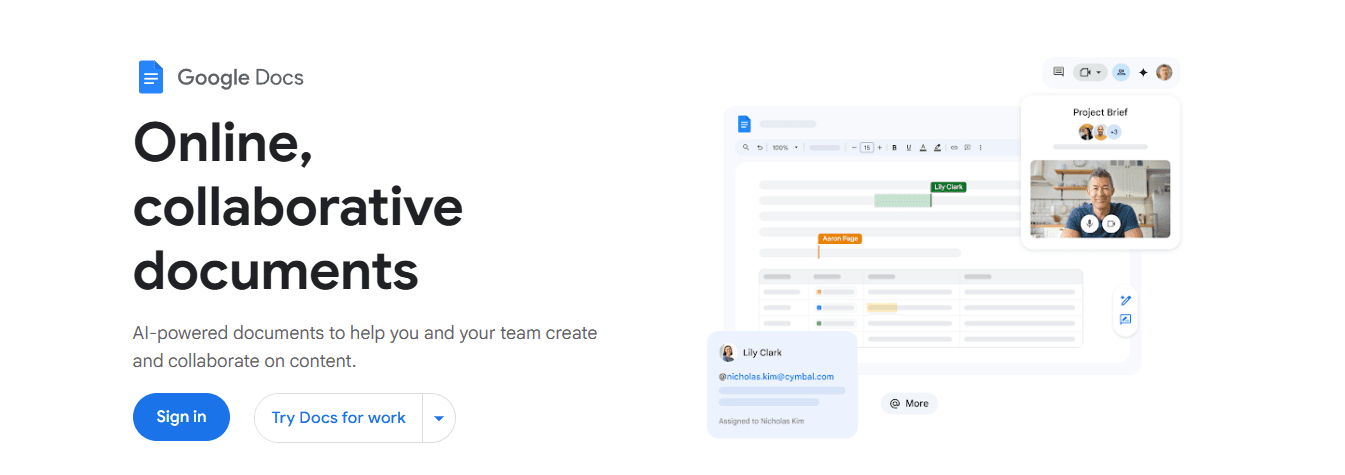
Google Docs remains one of the most practical writing apps for drafting, commenting, revision history, and collaborative feedback. While it is not an AI-first app on its own, it serves well as the core drafting space students return to while using AI tools around it. Essay improvement often depends on the visibility of revisions. Google Docs helps students draft in one place, leave comments on weak sections, compare versions, revise line by line, and clearly collect teacher or peer feedback. That makes it easier to see how an essay changed and whether the revision actually improved it. Over a 30-day period, Google Docs helps students improve because it serves as the central workspace where drafting, feedback, and revision actually happen. The AI tools can help around it, but Docs is where the score-improving changes get applied.
7. Hemingway Editor
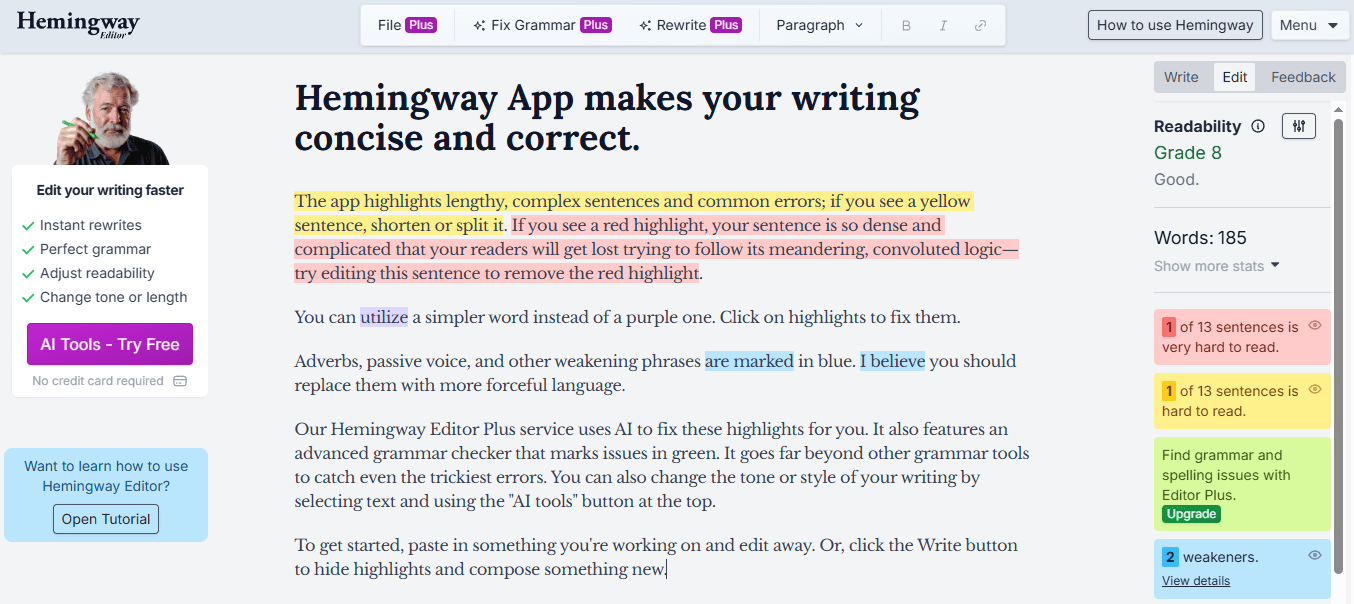
Hemingway Editor is designed to highlight hard-to-read sentences, passive voice, and overly dense writing so users can make their work clearer and more direct. Many students write essays that sound heavier than they need to. That can create problems such as long, confusing sentences, low readability, too much filler, and paragraphs that hide the main point. Hemingway helps students simplify that writing. Over 30 days, Hemingway can help students improve essay scores by training them to write with more clarity and control. That is especially useful for students whose ideas are decent but whose writing style keeps lowering their marks.
Why do These Essay Writing Apps Work Better Than Writing Everything Manually
Each app fixes a different essay problem. Numerous AI helps turn essay feedback into a tracking system. Grammarly helps catch grammar and clarity issues early. QuillBot helps rewrite weak sentences and improve flow. Notion AI helps organize ideas, notes, and outlines. Quizlet helps students remember content for stronger essays. Google Docs helps manage drafting and revision in one place. Hemingway Editor helps simplify dense writing and improve readability. That is the real shift. Students do not improve essay scores just by writing more essays. They improve when essay writing becomes a process of:
Planning
Drafting
Receiving feedback
Revising
Repeating the process.
But knowing which tools exist is only half the answer. The other half is knowing how to use them together in a way that actually changes scores.
Related Reading
The 30-Day Essay Score Improvement Workflow

The workflow breaks into six phases that move from pattern recognition to systematic application. Each phase targets a different part of the essay improvement cycle. Students who follow this sequence stop treating each essay as a new problem and start building the capability that transfers across assignments. Most students know their essay scores are not where they want them. But they do not always know exactly why.
They may have old essay comments
Grades from past assignments
Repeated teacher corrections
Weak introductions
Unclear body paragraphs
Grammar issues across multiple essays
The first step is not writing a new essay. It is identifying the patterns.
Days 1–5: Organize Your Essay Problems and Past Feedback
Start by collecting every piece of feedback you have received.
Pull together graded essays
Teacher comments
Peer review notes
Any corrections you remember making
Create a simple tracking system with columns for:
Essay title
Score
Teacher feedback
Repeated mistakes
Weak areas
Revision goals
Group the problems into categories like structure, clarity, grammar, argument, and evidence use. This matters because you cannot improve essay scores consistently if every essay feels like a separate problem. This stage helps students see what is actually lowering their marks.
Data-Driven Feedback Consolidation
Students managing scattered feedback across multiple assignments often find that spreadsheet-based approaches make pattern recognition faster. Tools like Numerous AI help organize comments by category, track which errors repeat across essays, and summarize revision patterns in an accessible format without requiring technical setup. That transforms scattered feedback into a reusable system, so each essay builds capability instead of just checking a box. When you finish this phase, you should be able to answer: What are the three most common problems in my essays? If you cannot answer that clearly, spend another day organizing feedback until the patterns become obvious.
Days 6–10: Build Stronger Planning and Outlining Habits
A lot of essay problems start before drafting. Students often write with weak plans, messy research, unclear paragraph direction, and no strong outline. That leads to essays that feel rushed, even when the student worked hard on them. Use your organized notes to build a planning template. Include sections for essay prompts, research notes, key arguments, and paragraph plans. Build a simple outline before drafting:
Thesis
Paragraph 1 claim
Paragraph 2 claim
Paragraph 3 claim
Evidence
Conclusion direction
Pre-Draft Logic and Argument Validation
Stronger planning creates stronger first drafts. And stronger first drafts are easier to revise into higher-scoring essays. The goal is not to spend more time planning than writing. The goal is to spend enough time planning that the writing becomes more intentional. Test your outline by asking:
Can I explain my argument in one sentence?
Does each paragraph support that argument?
Do I know what evidence I am using before I start writing?
If the answer is no, the outline needs more work.
Days 11–15: Draft Faster Without Losing Structure
Once the outline is clear, students often get stuck trying to make every sentence perfect too early. That slows them down. And it usually weakens the flow. This stage is about drafting clearly before overediting. Draft inside a single workspace where you can see your outline and notes. Focus first on a clear thesis, logical paragraph flow, relevant evidence, and a complete argument. Do not stop every minute to polish sentences. If a sentence feels awkward, keep moving and fix it later.
Momentum-Driven Drafting and Structural Completion
Students often lose time trying to perfect unfinished writing. This stage helps them get a fully structured draft done first. That makes revision easier later. The draft does not need to sound beautiful yet. It needs to be complete and logically organized. Set a timer for each paragraph. Give yourself 15 minutes to write one paragraph from start to finish without stopping to revise. That forces you to keep momentum rather than get stuck on word choice. You can always improve the wording later.
Days 16–20: Revise for Clarity, Grammar, and Flow
This is where many score gains happen. A student may already have a decent idea, but the essay still loses marks because it sounds unclear, repetitive, or awkward. This phase is where the draft becomes stronger. Use tools that catch grammar mistakes, sentence clarity issues, and weak phrasing. Rewrite awkward sentences, improve flow, and tighten long explanations. Shorten dense writing, reduce hard-to-read sentences, and make the main point easier to follow.
Aural Calibration and Cognitive Flow
Many essays do not lose marks because the idea is bad. They lose marks because the writing is harder to follow than it should be. This phase helps students fix that. The revision should make every sentence easier to understand without losing the argument. Read each paragraph out loud. If you stumble while reading, the sentence is probably too complex. If you lose track of the main point halfway through the paragraph, it needs restructuring. Your ear catches problems your eyes miss.
Days 21–25: Strengthen Your Content and Evidence Recall
Some students struggle with essay scores because they do not have enough usable material in memory. They know the topic loosely. But when it is time to write, they cannot quickly recall examples, quotes, definitions, key concepts, or evidence. That weakens the analysis. Turn weak content areas into active review materials. Create flashcards for quotes, concepts, definitions, and supporting points. Review them daily in short sessions. Better recall gives students more to work with when they write. That leads to stronger analysis and more confident essays.
Evidence Fluency and Retrieval Validation
The goal is not to memorize entire essays. The goal is to make the supporting material automatic so you spend less time searching for evidence and more time explaining it. When you can recall three relevant examples without looking them up, your writing gets faster and sharper. Test yourself without notes. Can you write a full paragraph using only what you remember? If you cannot, you need more review time. If you can, you are ready to apply that recall under exam conditions.
Days 26–30: Apply the Feedback Loop to the Next Essay
The final stage is when students stop treating essay writing as a one-time performance. Now the goal is to carry improvement forward. A lot of students improve one essay, then start badly on the next. This stage prevents that. Compare old essays to recent essays. Track repeated issues and improved areas. Build a personal checklist:
Is the thesis clear?
Does each paragraph support the argument?
Did I explain my evidence?
Are my sentences clear?
Did I fix my usual grammar issues?
Use that checklist before every submission.
Iterative Mastery and Pattern Calibration
Essay scores improve faster when each essay teaches the student how to write the next one better. That is the real value of the 30-day process. The workflow does not end after 30 days. It becomes the system you use for every essay moving forward. Before submitting, run through your checklist twice. First pass catches obvious errors. Second pass catches the patterns you identified in days 1 through 5. If you still see those patterns, the revision is not finished yet.
Before and After
Before this workflow, each essay feels like starting over.
Feedback gets ignored.
Grammar and clarity issues repeat.
Planning is weak.
Scores improve slowly.
Students spend the same amount of time on each essay without seeing different results. After this workflow, feedback is tracked.
Planning gets clearer.
Drafting gets faster.
Revision gets smarter.
Essay scores improve with structure.
Students spend less time fixing the same problems and more time building new skills. The difference is not the amount of effort. The difference is that effort now compounds rather than repeats. Each essay builds on the lessons from the previous one. That is what makes 30 days enough time to see real improvement in scores.
The Core Workflow in One Sentence
If essay writing is not improving your scores, the problem is not only the amount of writing. It is the lack of a system that turns writing into feedback, revision, and repeated improvement. When you track, plan, draft, revise, and apply feedback, you stop writing essays the same way every time. That is what helps improve essay scores in 30 days. The workflow is not complicated. It is deliberate. And deliberate practice is what separates students who write a lot from students who write better each time. But the real shift happens when you stop using these steps as a checklist and start using them as a system that runs automatically every time you write.
Improve Your Essay Scores in 30 Days With Numerous AI
If essay writing is taking hours and your scores are still not improving, the problem is not the essay. It is the process. Instead of writing each essay from scratch, losing teacher feedback after one assignment, repeating the same structure mistakes, forgetting what lowered your last score, and revising without a clear system, you need a way to turn scattered comments into repeatable improvement. Put your essay feedback into Numerous AI. Turn comments into clear revision points. Track repeated mistakes in one sheet. Organize weak areas by structure, clarity, grammar, or argument. Use that sheet to improve the next essay before you submit it. That is it.
Systematic Growth and Compound Improvement
No more scattered feedback. No more repeated writing mistakes. No more starting every essay like it is your first one. In 30 days, you will have clearer revision targets, better essay structure, faster editing, and stronger essay scores. Open Numerous AI, turn your essay feedback into a writing system, and start improving your scores today. Better essays do not come from writing more without direction. They come from using each essay better. Numerous AI gives you that process.
Related Reading
Otter.ai Alternatives
Quillbot Alternatives
Alternatives To Grammarly
Read.ai Vs Otter.ai
Best Apps For Essay Writing
Notion Ai Alternatives