
If you work with spreadsheets daily, you already know that manually processing data takes time you could spend doing something more useful. Connecting Excel to CrewAI lets you automate repetitive workflows, run AI agents directly against your data, and get results faster than doing it by hand. This guide walks you through the full setup in 20 minutes, so you can see exactly how the best AI agents for Excel fit into a real working process without getting lost in documentation.
One tool worth knowing before you start is Numerous, a spreadsheet AI tool that brings AI capabilities directly into your Excel workflow. Instead of switching between apps or writing complex integration code, Numerous lets you run prompts, classify data, and generate outputs right inside your cells, making the whole process of connecting AI agents to your spreadsheet work feel straightforward and practical.
Table of Contents
Why People Struggle to Connect Excel to CrewAI
The Hidden Cost of Assuming Excel Integration Covers Any File
How to Connect Excel to CrewAI in 20 Minutes
The 20-Minute Workflow to Connect CrewAI to Your Excel File
Handle Everyday Excel Tasks Without Any Agent Setup, Using Numerous
Summary
Connecting Excel to CrewAI requires matching your method to your actual file location before touching any configuration. The official CrewAI Excel integration only works with files stored in OneDrive or SharePoint through an active AMP subscription. Local files on a desktop are outside the integration's documented reach, regardless of subscription status.
Building a custom tool with openpyxl or pandas removes the file location constraint completely and takes less time than most people assume. A basic tool that reads a local Excel workbook, extracts a target sheet, and returns structured data can be written in under thirty lines of Python. This is not a workaround, but the architecture CrewAI was designed to support.
Accuracy concerns extend beyond setup and represent a separate, often overlooked cost. According to a LinkedIn post by Memory Nguwi, most calculations are incorrect when top AI models analyze Excel files, a finding confirmed by professionals across industries in the comments. A correctly configured agent pipeline can still return unreliable outputs if the underlying model misreads ranges, formula logic, or structured data inside the workbook.
Authentication is where correctly written integrations most often fail on the first run. For AMP, the OAuth flow and the Enterprise Token are two separate steps, and completing only one leaves the integration half-connected and produces confusing permission errors. For custom tools using openpyxl or pandas, the Python environment must be version 3.9 or higher, since older versions produce dependency conflicts that look like tool errors but are actually version mismatches.
Testing a simple read operation before adding any agent logic is the single step that prevents the most debugging time. Reading one cell or one row and confirming the output eliminates the assumption that the connection works before you've confirmed it. Adding complexity before the base layer is confirmed creates technical debt with extra steps.
Matching solution complexity to actual need prevents unnecessary infrastructure from accumulating in a codebase. For one-time data extraction tasks, converting to CSV and using CrewAI's native FileReadTool is often faster than building a full custom tool that may never be used again. For recurring workflows, a properly scoped custom tool or a purpose-built approach scales better over time.
Numerous spreadsheet AI tools address this by bringing AI capabilities directly into Excel cells through a simple function, removing the need for OAuth configuration, agent orchestration, or file-export steps for teams running everyday data tasks inside their spreadsheets.
Why People Struggle to Connect Excel to CrewAI
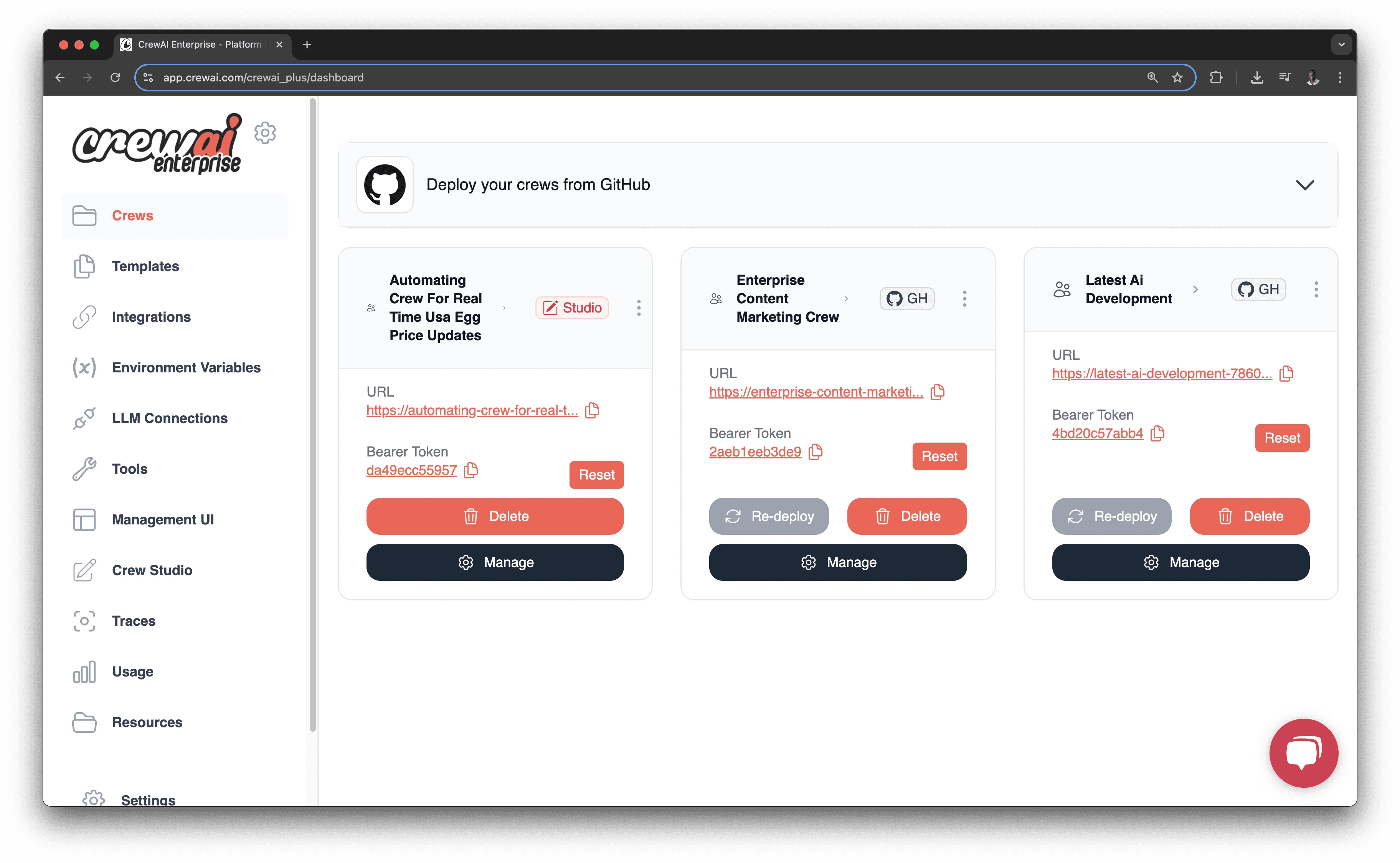
CrewAI's official Microsoft Excel integration is gated behind CrewAI AMP, a paid enterprise platform, and even with that access, it only works with files stored in OneDrive or SharePoint. A local .xlsx file sitting on your desktop is simply outside its reach.
Clarifying Cloud Requirements for Enterprise Excel Integrations
The failure point is usually a mismatch between what "Excel integration" sounds like and what it actually covers. The phrase reads as broad format support, so people reasonably assume it applies to any workbook, anywhere. It doesn't. The documented requirements specify a Microsoft 365 account with OneDrive or SharePoint access, plus an active AMP subscription and OAuth authentication through CrewAI's own platform, none of which exist in the open-source `crewai` package installed via pip. When someone with an AMP subscription tries to point the integration at a locally saved file, the tool has no way to reach it. The scope was never that wide.
Understanding the Limits of Native File-Reading Tools
The same pattern surfaces with CrewAI's generic FileReadTool. It handles text-based formats well:
.txt
.csv
.json
An Excel workbook's native .xlsx format is binary, not plain text, so FileReadTool doesn't parse it directly. Someone who converts their Excel file to CSV first, or builds a custom tool using openpyxl or pandas, gets genuine access to their data. Pointing FileReadTool at a raw .xlsx file produces an unexpected result from a tool never designed for that format.
Building Custom Tools to Handle Complex Spreadsheets
Most teams working around this limitation start by converting files to CSV before passing data to their agents, which works until the spreadsheet has multiple sheets, merged cells, or formatting that carries meaning. At that point, a proper Python library wrapped as a custom CrewAI Tool becomes the real path forward. This approach doesn't require AMP or cloud storage, just a correctly scoped tool that matches the actual file format. The bottleneck was never Excel and CrewAI being incompatible. It was using the wrong tool for the specific situation.
Navigating AI Accuracy Risks in Data Analysis
Accuracy concerns extend beyond setup. According to a LinkedIn post by Memory Nguwi, most calculations are incorrect when top AI models analyze Excel files, a finding professionals across industries confirmed in the comments. This matters because even a correctly configured agent pipeline can return unreliable outputs if the underlying AI model misreads ranges, formula logic, or structured data inside the workbook. Setup is only half the problem.
Simplifying Workflows With Direct Spreadsheet AI Extensions
Teams that want to run AI workflows against spreadsheet data without building custom tool wrappers or managing cloud storage dependencies often find that a purpose-built approach fits better. Numerous, a spreadsheet AI tool, brings AI capabilities directly into Excel cells through a simple function, so the entire workflow stays inside the spreadsheet without agent orchestration, OAuth tokens, or file-location constraints. It's a different model entirely, and for many use cases, a faster one to actually ship. But the real cost is knowing where setup ends and accuracy begins.
Related Reading
Can You Group Sheets In Excel
The Hidden Cost of Assuming Excel Integration Covers Any File

Scope assumptions are expensive, and the cost rarely shows up where you expect it. The official CrewAI Excel integration works exactly as documented, within a specific boundary:
Microsoft 365
OneDrive or SharePoint
OAuth
An active AMP subscription
The hidden cost isn't a broken feature. It's the time spent troubleshooting a setup that was correctly configured but pointed at the wrong file type from the start. The failure point is usually invisible until you're already deep into it. Someone clears the AMP access barrier, assumes the hard part is done, and then spends hours trying to understand why the integration won't reach a workbook sitting on their local drive. The documented scope was never ambiguous. The assumption was. And assumptions about tool scope behave like invisible walls: you don't find them by reading the documentation after the fact; you find them by walking into them.
What Actually Drives the Scope Confusion
The same issue surfaces in software integrations across categories: once the primary access requirement is met, people treat secondary constraints as minor details rather than hard limits. With CrewAI's Excel integration, the primary constraint is AMP access. The secondary constraint, that workbooks must live in OneDrive or SharePoint, carries equal weight in practice. A local file isn't a minor edge case the integration handles differently. It's entirely outside the integration's documented reach, regardless of subscription status.
Bypassing Overhead With In-Spreadsheet AI Functions
Most teams working around this default to CSV conversion or manual data extraction before feeding anything into their agents. That works, but it adds a step that compounds across every workflow that touches Excel. Teams that run regular reporting cycles, content pipelines, or research aggregation in spreadsheets find that the conversion overhead isn't a one-time cost. It accumulates.
Tools like Numerous take a different angle entirely, putting AI directly inside Excel cells through a simple function so the workflow never leaves the spreadsheet or routes through external orchestration. For teams where the spreadsheet is the workspace, not just a data source, that distinction matters more than it might first appear.
When the Custom Tool Path is Actually the Faster One
The truth is that building a custom CrewAI tool with openpyxl or pandas removes the file location constraint completely, and it takes less time than most people assume. A basic tool that reads a local Excel workbook, extracts a target sheet, and returns structured data can be written in under thirty lines of Python. That's not a workaround. It's the architecture CrewAI was designed to support. The real cost isn't the build time. It's the time spent assuming the official integration would handle local files, only to discover it wouldn't.
Preventing Setup Friction by Auditing Integration Scope
Checking the documented scope before choosing an integration path costs almost nothing. Discovering the scope limit after two hours of troubleshooting costs real momentum, and in team environments, it costs credibility too.
The measurable fix is simple:
Confirm file location before committing to an approach.
Treat the AMP integration and the custom tool path as genuinely different tools for genuinely different situations.
Stop treating the paywall as proof that no other path exists.
But knowing which path to take is only half the equation, and the other half is where most people lose the most time.
How to Connect Excel to CrewAI in 20 Minutes

Matching the method to the file location is the diagnostic. Execution is where the clock actually starts. The path forward splits cleanly into two directions, and your first move determines everything: check whether your Excel file lives in OneDrive or SharePoint, or sits on your local drive. That single confirmation, which takes thirty seconds, tells you which of the following steps actually applies to you.
For Cloud-Hosted Files: Use the Native AMP Integration
If your file is already in OneDrive or SharePoint and you have CrewAI AMP access, the setup is straightforward.
Go to the Integrations page inside AMP
Connect your Microsoft account through the OAuth flow
Set your Enterprise Token
According to Composio's Excel MCP Integration with CrewAI, the full connection process breaks down into 4 steps, which means there is no sprawling configuration process here, just a linear sequence with a clear end point.
One thing most people miss at this stage: the OAuth flow and the Enterprise Token are two separate authentication steps, not one. Completing the first without the second leaves the integration half-connected and produces confusing permission errors. Finish both before testing anything.
For Local Files: Build a Custom Tool With Openpyxl or Pandas
Local files require a different approach entirely. Install openpyxl or pandas, write a function that reads and writes your specific file's data, then wrap that function as a CrewAI Tool your agents can call directly. This isn't a workaround; it is the correct architecture for local Excel access, because these libraries handle Excel's binary format at the file-system level. The failure point here is almost always environment setup, not the code itself. Python 3.9 or higher is a prerequisite, and running an older Python version produces dependency conflicts that look like tool errors but are actually version mismatches. Check your Python version before writing a single line of integration code.
Isolating Failures Through Early Sanity Testing
A short test before adding any agent logic saves significant debugging time.
Read one cell or one row from your file
Confirm the output matches what you expect
Only then build the processing logic on top of that confirmed foundation
This isolates file-access problems from application problems, which makes any failure trivially easy to trace.
When CSV Conversion is the Smarter Trade-Off
If the task is genuinely one-off, building a full custom tool is more infrastructure than the situation warrants. Export the Excel file to CSV first, then use CrewAI's native FileReadTool, which handles CSV natively without any additional configuration.
The trade-off is real: you lose live Excel formatting and multi-sheet structure, but for a single data extraction or analysis task, that trade-off is usually worth it. The pattern that surfaces repeatedly across teams attempting this: they build the custom tool for a one-time need, then never use it again, and the maintenance burden sits quietly in the codebase. Match your solution's complexity to how often you need it.
What Authentication Actually Looks Like in Practice
Most teams handle authentication by copying whatever setup they find in a tutorial, even if it doesn't match their chosen method. The familiar approach works until it doesn't, and when it breaks, the error messages rarely tell you which step was wrong.
For AMP, the authentication sequence is OAuth first, then Enterprise Token, and both are required.
For a custom tool using openpyxl or pandas, authentication is simpler: your Python environment needs the library installed and read/write permissions on the file path.
These are genuinely different setups, and mixing up their requirements is the most common reason a correctly written integration fails on the first run.
Democratizing AI Execution With Cell-Based Functions
Teams that run bulk AI workflows across large Excel datasets sometimes find that the per-task setup cost of custom tools adds up faster than expected. That friction is where tools like Numerous offer a different model: AI functions embedded directly in Excel cells, accessible to every team member without API configuration or Python environment management, shifting the capability from a technical specialist's workbench to a shared team resource.
Moving a Local File to OneDrive as a Legitimate Shortcut
If you have AMP access and no specific reason to keep your file local, moving it to OneDrive is often faster than building a custom tool from scratch. This is not a compromise; it is a deliberate architectural choice that trades local file control for officially supported integration features and simpler long-term maintenance.
The constraint worth naming: this only makes sense if your workflow actually permits cloud storage. Regulated data environments, offline-only systems, or strict data residency requirements make this option unavailable. If none of those constraints apply, moving the file takes minutes and removes the need for custom tooling entirely.
Confirming the Connection Actually Works
After setup, test the simplest possible operation before building anything on top of it.
Read one value from a known cell
Check that it returns correctly
Confirm the agent can access it without a permission error
This step takes two minutes and prevents an hour of debugging a complex workflow that fails because you never confirmed the foundation. The same principle applies regardless of method. AMP integration, custom tool, or CSV conversion: verify the read operation first, then build forward. Adding complexity before you confirm the base layer is just technical debt with extra steps.
Related Reading
• Integrate Agent With Google Sheets
• How To Compare Two Excel Sheets Using VLOOKUP
• How To Connect Google Sheets To CrewAI
• How To Connect Excel To LangChain
• How To Combine Multiple Excel Sheets Into One
• Data Visualization With Python In Excel
• How To View Hidden Sheets In Excel
• How To Connect Excel To CrewAI
• How To Delete Multiple Sheets In Excel
• How To Add VBA To Excel
The 20-Minute Workflow to Connect CrewAI to Your Excel File
Matching your method to your actual file location is what separates a working integration from a frustrating afternoon. But knowing which method fits is only useful if you can execute it without losing momentum to setup friction. The workflow below gives you a sequenced path that checks your situation first, then builds forward in the right direction.
Minute 0-5: Confirm File Location and AMP Access
Start by answering two questions before touching any configuration.
Is your Excel file in OneDrive or SharePoint, or sitting on a local drive?
And do you have an active CrewAI AMP subscription?
These two answers together produce four distinct scenarios, and each one points to a different method. Skipping this step is the most common reason people spend an hour configuring an integration that never reaches their actual file.
Minutes 5-15: Set Up Your Matched Method
If your file is cloud-hosted and you have AMP access, complete the OAuth and Enterprise Token setup through the official integration path. If your file is local, build a custom tool using openpyxl or pandas, or convert to CSV if you only need a one-time data pull. The method matters less than the match. A well-executed CSV conversion beats a half-configured OAuth flow every time.
Most teams handle the local file scenario by manually exporting to CSV before each workflow run, which works for occasional use. As data volume grows or the workflow needs to run on a schedule, that manual export becomes a bottleneck that compounds quietly over time. Teams that want to run AI operations directly in their spreadsheets often find that Numerous removes that friction entirely, letting anyone on the team use a simple =AI() function in Excel cells without agent configuration or file export.
Minutes 15-18: Test a Simple Read Operation
No matter which method you set up, test reading a single cell or row before writing any agent logic. According to the CrewAI Blog, the getting started guide is designed to be completed in 4 minutes, which tells you something important: the core setup is not inherently complex. If your read test fails, the problem is almost always either a missing authentication step or a file path error, both of which are fast to fix in isolation and nearly impossible to trace once you have agent logic layered on top. The failure point is usually not the agent itself. It is the assumption that the connection is working before you've confirmed it. One clean read test eliminates that assumption entirely.
Minutes 18-20: Confirm the Result and Document Your Method
When the test read returns the expected data, write down which method you used and why. Include your file location, your AMP access status, and the specific library or integration path you chose. This takes three minutes and saves an hour the next time your setup changes or a teammate needs to replicate the workflow. Documentation here is not bureaucracy. It is the difference between a repeatable process and a one-time fix that nobody can explain six weeks later.
Why the Sequence Matters More Than the Method
The problem was never that Excel-to-CrewAI integration is unreasonably hard. The problem was that most people chose a method before confirming which of the four real scenarios applied to them.
Cloud-hosted with AMP
Cloud-hosted without AMP
Local with AMP
Local without AMP
Each combination has a correct path, and none of them are interchangeable. The 20-minute structure above forces the confirmation step first, so every minute after it is spent building something that will actually work. What you build in those last 15 minutes is only as solid as what you confirmed in the first five.
Handle Everyday Excel Tasks Without Any Agent Setup, Using Numerous
Most tasks that seem to need a CrewAI agent connection really just need AI applied to data you already have open.
Cleaning a column
Summarizing responses
Categorizing entries
None of that requires OAuth setup, an AMP subscription, or a custom Python tool. The complexity of a genuine agent integration is appropriate when the work demands it, and unnecessary when it does not.
Choosing the Right AI Tool for the Job
That distinction is where Numerous earns its place. Instead of building a connection between two systems, you describe what you need in plain language directly inside your spreadsheet, and the AI handles it there. No file migration, no API configuration, no setup that takes longer than the task itself. For teams where not everyone is technical, that accessibility matters as much as the capability. Match the tool to the actual job. Reserve the CrewAI integration for autonomous, multi-step workflows that genuinely require an agent. For everything else, open Numerous and start describing.
Related Reading
• Datasnipper Alternatives
• Best Python Tools For Excel
• How To Use Python In Excel
• Lido Alternatives
• How To Build Agentic Workflows
• Suralink Alternatives
• Trullion Alternatives
• Top Autonomous Agents For Web Research
• Ai Agents For Multi-step Tasks With No Coding