
If you have ever tried to automate tasks in a spreadsheet, you know how quickly things can get complicated. Google Sheets VBA equivalents, like Google Apps Script, let you write macros, run custom functions, and connect your data to outside tools, much like you would with Excel scripts or formulas. This is exactly where things get interesting, especially if you are exploring the best AI agents for Excel and Sheets workflows, and want to know how to connect Google Sheets to LangChain in under 20 minutes.
That connection becomes much simpler with the right tool in your corner. Numerous offers a spreadsheet AI tool that works directly inside your spreadsheet, letting you run AI-powered tasks, pull in data, and automate repetitive work without writing complex code. Instead of spending hours figuring out API calls or script syntax, you can focus on what actually matters: getting your data to do something useful, fast.
Table of Contents
Why People Struggle to Connect Google Sheets to LangChain
The Hidden Cost of Using the Wrong Loader for Google Sheets
How to Connect Google Sheets to LangChain in 20 Minutes
The 20-Minute Workflow to Set Up LangChain and Google Sheets
Handle Everyday Sheet Tasks Without Any Code, Using Numerous
Summary
The most common mistake when connecting Google Sheets to LangChain is choosing the wrong tool. GoogleDriveLoader, despite its name, explicitly supports only Google Docs, not Sheets. This single misunderstanding sends developers down a path of empty results and broken workflows before they write a single meaningful line of code.
Building on unsupported internal methods creates hidden risk that compounds over time. Some developers discover a private method called `_load_sheet_from_id` through forums or GitHub threads and build workflows around it, not realizing that underscore-prefixed methods can change or disappear without warning across versions. According to Composio, developers already spend up to 40% of their time on integration and authentication setup rather than core logic, and building on an undocumented internal method only adds to that cost.
Authentication is one of the most commonly misunderstood parts of this setup. The Google Sheets toolkit in `langchain_google_community` requires its own OAuth2 configuration through a specific `api_resource` parameter tied to a Google Sheets service object, separate from any other Google integration already configured in a project. Most connections quietly break when you assume one Google auth setup covers everything, often hours after the initial configuration appears to succeed.
The correct integration is more compact than most developers expect. Composio documents the Google Sheets and LangChain connection in 4 steps, so the perceived complexity is largely a perception problem rather than a technical one. According to the LangChain-OpenTutorial GitHub Repository, the estimated setup time for LangChain agent workflows with external APIs is 20 minutes, but only when each step is verified before the next one starts.
Testing in sequence, rather than all at once, is what keeps that 20-minute estimate realistic. When you test OAuth2 configuration and the first append operation simultaneously, a failure could point to a credential scope issue, missing API enablement, an incorrect parameter, or a network issue. Isolating each checkpoint means any failure that surfaces afterward belongs to application logic, not the connection itself.
Both Python and TypeScript are fully supported for this integration, and that distinction matters in multi-tool agent architectures where language mismatches create unnecessary friction. Google Sheets has over 3 billion users worldwide according to Google Workspace, which means the ecosystem around Sheets integrations is enormous, and the volume of outdated tutorials and mismatched workarounds grows with it.
Numerous spreadsheet AI tools address this by letting users run AI-powered tasks directly in Google Sheets through a simple function, removing OAuth2 configuration, package selection, and API credential setup from the process.
Why People Struggle to Connect Google Sheets to LangChain
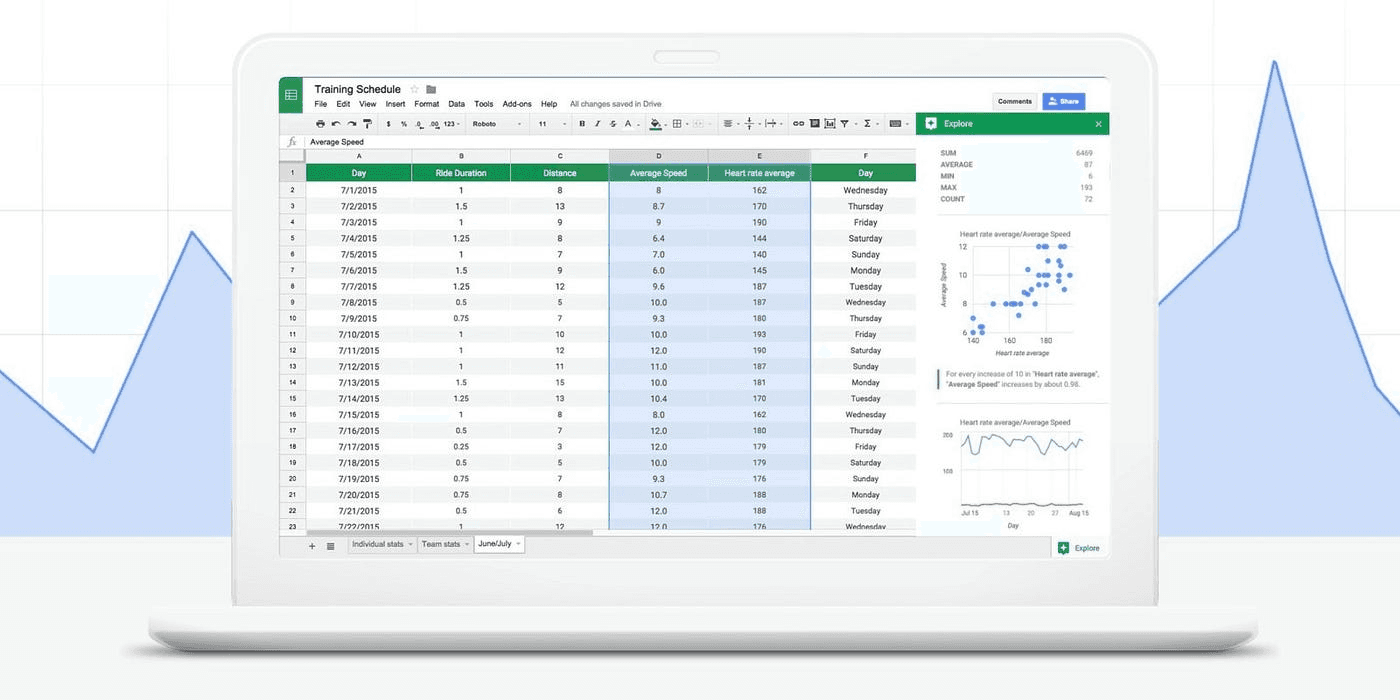
The most common mistake people make when connecting Google Sheets to LangChain isn't a coding error. It's reaching for GoogleDriveLoader first, a tool whose own documentation states plainly that "currently, only Google Docs are supported," making it the wrong starting point for spreadsheet data before a single line of code is written. The confusion is structural, not accidental. Google Drive stores both Docs and Sheets in the same place, so a loader named after Drive feels like it should handle both. That reasonable assumption sends people down a path where results come back empty or broken, with no error message that explains why. The loader isn't failing; it's working exactly as designed. Sheets simply aren't in its scope.
The Hidden Risks of Unsupported Workarounds
What makes this worse is that a workaround exists inside the loader's code. A private method called `_load_sheet_from_id` can pull spreadsheet data, and developers who find it through a forum post or GitHub thread often build workflows around it without realizing the underscore prefix matters. Private methods aren't part of a public interface. They can change, disappear, or behave inconsistently across versions without warning, and any automation script or macro-style workflow built on them carries that risk silently. Developers spend up to 40% of their time on integration and authentication setup rather than core logic, and building on an unsupported internal method only compounds that cost.
Proper Integration with Dedicated Libraries and OAuth2
The solution is a separate package. The `langchain_google_community` library includes a dedicated Google Sheets toolkit with read and write capabilities, built specifically for this use case rather than adapted from something adjacent. It also requires its own OAuth2 setup using an `api_resource` parameter tied to a Google Sheets service, distinct from any authentication already configured for other Google integrations.
Most people miss this because they assume one Google auth setup covers everything, and that assumption quietly breaks the connection before it starts. Most teams handle this by patching what they have rather than stepping back to find the right tool, which is understandable but expensive in debugging time.
Eliminating Friction With Native Spreadsheet A
The numerous spreadsheet AI tools exist precisely for people who want AI working inside their spreadsheet environment without navigating this kind of setup complexity. Instead of configuring OAuth2 flows or hunting for the right community package, users run AI-powered tasks directly in Google Sheets with a simple function, so the spreadsheet stays the workspace and integration friction disappears.
Navigating the Ecosystem at Scale
For context on why the right tool matters at scale: Google Workspace reports that Google Sheets has over 3 billion users worldwide, which means the ecosystem around Sheets integrations is enormous, and the volume of outdated tutorials, mismatched examples, and forum workarounds grows with it. Finding the correct path requires knowing which tool was purpose-built for the job, not just which one appears first in search results.
There's also a newer Model Context Protocol approach emerging in 2026, where a tool router discovers and serves the correct Sheets tools to a LangChain agent dynamically, a genuinely different architecture worth understanding as this space evolves. But knowing which tool to use is only part of the equation. What it actually costs to use the wrong one first is a harder number to reckon with.
Related Reading
How To View Hidden Sheets In Excel
Vba Excel Examples
Python In Google Sheets
Google Sheets VBA
How To Connect Google Sheets To Crewai
How To Connect Google Sheets To Langchain
Can You Group Sheets In Excel
The Hidden Cost of Using the Wrong Loader for Google Sheets

Choosing the wrong tool doesn't always fail immediately. Sometimes it works just enough to feel safe, which is exactly what makes it expensive. The failure point is usually invisible until you're already committed. GoogleDriveLoader runs without errors on many file types, and a private method like `_load_sheet_from_id` executes cleanly when you call it directly. Neither of these signals danger. But Python's underscore convention exists for a reason: it marks a boundary between what maintainers support and what they simply haven't hidden yet. Building a production pipeline on an internal method is like routing critical data through a side door that the building's owner never agreed to keep unlocked.
What the Wrong Starting Point Actually Costs
The real cost isn't discovering early that a loader doesn't support Sheets. That's a five-minute setback. The cost accumulates when a team standardizes on the wrong tool before checking its documented scope, then builds authentication logic, error handling, and data transformation layers on top of it.
According to LangChain's own documentation, the Google Drive loader explicitly supports only Google Docs, a constraint stated plainly, not buried. When that constraint surfaces after a pipeline is half-built, the rework isn't just technical. It's motivational. Teams lose confidence in their tooling decisions, and that hesitation slows every choice that follows.
Replacing Complex Scripting With Direct Formula AI
Most teams handling spreadsheet automation through custom scripts or unsupported workarounds recognize this pattern:
The first version works
The second patches the first
The third is when someone finally asks whether the foundation was right to begin with
Spreadsheet AI tools take a different approach entirely, letting users run AI directly inside Google Sheets through a simple formula interface rather than building integration layers from scratch. For teams whose goal is bulk AI-driven tasks like categorizing, summarizing, or cleaning data, that path skips the authentication complexity and underscore-method risk altogether.
Why the Authentication Assumption is Its Own Trap
The same pattern shows up in OAuth configuration and name-based tool selection: people assume a working setup in one context transfers cleanly to another. The Sheets toolkit in `langchain_google_community` requires its own OAuth2 authentication through a specific `api_resource` parameter tied to a Google Sheets service object. That's not a design flaw. It's a deliberate boundary between integrations. Treating authentication as a one-time, project-wide setup rather than a per-integration requirement is where workflows quietly break, often hours after the initial configuration appeared to succeed.
The critical difference between a workflow that holds and one that doesn't is almost never task complexity. It's whether you chose the foundation deliberately or inherited it by default. That distinction becomes much sharper once you see how quickly the right setup comes together.
How to Connect Google Sheets to LangChain in 20 Minutes
Starting with the right tool is only half the equation. The other half is knowing exactly what to do with it, in the right order, without the detours that eat up hours of setup time.
Confirm the Toolkit Before Writing a Single Line of Code
The `langchain_google_community` package is your starting point, not LangChain's core library. Install it directly, enable the Google Sheets API inside your Google Cloud project, and treat those two steps as non-negotiable prerequisites rather than optional configuration. Skipping either means your agent has no path to the data it needs, no matter how cleanly you write the rest of your code.
What surprises most people is how compact this process actually is. Composio documents the connection in 4 steps, which means the perceived complexity of "LangChain plus Google Sheets" is largely a perception problem, not a technical one. The integration itself is not the hard part. The hard part is resisting the urge to overcomplicate it before you've even started.
OAuth2 is a Dedicated Step, Not a Side Effect
The failure point is usually authentication treated as an afterthought. OAuth2 credentials for the Sheets toolkit need to be set up specifically for this integration, then passed through the `api_resource` parameter as a live, authenticated Google Sheets service object. This is not inherited from other Google integrations in your project, and assuming otherwise is where most setups quietly break after appearing to succeed.
Think of it this way: the API credential is the key, and `api_resource` is the lock it fits. Handing the right key to the wrong lock accomplishes nothing. Once that parameter is wired correctly, the toolkit opens up its full set of documented tools, including append and batch update, without any additional configuration.
Use Append and Batch Update as Your Default Tools
The append tool handles one of the most common spreadsheet tasks, adding new rows without overwriting existing data, by automatically finding the last populated row before writing. You do not need to calculate that position manually or build extra logic around it. That kind of built-in behavior is exactly what separates a purpose-built toolkit from a workaround.
Batch update goes a step further. Updating multiple ranges in a single API call is meaningfully faster than chaining individual updates, especially when your agent is processing dozens of rows or populating several columns at once. The efficiency gain is not marginal. It compounds across every run.
The Advantage of In-Sheet AI Automation
Most teams handling repetitive spreadsheet data tasks still reach for manual processes or script-based macros first, because that's the familiar path. The friction shows up later, when volume increases, and scripts need constant maintenance.
Tools like Numerous take a different approach entirely, letting users run AI-powered tasks directly inside Google Sheets using a simple `=AI` function, no API keys, no script editor, no OAuth setup required. For content creators, marketers, or researchers who need to categorize, summarize, or generate content at scale, that distinction matters more than it might initially seem.
Python and TypeScript are Both Fully Supported
Constraint-based decisions matter here. If your agent codebase is already in TypeScript, you do not need to switch languages or maintain a Python sidecar just to connect to Google Sheets. Both Python and TypeScript are supported for this integration, which means your existing language choice stays intact. This is worth naming explicitly because language mismatches create unnecessary friction in multi-tool agent architectures. Knowing both are supported lets you decide based on what your system needs, rather than what the integration forces on you.
MCP Integration Changes the Architecture Calculus
If your agent is already built around Model Context Protocol, a direct toolkit integration may not be the most natural fit. MCP-based Google Sheets integration is a documented, supported path for LangChain agents, and it changes how tools are exposed, composed, and called within the agent loop. This is not a replacement for the toolkit approach. It is a genuinely different architecture worth evaluating if your broader system is already MCP-native.
The pattern that surfaces across both approaches is the same: the integration that holds under production load is the one that was chosen deliberately, based on how the agent is actually structured. Inherited defaults tend to work until they don't, and the failure usually arrives at the worst possible moment.
What the Correct Setup Actually Changes
Before the right toolkit: hitting documented limitations, falling back on private methods, and rebuilding authentication multiple times as edge cases surface.
After it: a clean setup where append handles row insertion, batch update handles multi-range writes, and OAuth2 is configured once, correctly, for this specific integration. The difference is not a fundamentally harder or easier integration. It is starting from the documented, supported path rather than discovering its edges through trial and error. That distinction is worth more than any individual feature the toolkit provides.
The 20-Minute Workflow to Set Up LangChain and Google Sheets

The workflow you've just absorbed is sequential by design, and that sequencing is the entire point. Most setup failures don't happen because someone lacks technical skill. They happen because you test authentication and functionality together, so when something breaks, you can't tell which layer caused it.
Why Order Matters More Than Speed
The failure point is usually invisible until you're already deep in it. When you configure OAuth2 at the same time you're testing your first append operation, a failure could mean a credential scope problem, a missing API enablement, a wrong parameter, or a network issue. You now have four suspects and no clean way to isolate any of them. The five-minute checkpoints in this workflow exist specifically to prevent that ambiguity.
According to the LangChain-OpenTutorial GitHub Repository, the estimated setup time for LangChain agent workflows with external APIs is 20 minutes. That estimate holds only when you verify each step before the next one starts. Skip the verification, and the same 20-minute workflow can quietly expand into hours of tracing a problem that was introduced in minute three.
What the Minimal Test Actually Proves
Running a single read or append operation before building anything complex is not about confirming the obvious. It establishes a clean baseline. If that minimal test passes, every failure you encounter afterward belongs to your application logic, not your connection. That distinction saves more debugging time than any other single decision in this workflow.
The same pattern shows up in every integration that involves external credentials and API calls: teams that test incrementally spend less total time than teams that build first and test at the end. It is not a productivity philosophy. It is a debugging geometry problem. Smaller surfaces are easier to inspect.
Batch Operations are a Design Decision, Not an Optimization
Most people who miss the batch update step don't realize they've made a choice. They loop individual write calls because it works, and working feels like enough. The problem appears later, when the spreadsheet grows, or the agent runs more frequently, and a task that took seconds suddenly takes minutes. By then, the loop is embedded in application logic that has to be refactored rather than configured. Confirming batch operations at minute 18 is not premature optimization. It is recognizing that the architecture you choose during setup is the architecture you will live with. Changing it later costs more than choosing it correctly now.
The Hidden Assumption Most People Carry Into This Setup
The critical difference between a fast setup and a slow one is usually a single assumption: that credentials configured for one Google service will carry over to another. They won't, and the Google Sheets toolkit makes that explicit with the `api_resource` parameter. But when someone has already configured OAuth2 for Google Drive or Google Docs, they often assume the Sheets integration inherits that work. It doesn't. The toolkit requires its own authenticated service object passed directly.
Eliminating Authentication Friction in AI Workflows
Most teams handle this by testing their full integration at the end and discovering the authentication gap only when the whole system fails. As the integration grows in complexity, that gap becomes harder to trace because it looks like a logic error rather than a credential error. Tools like Numerous take a different approach entirely: rather than requiring users to configure API credentials, authenticate service objects, or manage OAuth2 scopes, the AI runs directly inside the spreadsheet through a simple `=AI()` function. For teams whose goal is AI-driven output rather than API architecture, that distinction removes the credential layer entirely.
What Confirmed Actually Means at Each Checkpoint
Confirming the correct package doesn't mean reading the documentation. It means running the install and verifying the import works in your environment. Confirming OAuth2 doesn't mean generating credentials. It means passing them through the `api_resource` parameter and getting a response back. Confirming batch operations doesn't mean knowing they exist. It means running one and seeing the result. In this workflow, "confirm" means a test ran and passed, not that you read something and believed it. That distinction is what makes the 20-minute estimate realistic rather than optimistic.
Why This Workflow Transfers Beyond Google Sheets
The pattern here applies to any LangChain integration with an external API:
Confirm the right package
Establish authentication in isolation
Test the smallest possible operation
Then build toward scale
Documents 15 distinct tool types supported in the agent tools framework, and across all of them, the teams that move fastest are the ones who resist the urge to build before they've confirmed the foundation.
The Hidden Cost of Unverified Integrations
That is not a lesson about patience. It is a lesson about where time actually goes in technical integrations. The time doesn't disappear during the build. It disappears during the debugging that follows a build that started on an unverified base. And once you've got the integration running cleanly, the next question is almost always the same one: what do you actually do with it?
Related Reading
How To Use Python In Excel
How To Connect Excel To LangChain
How To Compare Two Excel Sheets Using VLOOKUP
How To Combine Multiple Excel Sheets Into One
How To Add VBA To Excel
How To Build Agentic Workflows
Integrate Agent With Google Sheets
How To Delete Multiple Sheets In Excel
Best Python Tools For Excel
Data Visualization With Python In Excel
Handle Everyday Sheet Tasks Without Any Code, Using Numerous
Most data tasks don't need a custom agent. They need a faster path to the same sheet you're already working in. If your goal is to clean a column, summarize responses, or categorize entries at scale, building a full LangChain integration is infrastructure for a problem that doesn't require it.
That's exactly where the Numerous spreadsheet AI tool fits. Open it directly inside Google Sheets, describe what you need in plain language, and the task runs without package installation, OAuth2 configuration, or a Google Cloud project. It's the difference between writing a macro to automate one thing and having a function that handles an entire category of tasks.
Reserve the LangChain setup for genuine agent use cases. For everything else, match the tool to the actual task, and you'll spend your time on the work that matters.
Related Reading
• Top Autonomous Agents For Web Research
• Ai Agents For Multi-step Tasks With No Coding
• Trullion Alternatives
• Lido Alternatives
• Datasnipper Alternatives
• Suralink Alternatives