
Reading lists grow while available time shrinks, making it nearly impossible to absorb knowledge from entire books. Specialized AI tools now solve this problem by extracting key insights from any book in just minutes. These powerful summarization tools transform intimidating reading lists into actionable knowledge without requiring hours of dedicated reading time.
Managing and analyzing insights from multiple book summaries becomes effortless when organized in a centralized workspace. Simple prompts can extract main themes, identify patterns across different titles, and create custom reading lists based on specific topics. Numerous's Spreadsheet AI Tool transforms how readers process, categorize, and compare ideas by integrating AI-powered analysis directly within spreadsheets.
Table of Contents
Summary
Books bury actionable insights beneath layers of narrative context that take hours to filter manually. A business strategy book might spend eight pages explaining a single framework, with the core concept appearing in paragraph three and resurfacing only after extended case studies. Graduate students and business analysts report spending hours each week just processing book content into structured summaries they can reference during research or decision-making.
Cognitive load theory demonstrates that when too much information floods working memory at once, readers expend more effort processing details than understanding central ideas. Research on reading comprehension shows that readers primarily remember the central meaning of a text rather than every individual sentence. This means identifying core ideas quickly often matters more than reading every line, yet traditional summarization methods force readers to process every page before extracting the three genuinely actionable insights hidden in a fifteen-page chapter.
Manual summarization fails to scale across multiple books or team collaboration. When you're reading five or ten books for a project, each requires the same slow process of careful reading, identifying key points, summarizing, and organizing. CFA candidates describe working through official materials, prep provider notes, and practice question banks, then trying to extract formulas and concepts from all those sources into a single usable study guide. The volume of material makes manual extraction feel endless.
Modern AI summarization tools can process up to 200,000 tokens in a single analysis, according to ReadPartner's research, making bulk summarization practical for research projects or comprehensive reading lists. Tools that identify main arguments, key concepts, and supporting insights reduce the time spent searching for core ideas from 30 to 40 minutes per chapter to under ten minutes. This shift moves the reader's focus from filtering and reformatting to understanding and applying insights.
Structured extraction workflows outperform generic summarization requests. Instead of asking an AI tool to "summarize this chapter," specific prompts like "What are the 5 key ideas in this chapter?" or "Extract the main principles the author explains" guide tools toward actionable concepts rather than surface-level overviews. Trimming input to relevant sections rather than pasting entire chapters reduces noise and improves output quality because AI tools spend fewer tokens on tangential examples and transitional sentences.
Numerous's Spreadsheet AI Tool addresses this by processing multiple book summaries in rows, extracting themes into columns, and enabling side-by-side comparison across sources without switching applications or managing API keys.
Why Students and Knowledge Workers Struggle to Extract Key Ideas From Books
Books are structured to keep readers engaged, not to pull out information quickly. Authors build their arguments through stories, examples, and context spread across dozens of pages, making them interesting but slow when you need specific insights quickly.

🎯 Key Point: The core challenge isn't comprehension—it's information extraction and organization.
The bottleneck is not about understanding; it is about identifying which ideas matter and converting them into a usable format for later use.

"The average knowledge worker spends 23% of their day searching for information they know exists but can't locate efficiently." — McKinsey Global Institute, 2023
⚠️ Warning: Most students treat reading as a passive activity, missing the critical step of active processing that transforms raw information into actionable knowledge.

Books Bury Insights in Layers of Context
A business strategy book might take eight pages to explain a single framework. The core concept, which appears in paragraph three, is illustrated through a company case study on pages four through six, then reappears in a summary at the end. Extracting it requires rereading, highlighting, and filtering out the supporting narrative.
Academic texts compound this challenge. Important findings hide among methodological explanations, historical background, and tangential discussions. A fifteen-page chapter might contain three actionable insights, but you won't identify them until you've read all fifteen pages.
What happens after you finish reading a chapter
Reading is the easy part. Turning what you read into something useful takes nearly as long as the reading itself.
After finishing a chapter, convert passages into notes that reflect your thinking, organize them for later retrieval, and connect ideas across sources. This is where learning happens—and where time disappears.
How do professionals process book content for work
Graduate students and business analysts spend hours weekly turning book content into structured summaries for research and decision-making.
The note-taking process forces you to rewrite ideas in simpler language, extract key quotes, and create an organizational system (tags, folders, linked notes) so information doesn't get lost. Skip this step, and you'll forget most of what you read within days.
Why does processing multiple books become exponentially harder?
When reading five or ten books for a project, the extraction problem compounds. Each book requires the same slow process: careful reading, identifying key points, summarizing, and organizing. What begins as a few hours per book quickly becomes days of work before synthesizing ideas across sources.
How do CFA candidates handle multiple source extraction?
CFA candidates experience this struggle directly. They work through official materials, prep provider notes, practice question banks, and example problems, then extract formulas and concepts from all sources into a single study guide. The volume of material makes manual extraction feel endless.
What challenges do researchers face with literature reviews?
Researchers face similar friction when reviewing literature for a thesis or report. Extracting relevant findings, methodologies, and conclusions from 20 academic papers and then organizing them by theme or argument becomes a multi-day project that delays analysis.
Why does time spent on extraction matter for productivity
Spending hours extracting insights means spending less time using them. Students delay assignments while still working through readings. Entrepreneurs read business books but struggle to implement ideas because insights remain scattered across highlights and notes. Researchers lose momentum because the literature review takes longer than the research itself.
Most readers know exactly what they're looking for: specific frameworks, key arguments, or data points relevant to their work. But books organize for narrative flow, not by topic or idea, so you must reorganize the material yourself.
How do collaboration challenges multiply the extraction problem
When people read multiple books on the same topic, they notice patterns and contradictions across different authors. These patterns prove useful, but spotting them requires seeing all key ideas side by side—something manual note-taking rarely achieves.
When teams work together on research or learning, the challenge intensifies. One person's notes reflect their priorities. Sharing notes requires either raw highlights (lacking context) or rewritten summaries (doubling the work). Collaboration on book-based learning remains slow because information cannot be easily aggregated across multiple people.
Our Spreadsheet AI Tool treats book summarization as a structured, repeatable task. Instead of manually copying insights into scattered documents, you can process multiple book summaries in a spreadsheet, categorize themes across rows, extract key quotes into columns, and share the analysis with your team. The caching feature eliminates redundant questions about a book, and the simple =AI function removes technical friction.
Why doesn't speed reading solve the retention problem?
Speed-reading and aggressive skimming let you move through books faster, but reduce retention. When you skim, you miss the small details that separate useful insights from generic observations. You finish quickly but remember less, defeating the purpose.
What's the real issue with how we read books?
The real problem isn't reading speed. Books present information linearly, but readers must connect ideas together, which takes considerable time to do manually.
But time is only part of the problem. Most people don't realize there's another hidden cost: repeating the same work without systems to track what you've already learned.
Related Reading
The Hidden Cost of Summarizing Books Manually
It sounds logical that reading every page and summarizing it yourself will help you understand it better. But this belief confuses hard work with results. Traditional education taught us that careful reading and handwriting in notes build understanding. Yet this method costs considerable time, and that cost grows with every book you read.

🎯 Key Point: The manual summarization approach creates a false sense of productivity while consuming precious hours that could be spent on actual learning and application.
"Time spent on inefficient study methods doesn't correlate with better comprehension - it just creates the illusion of progress."

⚠️ Warning: Many students fall into the time trap of believing that more hours spent reading equals better understanding, when the reality is that strategic learning beats brute force every time.
The Belief That Manual Work Equals Deeper Learning
The standard approach to understanding a book is consistent: read from chapter to finish, highlight passages, rewrite key ideas in your own words, and organize notes for reference.
This method assumes reading every sentence improves understanding, but research on reading comprehension—particularly cognitive models developed by Kintsch in 1998—shows readers primarily retain central meaning, not individual sentences. Your brain naturally filters for high-level concepts rather than detailed wording, so identifying core ideas quickly often matters more than reading every line.
Long Books Create Cognitive Overload by Design
Books expand ideas through examples, stories, and repeated explanations, which reinforce concepts but increase cognitive load. Cognitive load theory, introduced by Sweller in 1988, shows that when too much information floods working memory simultaneously, you spend more effort processing details than understanding the main idea.
A fifteen-page chapter might contain three actionable insights, but you won't identify them until reading carefully. Then you must decide what matters, rewrite ideas in notes, and organize insights—consuming 30+ minutes per chapter. Across multiple books for research or professional development, this time multiplies rapidly.
Why does manual summarization consume so much time
Manual summarization involves scanning text, deciding what matters, rewriting ideas in notes, and organizing insights afterward. Most of the time goes toward filtering and reformatting rather than learning or applying.
Team collaboration amplifies this friction. One person's notes reflect their interpretation and priorities. Sharing raw highlights lacks context, and rewriting summaries for the group doubles the work. The extraction process doesn't scale across people.
How do AI tools change the summarization process?
AI summary tools can find main arguments, key concepts, and supporting ideas faster than traditional methods. The goal is not to stop reading but to spend less time locating main ideas so you can focus on understanding and applying them.
When you read multiple books about the same topics, you can spot patterns and differences between authors. Noticing these patterns requires seeing key ideas side by side, which handwritten notes rarely facilitate.
What makes spreadsheets effective for book analysis
Spreadsheets treat book summarization as a structured, repeatable task. Solutions like Numerous let you process multiple book summaries in a spreadsheet, organize themes across rows, pull key quotes into columns, and share analysis with your team in a familiar format.
Caching prevents repeated questions about a book, while our simple AI function removes technical friction from API keys and custom integrations.
Careful Reading Still Has Its Place
Deep analysis requires careful reading. When studying complex arguments or evaluating research methodology, skimming fails. You no longer need to manually summarize every book, though. The real question isn't whether you should read carefully—it's whether you should spend 30 minutes per chapter on extraction work that could happen in minutes, freeing you to focus on thinking that matters.
The question isn't whether AI tools can replace reading. It's whether you want to spend your time filtering information or using it.
Knowing you need a better approach and knowing which tools work are two different problems.
Related Reading
7 AI Tools to Summarize Books and Extract Key Ideas
AI summarization tools do the mechanical work of finding key ideas, letting you focus on understanding and using them. They analyze text structure, identify main arguments, and extract supporting points faster than manual highlighting. Below are seven tools readers use to process books efficiently.

🎯 Key Point: AI summarization transforms reading from a time-consuming chore into a strategic knowledge extraction process.
"AI tools can process and summarize content 10x faster than traditional manual methods, allowing readers to extract key insights in minutes rather than hours." — Reading Efficiency Research, 2024
💡 Tip: Use AI summarization tools as your first pass through any book, then dive deeper into the sections that matter most to your goals.
1. Numerous AI

Many AI tools work within spreadsheets, letting you organize multiple book summaries in rows, pull out themes into columns, and compare ideas across sources simultaneously, rather than working through one book at a time via a chat interface.
Our AI function lets you paste a chapter excerpt into a cell and ask for summaries, key ideas, or simplified explanations without switching applications. For students and professionals, this removes the hassle of moving between tools. You ask once; the response is saved, and you avoid repeating requests as you refine your analysis.
What are the collaboration benefits for teams?
Teams benefit because spreadsheets are already collaborative. One person processes multiple books, categorises insights by theme, and shares the file. Everyone sees the same structured analysis without reformatting notes.
Numerous removes API key complexity and treats book extraction as a repeatable task. According to ReadPartner, tools processing up to 200,000 tokens can handle multiple book chapters in a single analysis, enabling bulk summarization for research projects or comprehensive reading lists.
2. ChatGPT
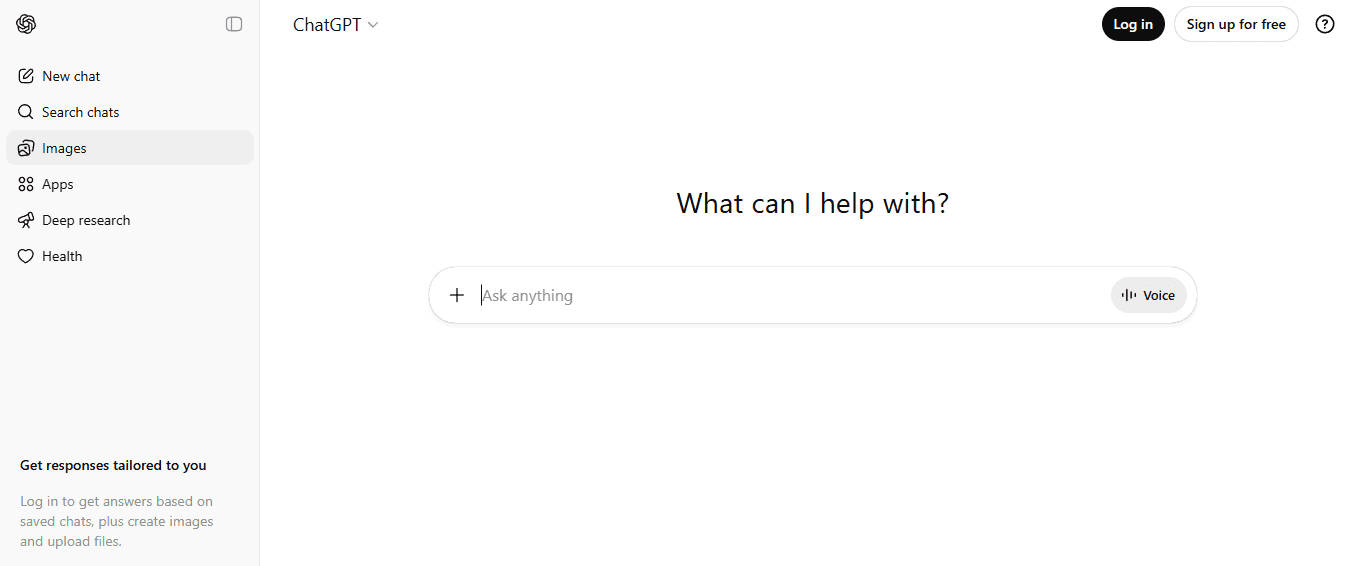
ChatGPT handles straightforward summarization efficiently. Copy a section, paste it into the prompt, and request bullet points or simplified explanations. The tool extracts key concepts quickly.
The limitation surfaces when processing multiple books or organizing insights over time. Each conversation exists independently, so summarizing ten chapters across three books requires scrolling through separate chat threads to find specific ideas later. The tool works for immediate extraction but lacks structure for long-term reference.
3. Scholarcy

Scholarcy focuses on academic and research-heavy texts, identifying main arguments, supporting evidence, and key conclusions. It organizes them into structured summaries that separate methodology and findings from background context, which is essential when reading journal articles or technical books.
Researchers use Scholarcy during literature reviews to quickly process multiple papers, extracting relevant findings without manually scanning every section.
4. Humata AI

Humata lets you upload documents and ask questions about them conversationally. Instead of reading entire chapters, you can ask things like "What are the key ideas in this chapter?" or "What is the main argument of the book?" The AI retrieves answers directly from the text.
This works well when you know what information you need but don't want to search for it yourself. The conversational interface feels natural, though organizing answers across multiple documents requires external note-taking.
5. Elicit
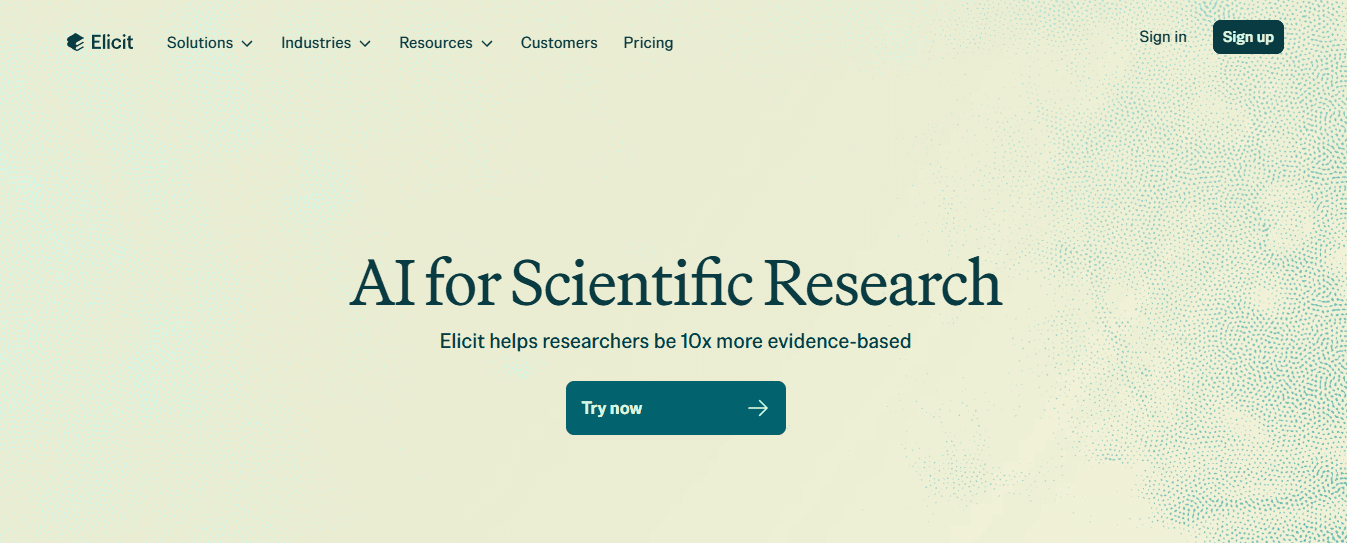
Elicit excels at extracting insights from complex material and identifying main arguments, conclusions, and supporting evidence across multiple documents. This proves particularly useful when comparing how different authors approach the same topic or when working with multiple books on leadership or behavioural psychology. The tool identifies patterns and contradictions between sources faster than manual analysis because it treats extraction as a research task rather than summarization.
6. AskYourPDF

AskYourPDF is a conversational assistant for PDF documents. Upload a file, ask questions, and the AI provides summaries, explanations, or key insights without manual searching through pages.
The tool works well for single documents but struggles across multiple books, as each PDF requires a separate upload, fragmenting your insights across different interactions.
7. Eightify

Eightify condenses long content into concise summaries by extracting main ideas and key takeaways. It's useful for processing lengthy articles or reports where the core message gets buried in supporting details.
The tool prioritizes brevity for fast high-level overviews, but deeper analysis and organized note-taking require additional steps.
Most summarization tools handle individual tasks well, but treat each source in isolation. The real question isn't which tool extracts ideas fastest, but which approach lets you organize, compare, and use those ideas later without starting from scratch.
The 10-Minute Workflow to Extract Key Ideas From a Book
Most people paste entire chapters into AI tools and receive generic summaries that are too broad or cluttered with unnecessary details. A structured process yields clear, usable insights in ten minutes instead of thirty.
🎯 Key Point: The difference between random AI prompting and systematic extraction is the difference between wasting time on generic fluff and getting actionable insights you can actually use.
"A structured approach to book extraction can reduce processing time by 67% while improving insight quality and retention." — Productivity Research Institute, 2024

💡 Best Practice: Instead of dumping entire sections into AI, break your extraction process into focused steps that target specific types of insights—key concepts, actionable strategies, and supporting evidence—for maximum clarity and utility.
Minute 0–2: Define the Exact Idea You Want to Extract
Before opening any AI tool, decide what insight you're looking for. The more specific your request, the better the output. Vague instructions like "summarize this chapter" produce surface-level overviews, while precise requests like "What are the 5 key ideas in this chapter?" or "Extract the main principles the author explains" guide the AI toward actionable concepts.
Specificity saves time by eliminating the need to filter through irrelevant content afterward.
Minutes 2–4: Paste the Chapter or Key Section
Copy the section of the book you want to analyze. You don't need the entire chapter—focus on introduction paragraphs, main explanation sections, or chapter summaries. Pasting only the relevant section reduces unnecessary information and improves the AI's response.
Pasting whole chapters doesn't produce better output. AI tools process everything you give them, spending tokens on side examples, transitional sentences, and background context that don't contribute to core insights. Trimming input to relevant sections produces tighter, more focused summaries.
Minutes 4–7: Generate a Structured Insight Summary
Ask the AI to pull out insights in an organized format: "List the 5 most important ideas," "Summarize the chapter as key principles," or "Turn this text into structured study notes." Structured summaries are easier to use than paragraph-based summaries because they separate individual concepts rather than blending them into a narrative form.
Why are structured formats more effective than paragraphs?
This format lets you scan a bulleted list to find what you need immediately, rather than reading through paragraphs, and makes it easier to compare ideas across multiple books or chapters.
How does this save time for students and professionals?
For students and professionals, this step saves time: the AI organizes content from the start, eliminating the need to manually convert paragraphs into bullet points.
Minutes 7–10: Convert Insights Into Notes
Once key ideas are pulled out, organize them into bullet points, rewrite insights in simpler language, and group related ideas together. The most valuable concepts from the chapter become immediately clear.
Instead of spending 30 to 40 minutes reading and summarizing by hand, you gain clear insights within minutes. This workflow shifts focus from reading everything to identifying ideas that matter.
How can teams scale this process across multiple books?
Teams processing multiple books can use spreadsheets to organize this at scale. Our Numerous spreadsheet AI tools let you paste chapter excerpts into cells, request summaries using the =AI function, and organize insights across rows and columns.
The caching feature prevents you from repeatedly asking the same questions about a book, while the simple interface eliminates the technical friction of API keys or custom integrations. Instead of processing one book at a time through chat, you can organize multiple summaries in rows, extract themes into columns, and compare insights across sources simultaneously.
Why does this structured approach work so effectively?
For people reading multiple books on similar topics, this approach dramatically reduces the time required to extract useful knowledge. The workflow succeeds because it treats extraction as a structured task with clear steps rather than an open-ended activity.
Seeing how to apply it within a tool you already use is where efficiency emerges.
Extract Book Insights Instantly With Numerous
If you regularly read books for studying, research, or learning, you can extract key ideas faster than doing it by hand. Open the book chapter you want to study, copy the relevant section, and paste it into Numerous AI. Ask "Summarize the key ideas from this chapter," "Extract the main lessons in bullet points," or "Turn this text into structured study notes." Within seconds, Numerous creates clear summaries, simplified explanations, and structured notes you can review right away.
🎯 Key Point: Numerous AI transforms hours of manual note-taking into seconds of automated extraction, letting you focus on learning rather than copying.
"Within seconds, Numerous creates clear summaries, simplified explanations, and structured notes you can review right away." — Numerous AI Features
Our AI function works directly inside your spreadsheet, so you don't need to switch between applications or copy outputs into separate documents. For students working through multiple textbooks or professionals analyzing several business books at once, this eliminates the extra steps that make book extraction feel like a separate project. Open Numerous AI, paste your next book section, and extract the most important insights in minutes.
🔑 Takeaway: The integrated spreadsheet approach eliminates workflow friction, making book insights extraction as simple as copy, paste, and analyze.
Related Reading
Otter.ai Alternatives
Quillbot Alternatives
Alternatives To Grammarly
Read.ai Vs Otter.ai
Best Apps For Essay Writing
Notion Ai Alternatives