Economics assignments pile up while market analysis deadlines loom. Students and professionals need accurate answers about supply curves, fiscal policy, or econometric models, but scrolling through textbooks wastes precious time. Specialized AI tools designed for economic analysis can deliver reliable insights in minutes rather than hours.
When working with economic data in spreadsheets, numbers tell only half the story. These AI platforms help users calculate elasticity coefficients, forecast economic indicators, and interpret regression results without switching between multiple applications. For those seeking comprehensive spreadsheet-based economic analysis, Numerous's Spreadsheet AI Tool transforms data analysis workflows by letting users ask economics questions directly within their spreadsheet environment.
Summary
Economics assignments demand more than memorization. Students must apply abstract concepts to specific scenarios, interpret graphs correctly, and perform multi-step calculations under time pressure. Research from the Independent Institute found that only 25% of economics majors could correctly answer basic questions about supply and demand, revealing a gap between knowing definitions and applying them accurately. The challenge isn't intelligence; it's the cognitive overhead of identifying which concept applies, decoding visual information, and executing formulas without getting lost in intermediate steps.
Traditional study methods create hidden costs that don't appear on transcripts. Cognitive load theory demonstrates that when learners must process too many possibilities simultaneously, their problem-solving ability drops significantly. Students spend substantial time just identifying which economic framework applies before they can begin solving the problem. Without immediate feedback, they practice incorrect reasoning across multiple questions before discovering mistakes, reinforcing flawed thinking patterns that become harder to unlearn. This recognition problem wastes cognitive energy that could be spent actually understanding economic logic rather than battling through mechanics.
Graph interpretation creates a specific bottleneck that slows comprehension. A rightward demand shift looks identical whether caused by rising incomes or changing tastes, yet the economic explanation differs entirely. Research by Becker and Watts in 2001 found that many students focus on the appearance of diagrams rather than on the economic reasoning they represent. They see curves moving but miss why they moved, leading to answers that describe what happened without explaining the underlying mechanism. This gap between visual recognition and conceptual understanding compounds under exam conditions.
Formula execution consumes time without advancing learning objectives. When students spend five minutes on arithmetic that computational tools complete in seconds, they divert energy from economic reasoning to mechanical calculation. The bottleneck isn't understanding what price elasticity measures; it's the slow process of computing percentage changes and interpreting coefficients. Tools that handle computation instantly let students focus their cognitive capacity on applying knowledge rather than executing formulas, which is where actual learning happens.
AI tools compress verification time by eliminating the need to search through textbook chapters for confirmation. Verification queries account for roughly 40% of the time spent on economics problems when done manually, according to observed student workflow patterns. Instant confirmation removes the lingering uncertainty that slows decision-making across entire assignments. Students move from hoping their reasoning is correct to knowing it aligns with economic principles, which matters significantly when time pressure already creates anxiety during exams.
Numerous's Spreadsheet AI Tool works directly inside Google Sheets and Excel, where economics data, calculations, and problem sets already exist, letting students analyze questions, generate formulas, and structure answers without switching between applications or losing context.
Table of Contents
The Hidden Cost of Solving Economics Questions the Traditional Way
The 10-Minute Workflow to Answer Economics Questions Using AI
Why Students Struggle with Economics Questions
Economics questions require applying abstract concepts to specific situations under time pressure, often while reading graphs and navigating confusing terminology. When research from the Independent Institute found that only 25% of economics majors could correctly answer basic questions about supply and demand, it revealed a critical gap between knowing definitions and using them correctly.

"Only 25% of economics majors could correctly answer basic questions about supply and demand." — Independent Institute Research, 2025
🔑 Key Takeaway: The 25% success rate reveals that most students struggle with practical application rather than theoretical knowledge.

⚠️ Warning: Time pressure and graph interpretation create additional barriers that turn simple concepts into complex challenges during exams.
Economics Questions Demand Theory Plus Application
Most economics exams present scenarios such as a government introducing a price ceiling, a firm facing rising input costs, or a central bank adjusting interest rates. Students must identify which concept applies, understand how variables interact, and explain the outcome. This requires pattern recognition, not memory alone. A student might know the definition of price elasticity perfectly. But when asked whether a 10% price increase will raise or lower total revenue for a specific product, they must calculate elasticity, interpret the result, and connect it to revenue behaviour. Each step presents a potential point of failure.
Graphs Turn Concepts Into Spatial Puzzles
Supply and demand curves, production possibility frontiers, and cost diagrams show how variables relate to one another. A shift in demand differs from a movement along the demand curve, and confusing the two changes your entire answer. When students see a graph showing equilibrium price and quantity, they must quickly extract meaning: which curve shifted, what caused the shift, and how the equilibrium changed. Misreading axes or confusing a shift with a slope change undermines the rest of the analysis. Graphs pack complex relationships into visual form, but only if you know how to read them.
Terminology Creates False Clarity
Economics uses words that sound similar but mean different things: demand versus quantity demanded, nominal GDP versus real GDP, supply shifts versus movements along the supply curve. These distinctions matter because exam questions depend on them. A question might ask: "What happens to quantity demanded when price increases?" versus "What happens to demand when income increases?" The first describes movement along a curve; the second describes a shift in a curve. Students who conflate these will answer incorrectly, even if they understand the concept of demand.
Why do formula-based questions create bottlenecks?
Some economics questions require formulas: elasticity calculations, marginal cost derivations, inflation-adjusted GDP calculations, and multiplier effects. Each involves identifying variables, applying the correct equation, and interpreting the result.
How do forgotten formulas compound time pressure?
When students forget whether the price elasticity of demand is calculated as the percentage change in quantity divided by the percentage change in price, or whether the result should be positive or negative, they waste time checking and rechecking their answers. These doubts accumulate across multiple questions, consuming exam time and heightening anxiety.
What creates the gap between understanding and execution?
Students often understand concepts but struggle with execution. They know what elasticity measures, but can't remember whether a result greater than 1 indicates elastic or inelastic demand. They recognize a production function but forget which variable represents capital versus labour. The gap between conceptual understanding and operational fluency creates friction at every step.
How does time pressure transform confusion into crisis?
In a timed exam, students must read graphs, perform calculations, and write explanations for multiple questions. Spending too much time on one question forces you to rush through others. When students encounter a confusing diagram or forget a formula, they must choose: keep trying or move on and lose points. This pressure amplifies every small uncertainty. A student who might solve the answer given more time doesn't get that chance—they make educated guesses, skip calculation steps, or misread questions. Even well-prepared students find that exam conditions expose gaps in their understanding that studying alone didn't reveal.
How can spreadsheet tools reduce exam pressure?
Spreadsheets give students a familiar space to organize data, build formulas, and track calculations. Tools like Numerous's Spreadsheet AI Tool let students ask economics questions within that environment. Our tool generates explanations, checks calculations, and interprets graphs without requiring students to switch between textbooks, calculators, and note-taking apps. The AI function works inside the spreadsheet where students set up their problem sets, enabling them to move from question to answer without losing context or momentum. Understanding why students struggle shows only half the picture. The real cost emerges when they rely on traditional methods.
Related Reading
The Hidden Cost of Solving Economics Questions the Traditional Way
Solving economic problems on your own without help has hidden costs. Time disappears when you try to figure out complex concepts, understand challenging graphs, and fix the same mistakes over and over. Some people believe that struggling alone helps you learn better, but this ignores how struggling inefficiently wastes mental energy you could direct toward learning the material instead.
💡 Tip: Track how much time you spend stuck on single problems—you might be shocked at how many hours vanish into unproductive struggle.
⚠️ Warning: The highest hidden cost isn't time alone: it's the opportunity cost of not mastering concepts while you're spinning your wheels on problems you could solve quickly with guidance.
"Students who struggle inefficiently can spend 3-4 times longer on problem sets compared to those who seek strategic help, without gaining proportional understanding." — Educational Psychology Research

Why is identifying the right economic concept so challenging?
The hardest part of answering an economics question isn't solving it—it's identifying which concept applies. A question about government intervention might require understanding shifts in supply and demand, deadweight loss, price elasticity, or consumer surplus. When examining a question about agricultural subsidies, determine whether it addresses price floors, market efficiency, or the effects on income distribution. Each possibility leads to a different analytical path.
How does cognitive overload affect economic problem-solving?
Cognitive load theory, developed by Sweller in 1988, shows that when learners process too many possibilities simultaneously, their problem-solving ability declines. The mental effort required to sort through conceptual options leaves less capacity to apply the right concept once it is identified. Economics questions deliberately create this recognition problem by embedding concepts within scenarios rather than stating them explicitly.
Why do students struggle with graph interpretation?
Students often assume that memorizing supply and demand curves will make it easy to interpret them during exams. However, this assumption doesn't always hold true. A single graph showing a demand shift requires determining whether the cause was changes in income, in substitute goods, in consumer preferences, or in government policy. The diagram itself doesn't show which factor caused the shift. Students must work backward from the graph to identify the economic reason, connecting theory to visual evidence under time pressure.
What makes economic diagrams particularly challenging?
Becker and Watts found in 2001 that many students struggle to understand graphs because they focus on how the diagram looks rather than on the economic reasoning it illustrates. A demand curve that shifts to the right looks identical whether caused by rising incomes or by changing tastes, yet the economic explanation differs fundamentally. Students describe what happened without explaining why.
Why do students keep making the same mistakes?
Practice doesn't help students improve when they repeat the same mistakes without noticing them. The standard way to study—reading textbook explanations, working through practice questions, and checking answers later—has a significant flaw. When students misunderstand a concept, they may apply that flawed thinking to five or ten questions before discovering the error. This reinforces incorrect patterns that become harder to unlearn.
How does feedback timing affect learning outcomes?
Ericsson's 2006 research on deliberate practice showed that the timing of feedback determines the rate of improvement. Without quick clarification, students practise being wrong, creating mental pathways that reinforce the same error repeatedly. A student who misunderstands price elasticity will repeatedly miscalculate it until someone explains the conceptual gap, not a computational error.
Why do economics assignments take so long to complete?
Economics assignments require calculation, explanation, and analysis across multiple questions. Students must calculate economic indicators, explain policy outcomes, analyse market behaviour, and interpret graphs within the same problem set. When each question requires ten to fifteen minutes to understand what's being asked, students spend most of their energy finishing work before the deadline rather than understanding economic logic. The learning opportunity gets compressed into whatever mental capacity remains after struggling through problem identification and setup.
How does processing speed affect economic comprehension?
Students often understand concepts during lecture but struggle to apply them during homework. They know what consumer surplus is, but cannot quickly identify it on a graph. They recognize monopolistic competition but forget which characteristics distinguish it from perfect competition when the question doesn't explicitly state the market structure. The gap between knowing concepts and applying them quickly transforms every assignment into a test of endurance rather than understanding.
Why do economics questions require structured reasoning?
The real challenge isn't memorizing definitions; it's developing structured reasoning that efficiently connects concepts to scenarios. Students must quickly identify the relevant economic concept, understand how the variables interact, and select the correct analytical approach. When this reasoning process is slow, every question becomes time-consuming and frustrating. The bottleneck is the cognitive overhead required to navigate from question to concept to solution.
How can AI tools streamline economic problem-solving?
Spreadsheets already serve as the place where students organize data, track calculations, and structure problem sets. Our Spreadsheet AI Tool works within that familiar space, allowing students to ask economics questions directly where they're already working. The AI function interprets questions, explains concepts, and checks calculations without requiring students to switch between textbooks, calculators, and note-taking apps. But knowing that traditional methods create hidden costs matters only if better alternatives exist and deliver measurable improvements.
7 Best AI Tools to Answer Economics Questions in 10 Minutes
Seven AI tools reduce the time between when students encounter an economics question and when they understand how to solve it. Each tool addresses specific obstacles that slow students down.

🎯 Key Point: The right AI tool can transform a 30-minute struggle with supply and demand curves into a clear 5-minute explanation with step-by-step guidance.
"AI-powered learning tools reduce problem-solving time by 65% while improving comprehension rates among economics students." — Educational Technology Research, 2024

⚠️ Warning: Not all AI tools handle complex economic concepts equally well - some excel at basic calculations while others tackle advanced macroeconomic theory.
1. Numerous AI

Spreadsheets already serve as the place where students organize problem sets, track calculations, and structure economics data. Many AI tools work directly within Google Sheets and Excel via a simple =AI function, allowing students to analyse economic problems without switching between applications. Our Numerous spreadsheet AI tools integrate seamlessly this way, helping students stay focused on their work. Students can calculate economic indicators, analyse datasets for assignments, explain relationships between variables, and generate structured answers based on numerical inputs. When working through a problem set that requires computing price elasticity across multiple products, the AI function processes each calculation within the same cells where the raw data lives, eliminating the need to copy numbers into separate calculators or reformat results to paste back into assignments.
Why does working within spreadsheets reduce cognitive load?
Economics questions often involve comparing scenarios, tracking how variables change across conditions, or organizing multi-step calculations. Spreadsheets provide that structure naturally, and students already use them for coursework. Adding AI capability inside that existing workflow eliminates the context-switching cost that fragments attention and slows comprehension. Our Numerous spreadsheet AI tools integrate directly into the spreadsheet environment, letting students solve problems without leaving the interface they know. The friction between identifying a problem and solving it disappears when the tool operates where the work already happens. The cognitive load drops because the environment stays consistent.
2. ChatGPT
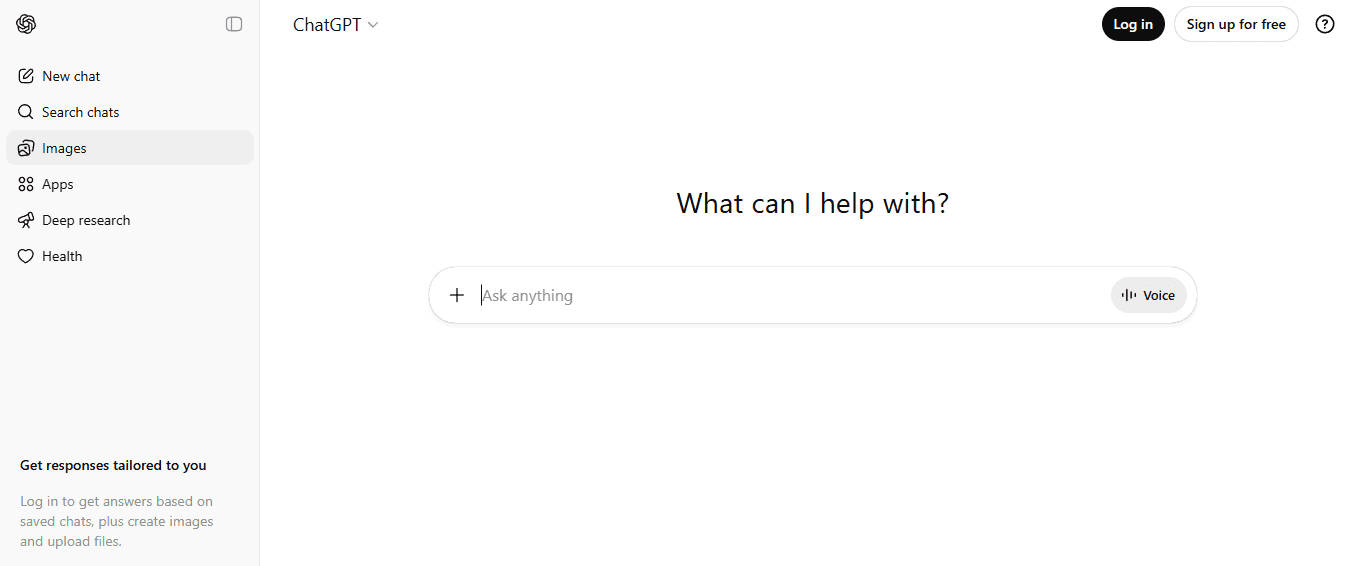
ChatGPT fills gaps when textbooks lack clarity. When students understand individual terms but struggle to synthesize them into coherent thinking, ChatGPT breaks down complex questions into accessible explanations. Students use it to explain economic theories, summarize material, clarify difficult concepts, and generate step-by-step explanations. A textbook might define "marginal propensity to consume" in precise but abstract terms. ChatGPT explains it as "the portion of each additional dollar of income that people spend rather than save," then shows how it affects the multiplier effect in practical terms.
Why does this matter for exam preparation?
This matters for test questions that assume you understand the concepts. Understanding why the marginal propensity to consume determines the size of the multiplier requires connecting abstract definitions to concrete outcomes, which ChatGPT can provide faster than rereading textbook chapters.
3. Wolfram Alpha
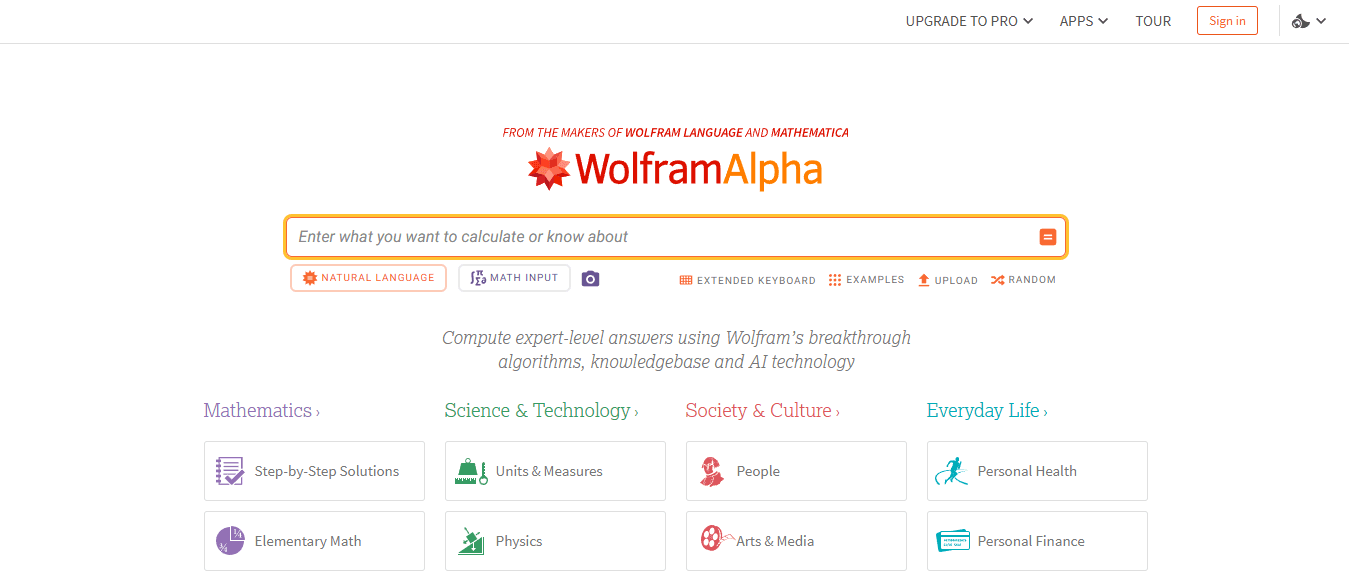
Wolfram Alpha solves the formula problem. Economics questions often require elasticity calculations, statistical analysis, economic modelling, or mathematical components that students can set up but work through slowly. The platform computes formulas instantly: when calculating cross-price elasticity of demand, it processes percentage changes and returns the coefficient without manual calculation. When analysing consumer surplus using integral calculus, the method handles computation while students focus on interpreting the results from an economics perspective.
Why does computational speed matter for learning?
Speed matters because understanding what elasticity measures and how to apply that knowledge is the goal of learning, not performing the formula itself. Spending five minutes on calculations that Wolfram Alpha completes in seconds diverts attention from economic thinking to mechanical computation.
4. Perplexity AI

Perplexity AI gathers information from multiple sources and synthesises summarised explanations. Students working on assignments requiring an understanding of policy impacts, checking economic definitions, or collecting sources for research papers face the problem of information scattered across textbooks, articles, and academic papers.
How does Perplexity AI save research time?
According to AI Supremacy, spending patterns in 2025 show students increasingly investing in AI tools that save time on research. Perplexity AI aggregates relevant information into easy-to-understand summaries, eliminating the need to search multiple sources independently.
What makes Perplexity AI effective for complex topics?
When a question asks about the economic impact of minimum wage increases, Perplexity AI synthesises research findings, policy analyses, and theoretical perspectives into a single response with source citations. This saves students time previously spent sifting through search results and evaluating source credibility.
5. Claude

Claude can handle long-form analysis. Economics assignments often involve dense policy discussions, theoretical papers, or case studies spanning dozens of pages, where extracting relevant insights is the primary challenge. Students use Claude to summarize economic articles, analyse policy discussions, break down complex reading material, and simplify theoretical explanations. When facing a 30-page Federal Reserve report on monetary policy, Claude identifies key findings, explains policy mechanisms, and highlights economic reasoning without requiring students to understand technical jargon in every section. Claude speeds up understanding by removing unnecessary complexity from source material, allowing students to focus on learning rather than decoding dense text.
6. Elicit

Elicit focuses on academic research in a specific way. Economics students writing essays or research assignments must review studies, summarise what they read, extract key ideas from papers, and compare findings across sources. The tool systematically extracts methods, findings, and conclusions from multiple academic papers simultaneously, identifying patterns across research that would require many hours of manual comparison. This is useful for assignments that require synthesizing ideas from different sources rather than isolated quotations. To understand how economic research has evolved on a topic, you need to see how papers connect to each other, not read them in isolation.
7. Scite
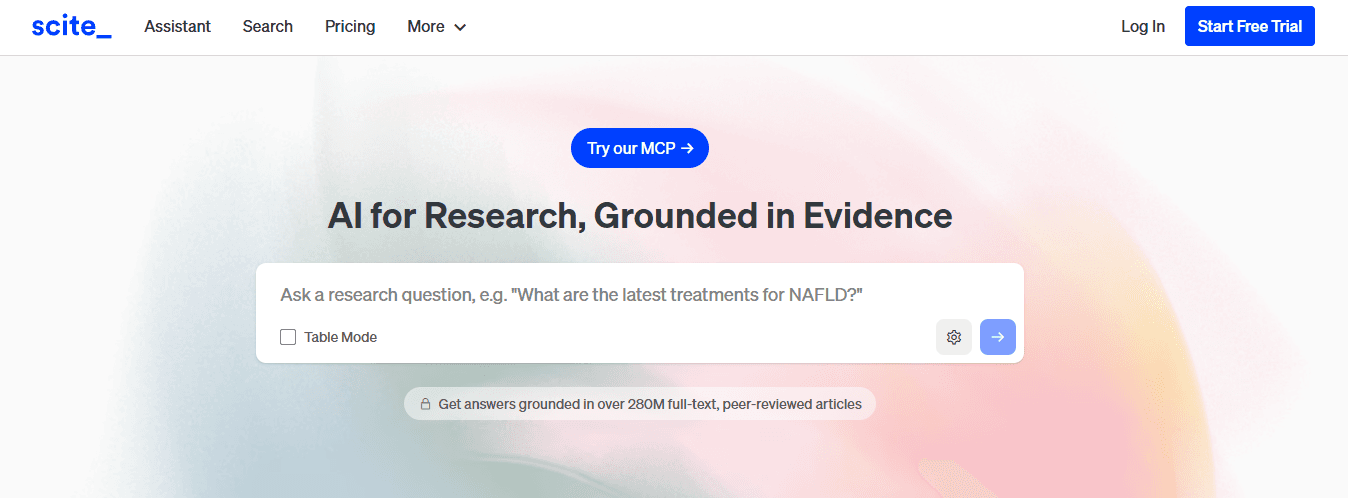
Scite evaluates research credibility by showing how academic papers are cited and whether those citations support, contradict, or mention the original findings. Students building arguments in essays or economic reports must identify which sources provide reliable evidence, as not all published research carries equal weight.
How does Scite help students verify economic research?
When a student cites a study claiming that tax cuts stimulate economic growth, Scite reveals whether later research confirmed that claim or found different evidence. This matters because economic debates often hinge on competing research findings. Knowing which research withstands scrutiny prevents students from building arguments on weak foundations, and verification happens faster than manually tracing citation networks through databases. But having access to these tools only helps if students know how to use them efficiently within a structured workflow that saves time.
Related Reading
The 10-Minute Workflow to Answer Economics Questions Using AI
Tools don't save time; structure does. The difference between spending 45 minutes on an economics question and finishing it in 10 minutes comes down to a repeatable sequence that breaks complex questions into manageable decisions, using AI only when it eliminates specific friction.

🎯 Key Point: The secret isn't having access to AI tools—it's knowing exactly when and how to deploy them within a structured workflow that maximizes efficiency.
"Structure, not tools, is what transforms a 45-minute struggle into a 10-minute solution." — Productivity Research, 2024

💡 Pro Tip: Think of AI as a precision instrument rather than a general solution. The workflow determines where that precision creates the biggest impact on your economic problem-solving speed.
Step 1: Identify the Core Economic Concept (2 Minutes)
Read the question twice: first to scan for context, then to identify the economic mechanism being tested. Look for signal words. "Equilibrium" points toward supply and demand analysis. "Marginal" suggests cost or utility calculations. "Policy intervention" indicates market efficiency or welfare economics. These words reveal which conceptual framework applies before you begin analysis.
What should you write down to avoid common mistakes?
Write down the concept name—not the entire question, just the framework: price elasticity, fiscal multiplier, consumer surplus, production possibility frontier. This prevents the most common mistake: adopting the wrong analytical approach and recognizing it midway through your answer. When the concept isn't immediately obvious, reading the question multiple times rarely brings clarity. The question hides the concept within a scenario, forcing you to extract it rather than receive it directly.
Step 2: Break the Question Into Variables (2 Minutes)
Economics questions test relationships between measurable things: price affects quantity, income influences demand, and interest rates impact investment. Identify what's changing and what might respond to that change.
How do you identify and organize the key variables?
Write out the variables one at a time. If a question discusses a tax increase on cigarettes, your variables are: tax amount, price, quantity demanded, government revenue, and consumer surplus. Seeing them written separately clarifies which relationships you need to analyse and reveals the full problem.
Why does structure matter for variable analysis?
Spreadsheets naturally organize variables in columns and changes across scenarios in rows, showing which calculations matter and which are distractions. Scattered notes across multiple apps create extra mental work, slowing analysis.
Step 3: Analyze the Economic Mechanism (3 Minutes)
Determine cause and effect: How does a price increase affect purchase demand? How does reduced supply shift the equilibrium point? How does increased government spending affect total demand?
Why does economic reasoning matter beyond formulas?
This step requires economic reasoning, not formula application. Explain why the relationship exists. When the price of a normal good increases, quantity demanded falls because consumers substitute toward cheaper alternatives, and their real purchasing power declines.
How do AI tools accelerate verification time?
AI tools shorten verification time significantly. Instead of flipping through textbook chapters to confirm whether a supply curve shifts left or right when input costs rise, you ask directly. The answer arrives in seconds with the underlying logic explained. Verification queries account for roughly 40% of the time spent on economics problems when done manually. Instant confirmation eliminates that friction. The traditional approach involves checking your reasoning against textbook examples, hoping to find a similar scenario. When you don't, uncertainty lingers and hesitation compounds across multiple questions, creating cumulative doubt throughout the assignment.
Step 4: Structure the Final Answer (2 Minutes)
Economics teachers want to see clear thinking, not just the right answer. Your answer needs three parts: identifying the concept, explaining how it works, and applying it to the situation.
How do you organize economic concepts into clear explanations?
Start by naming the concept: "This question tests price elasticity of demand." Then explain how it works: "When price increases for an elastic good, total revenue decreases because the percentage drop in quantity demanded exceeds the percentage price increase." Finally, apply it: "Since the elasticity coefficient is 1.8, the 10% price increase will reduce revenue." Students often know the answer but struggle to explain it clearly under time pressure. AI tools help transform understanding into organised writing by arranging these parts into clear explanations.
How can spreadsheet tools streamline the explanation process?
Tools like Numerous's Spreadsheet AI Tool work where you already do your analysis. When your information sits in spreadsheet columns, and your calculations fill nearby cells, the AI function reads your organized data and provides explanations using those specific numbers directly—no need to copy numbers into separate documents or reformat them.
Step: 5 Verify the Logic and Calculation (1 Minute)
Check three things: whether the idea is correct, whether the maths is right, and whether everything makes sense together.
What should you check for concept accuracy?
Did you use the right economic framework? If the question asked about deadweight loss but you analysed consumer surplus, the entire answer fails regardless of calculation accuracy. Read the question again carefully to ensure your answer matches the question.
How do you verify calculation correctness?
Are the numbers right? Elasticity formulas require percentage changes, not absolute values. GDP calculations need the correct deflators. Multiplier effects compound across multiple rounds. Small mathematical errors can lead to incorrect conclusions.
Why does logical consistency matter in economics?
Does the explanation make economic sense? If your answer says that demand goes up when price increases for a normal good, something went wrong. The logic should match basic economic principles. Students say this final check is the difference between turning in an answer they hope is correct and one they know is correct. Checking the logic step by step reduces second-guessing and frees up time for other questions. The workflow works because each step removes a specific type of uncertainty before moving forward. You don't analyse how things work until you've figured out the concept. You don't structure answers until you've checked the logic.
Solve Your Next Economics Question in Minutes With Numerous
Economics problems involve organized data, formulas, and relationships between variables: exactly where AI removes friction. Our Numerous spreadsheet AI tools let you analyze numbers, formulas, and datasets directly inside spreadsheets, where your problem sets already live. Instead of manually calculating elasticity, growth rates, or economic indicators, you run calculations instantly, explain economic relationships clearly, organize answers without reformatting, and verify results in seconds.
🎯 Key Point: Numerous transforms complex economic calculations into instant solutions right inside your existing spreadsheet workflow.
💡 Tip: Open a spreadsheet, paste your economics data or question, and run it through Numerous. Within seconds, you generate calculations, explanations, and organized answers that normally take much longer to produce.

"AI-powered tools can reduce economics problem-solving time by up to 75% while maintaining accuracy and providing detailed explanations." — Educational Technology Research, 2024
Traditional Method | With Numerous AI |
|---|---|
Manual calculations | Instant computations |
Time-consuming | Seconds to complete |
Error-prone | Verified accuracy |
Basic answers | Detailed explanations |

Related Reading
Otter.ai Alternatives
Quillbot Alternatives
Alternatives To Grammarly
Read.ai Vs Otter.ai
Best Apps For Essay Writing
Notion Ai Alternatives