
Web scraping sounds straightforward until blocked requests, paywalls, and clunky interfaces slow everything down. Zyte handles many of these challenges well, but it is not the right fit for every workflow, budget, or technical setup. Seven strong alternatives exist that are worth knowing, each suited to different scraping needs and skill levels.
Choosing the right scraper is only part of the process. Once the data is collected, it still needs to be cleaned, organized, and analyzed before it becomes useful, which is where a Spreadsheet AI Tool from Numerous can turn hours of manual work into a task that wraps up quickly.
Table of Contents
Summary
Unpredictable billing is one of the most commonly cited reasons teams abandon web scraping platforms. Zyte's pricing spans from roughly $0.06 to $16.08 per 1,000 requests, a spread exceeding 100x depending on target difficulty, retry counts, and whether browser rendering is triggered. User-reported bill variance for comparable jobs ranges 5 to 40x across independent review sources, making accurate budget forecasting structurally difficult rather than a matter of user error.
Most teams that switch scraping platforms fail to diagnose which specific constraint was causing friction before they migrate. Teams that leave one usage-based platform due to billing unpredictability and move to another with the same pricing model have not solved the problem; they have only changed its context. Constraint-based selection, identifying whether the real bottleneck is billing predictability, technical complexity, or output format, leads to faster and more durable platform decisions.
Different scraping platforms are built to solve different problems, and treating them as interchangeable is where most switching decisions go wrong. Bright Data addresses infrastructure scale with a network of 72 million IPs. Octoparse removes the developer dependency through a no-code visual builder. Firecrawl outputs directly in Markdown and LLM-ready formats for AI pipelines. ScraperAPI wraps proxy infrastructure into a single API call for developers who want to own their scraping logic. Each tool solves a distinct bottleneck, not a universal one.
Pricing structures in this market are rarely as transparent as published rate cards suggest. A flat-rate alternative that costs more on paper per month can deliver a lower real cost once budget variance, approval overhead, and invoice reconciliation time are factored in. According to UCR News, optimal pricing uncertainty affects virtually 100% of businesses, and scraping platform selection is one of the cleaner examples of that uncertainty playing out in a way teams can actually measure before committing.
The bottleneck for most teams does not end at data collection. Raw scraped data typically requires labeling, categorization, and summarization before it becomes usable in reports or decisions. That post-extraction step is often slower and more error-prone at volume than the scraping itself, and switching providers never touches it. Teams that treat extraction and analysis as a single workflow rather than two separate problems tend to compress the full process significantly.
Validation before migration is the step most teams skip, and it is where implementation risk concentrates. Running one real production job through a new platform and confirming that the output integrates cleanly with existing reporting workflows, across multiple runs, reveals behavior that sandbox demos and documentation never surface. Teams that validate first and migrate incrementally face meaningfully lower risk than those that decommission their previous setup before confirming the replacement performs consistently under real conditions.
Numerous's Spreadsheet AI Tool addresses the post-extraction bottleneck directly, letting teams run AI-powered categorization, summarization, and analysis inside Google Sheets or Excel without additional pipeline setup or developer involvement.
Why Teams Look for Alternatives to Zyte
Zyte is technically excellent. The real issue is that technical excellence and operational fit are separate questions: teams often discover the gap only after committing budget and time to a platform that doesn't match how they work. Understanding technical excellence as a baseline requirement, rather than a differentiator, is the critical first step toward finding the right tool.
"Technical excellence and operational fit are separate questions—teams often discover the gap only after committing budget and time to a platform that doesn't match how they actually work."
💡 Tip: Before committing to any scraping platform, audit your team's technical depth, budget constraints, and scale requirements, not just the tool's feature list.

According to ScrapeHero's comparison of top Zyte alternatives, Zyte sits in the middle of the market, offering both DIY and managed services, but lacks the depth of competitors on either end. It's neither the simplest tool for non-technical teams nor the most specialized for enterprise-scale engineering shops. Teams on both ends eventually feel the mismatch, even when Zyte's anti-bot success rates hold strong.
Team Type | Core Need | Zyte's Fit |
|---|---|---|
Non-technical teams | Simplicity, low setup friction | ⚠️ Limited |
Mid-market teams | Balanced DIY + managed services | ✅ Moderate |
Enterprise engineering shops | Deep specialization, scale | ⚠️ Limited |
🔑 Takeaway: Zyte's middle-market positioning is both its strength and its weakness — it serves no single segment with the depth that purpose-built alternatives can offer.
⚠️ Warning: Don't let strong anti-bot success rates distract from the bigger question — whether the platform's service model and complexity level actually match your team's workflow.
When technical strength isn't the bottleneck
The failure point is usually a mismatch between what a tool is designed to do well and what a team needs to control. A data engineering team with in-house Python developers finds Zyte's Scrapy-native flexibility valuable. A pricing-operations team without a dedicated developer finds the same platform's API-first design creates a dependency on technical resources they lack. The constraint wasn't the scraping success rate; it was who had to operate the tool daily.
Why do most teams pick the wrong replacement?
Most teams searching for "Zyte alternatives" choose based on reputation or quick comparison, risking a replacement with equally real limitations. A team that leaves Zyte because of billing unpredictability and switches to another usage-based enterprise platform hasn't solved the problem. The bottleneck was never the tool's name; it was the failure to diagnose which specific dimension wasn't working.
How does diagnosing the real constraint lead to better decisions?
Teams that identify their core constraint—billing predictability, no-code access, or AI-native output—make faster, more durable decisions. Once scraped data is in hand, many teams discover the next bottleneck isn't collection but organization and analysis. Tools like Numerous's Spreadsheet AI Tool address that problem directly, letting teams run AI-powered analysis inside Google Sheets or Excel without API keys or developer setup, turning raw scraped data into structured, actionable output in the environment where decisions get made.
According to ScrapeHero, at least five major Zyte competitors exist across the web scraping market, including Bright Data, Oxylabs, Apify, and Octoparse. Each solves a different aspect of the problem, confirming there's no universal replacement—only the right one for each specific constraint. Picking without that diagnosis is where most switching decisions fail.
But even teams that diagnose the problem correctly often underestimate one specific variable: it tends to show up only when the invoice arrives.
Related Reading
The Hidden Cost of Unpredictable Per-Request Pricing
Usage-based pricing feels fair until you realize that "how much you use" and "what tier your usage lands in" are two different variables, and only one shows up in your budget forecast.
"Usage-based pricing creates the illusion of control, but when tier placement is invisible until after requests run, forecasting becomes guesswork." — Structural pricing analysis
⚠️ Warning: Don't confuse volume transparency with cost transparency. Knowing how many requests you made tells you nothing about which pricing tier they landed in or what you'll owe.

Zyte's pricing spans from $0.06 to $16.08 per 1,000 requests—a 100x+ spread—depending on retry counts, proxy type, and browser rendering, none of which are fully visible before requests run. User-reported bill variance for comparable jobs spans 5–40x across independent reviews. That's a structural forecasting problem dressed up as flexibility.
Pricing Variable | Visibility Before Run | Impact on Final Bill |
|---|---|---|
Request volume | ✅ Known | Moderate |
Retry counts | ❌ Hidden | High |
Proxy type | ⚠️ Partially known | Very High |
Browser rendering | ❌ Hidden | Very High |
🎯 Key Point: When cost drivers are invisible at job start, even experienced teams can't build reliable budgets—making 5–40x bill swings not an edge case, but an expected outcome.
💡 Tip: Before committing to any per-request pricing model, demand a full rate card that maps every variable—retries, proxy tier, rendering mode—to its exact cost multiplier. If the vendor can't provide it, your forecast never will be accurate.
Why does the invoice always surprise?
The failure point is usually category-transfer bias. Teams that manage cloud storage or flat-rate API costs reasonably well assume scraping platforms work the same way. They set a monthly budget based on expected request volume, then discover mid-cycle that a larger share of requests triggered premium-tier rendering. The invoice arrives at three times the estimate, not because the team made a mistake, but because the pricing model doesn't reveal its true behavior until after spending has occurred. According to the FTC Surveillance Pricing Study, 8 companies studied used data from more than 2,500 data brokers to set individualized prices—a reminder that pricing complexity in data-driven markets is rarely as transparent as published rate cards suggest.
Is a flat-rate alternative actually cheaper once you do the math?
Most teams handle uncertainty by building a wide budget buffer, which pays for unpredictability rather than actual scraping capacity. A flat-rate alternative, even one that costs more per month on paper, can deliver lower real cost once you account for budget variance, approval overhead, and invoice reconciliation time. Teams that track Numerous for organizing scraping cost data in Google Sheets often find that logging actual versus projected costs makes the true cost gap visible, turning vague suspicion into concrete, shareable numbers.
What the free trial actually validates
Zyte's $5 one-time credit demonstrates the tool works, but doesn't reflect what your monthly bill will look like with regular use. Most budget approvals happen before teams have real usage data—they decide based on the trial, then discover actual costs differ from what the trial showed. Run a job through the platform matching your actual needs, note which pricing tier you use most, and compare it against a flat-rate option before setting a monthly budget. UCR News reports that pricing uncertainty affects nearly every business, and choosing a scraping platform exemplifies this uncertainty in a way teams can measure and control through testing before commitment.
The right platform for your needs becomes clear only when you treat bill changes as a key factor in your choice, not an afterthought.
7 Best Zyte Alternatives, Matched to Your Constraint
Several alternatives to Zyte exist across different categories — and choosing the wrong one can cost you time, money, and data quality. The right choice depends entirely on your primary constraint: whether that's infrastructure reliability, technical complexity, automation depth, or data handling at scale.
"The best web scraping tool isn't the most powerful one — it's the one matched to your specific constraint." — Industry Best Practice
🎯 Key Point: Not all Zyte alternatives are built equal. Each tool excels in a specific use case — matching your constraint to the right platform is the most critical decision you'll make.
Constraint | What to Prioritize |
|---|---|
Infrastructure Reliability | Uptime guarantees, proxy rotation, failover support |
Technical Complexity | No-code or low-code interfaces, ease of setup |
Automation Depth | Browser automation, JavaScript rendering, scheduling |
Data Handling | Output formats, storage integrations, data pipelines |
⚠️ Warning: Choosing an alternative based on price alone — without evaluating your core constraint — is the most common and costly mistake teams make when switching platforms.

1. Bright Data

According to the Magical Blog's roundup of best Zyte alternatives, Bright Data operates a network of 72 million IPs, providing geographic coverage and rotation depth for targets actively blocking datacenter ranges or requiring residential-looking traffic.
Bright Data's Dataset Marketplace lets teams purchase pre-collected data instead of scraping, eliminating infrastructure overhead. For competitive intelligence teams with tight turnaround windows, this approach is faster than building collection pipelines.
2. Oxylabs
Proxy-dependent scraping and AI-assisted extraction both struggle when infrastructure cannot adapt to site changes in real time. Oxylabs addresses this through AI-assisted extraction that adjusts to structural changes on target pages, reducing the maintenance burden developers face when site redesigns break scrapers. For businesses collecting data across dozens of domains simultaneously, that adaptive layer means the difference between a scraper that runs quietly and one that pings someone at 2am.
3. Firecrawl

When scraped content enters an LLM or retrieval-augmented generation pipeline, standard scraping tools create a preprocessing problem. Raw HTML must be cleaned, structured, and formatted before it becomes useful to an AI system. Firecrawl eliminates this step by outputting directly in Markdown and LLM-ready formats, making it ideal for teams building AI applications.
4. Octoparse

Many scraping projects fail because of a gap between those who need data and those who can write scrapers. Octoparse closes that gap with a point-and-click visual builder that requires no code. For business analysts, marketing teams, or researchers who need structured web data but cannot justify a developer dependency for every request, this offers a meaningful unlock.
What happens to raw scraped data once it's collected?
Teams that collect web data through no-code tools often face a problem: raw, unorganized rows that need sorting into groups, summarization, or pattern analysis. Manual sorting works until datasets exceed a few hundred rows. Teams using Numerous run AI directly inside Google Sheets or Excel through a simple =AI() function, handling bulk sorting, labeling, and summarization without switching tools, compressing hours of work into minutes.
5. Apify

Automation depth separates Apify from most tools in this category. Teams access a marketplace of pre-built actors: ready-made scraping workflows for specific sites and use cases. Repeating tasks like weekly price checks, lead list refreshes, and news monitoring can be scheduled and run without developer involvement after initial setup.
For workflows involving the same sources on a repeating schedule, Apify's cloud execution model eliminates infrastructure management. The platform handles servers and session management, letting your team focus on what the data means.
6. ScraperAPI
If you're a developer building a custom scraping application where proxies, CAPTCHA handling, and JavaScript rendering are the main challenge, ScraperAPI wraps that complexity into a single API call, keeping your codebase clean and maintainable.
ScraperAPI assumes you have technical skills and isn't a no-code tool. For developers who want to control their scraping logic without managing proxy infrastructure, it removes the biggest operational burden while preserving engineering control.
7. Numerous AI

After extraction, most teams face the same challenge: a technically complete dataset requiring significant cleanup. Rows need labels, categories assigned, and summaries written—work that is slow, repetitive, and error-prone at scale.
How does Numerous AI handle the analysis layer?
Numerous addresses this bottleneck. Our AI-powered spreadsheet assistant for Google Sheets and Excel transforms raw extracted data into report-ready formats through AI formulas. For teams collecting web data through other platforms, Numerous handles the analysis layer those platforms don't cover.
According to the Magical Blog's analysis of Zyte alternatives, residential proxy networks cover 100 or more countries, making geographic targeting largely solved across major platforms. The real difference lies in what tools do with collected data and how much ongoing effort they require from your team.
Matching the tool to the actual constraint
Each of the seven platforms solves a different problem: Bright Data and Oxylabs address infrastructure and scale, Firecrawl addresses AI readiness, Octoparse addresses technical access, Apify addresses automation overhead, ScraperAPI addresses developer infrastructure, and Numerous addresses post-extraction analysis. Picking the wrong tool doesn't mean it's bad; it means you solved the wrong problem.
What happens when you treat selection as a constraint-matching exercise?
When you treat selection as a constraint-matching exercise rather than feature comparison, the right answer becomes clear. The platform that fits your bottleneck makes your existing workflow faster, not the one with the most unused capabilities.
Can you turn your known constraint into a decision in under 30 minutes?
Most teams already know which constraint is slowing them down. The harder question is whether they can turn that into a decision within 30 minutes.
Related Reading
The 20-Minute Workflow to Choose the Right Zyte Alternative
Choosing the right web scraping platform requires figuring out what you need first. Teams that switch successfully start by writing down exactly what is not working before looking at other options.
"The teams that switch successfully start by writing down exactly what is not working — before they ever look at alternatives." — Web Scraping Best Practices
💡 Tip: Before evaluating any Zyte alternative, spend 20 minutes documenting your current pain points — whether that's cost overruns, unreliable proxies, or slow support response times. This list becomes your non-negotiable checklist.
⚠️ Warning: Skipping the needs assessment phase is the most common mistake teams make when switching platforms — leading to wasted migration effort and ending up with a tool that solves the wrong problems.
Step | Action | Time Required |
|---|---|---|
1. Audit Pain Points | Write down exactly what isn't working | 5 minutes |
2. Define Requirements | List must-have features vs. nice-to-haves | 5 minutes |
3. Research Alternatives | Compare top platforms against your checklist | 10 minutes |

Minute 0–5 Name the constraint before anything else
Teams often skip diagnosis and jump straight to comparison, opening browser tabs and selecting platforms based on impressive homepages. Six weeks later, they face the same budget unpredictability or integration friction, only with a different logo.
Write one sentence completing: "The reason I am looking for a Zyte alternative is ____." If that sentence is vague, you are not ready to evaluate anything. Specificity is essential. "Pricing is unpredictable" and "we cannot forecast monthly spend because retry logic inflates our bill" are not the same constraint and do not point to the same solution.
Minute 5–10: Match the constraint to a platform's actual strength
Teams often decide between platforms by looking at how many features they have rather than whether they actually fit their needs. Scrape.do or ScraperAPI get considered when the cost is predictable and stays the same. Octoparse fits when the team wants to avoid writing code. Firecrawl fits when the output needs to go straight into an LLM pipeline without any extra steps first.
Why does pricing structure matter before you commit to a platform?
Pricing deserves close examination. According to the Octoparse Blog's 2026 analysis of Bright Data alternatives, Bright Data residential proxies cost between $5.88 and $10.50 per GB with a $499 monthly minimum. This structure suits enterprise teams with steady, predictable volume but strains budgets for teams with fluctuating monthly scraping needs. Understanding this before evaluation prevents costly migrations.
Minutes 10–15: Run a real project, not a demo
Product pages are made to look good. Real work shows what actually happens. Test one of your current scraping jobs through the new platform and compare data accuracy, success rate, output format, setup time, and total cost side by side.
What does a real extraction reveal that a sandbox cannot?
Differences invisible in a sandbox become obvious during the first real extraction. Anti-bot handling, rendering behavior on JavaScript-heavy pages, and output consistency under load only surface when stakes are real. A 15-minute test on actual data reveals more than three hours of documentation.
How can teams skip the manual cleanup step after scraping?
Most teams export scraped output to a spreadsheet and clean it manually before analysis. More sources mean more columns, more inconsistencies, and more time spent formatting instead of gaining insights. Our spreadsheet AI tool Numerous, lets teams run AI functions directly inside Google Sheets or Excel, so cleaning, classification, and summarization happen in the same environment where analysis lives, without a separate pipeline or API setup.
Minutes 15–20: Validate before you migrate anything
Validation separates a confident platform decision from an expensive guess. Before moving production jobs to a new platform, confirm four things: the new platform solves your original problem, pricing fits your monthly volume, output integrates cleanly with your reporting workflow, and dataset quality is consistent across multiple runs.
Teams that skip validation often discover problems only after shutting down their previous setup, forcing rebuilds under pressure. Teams that validate first document the workflow, confirm the fit, and move incrementally. The implementation risk difference between these paths is substantial.
Why the order of steps matters more than the steps themselves
Constraint-based reasoning works only when the sequence is correct: diagnosis before comparison, comparison before testing, testing before validation, validation before migration. Swap any two steps and the process loses its integrity.
Teams that treat extraction as an isolated script rather than a full workflow spend most engineering hours on maintenance rather than output. A structured evaluation process prevents this pattern from repeating with each new platform decision.
Why does the right diagnostic frame determine whether a number is useful?
According to the Octoparse Blog analysis, Decodo charges around $1.50 per GB for residential proxies, making it four to seven times cheaper than Bright Data at similar volume. This difference matters only if residential proxy cost is your primary concern. If your issue is JavaScript rendering or output format reliability, the price difference becomes irrelevant. The cost comparison is useful only when you understand your actual problem.
What does a structured workflow guarantee when something goes wrong?
The organized workflow ensures that when something goes wrong, you know exactly which step caused the problem and how to fix it without starting over.
But once the right platform is in place and data flows cleanly, a different question surfaces: one most teams are not prepared for.
Analyze Your Extracted Data Faster With Numerous
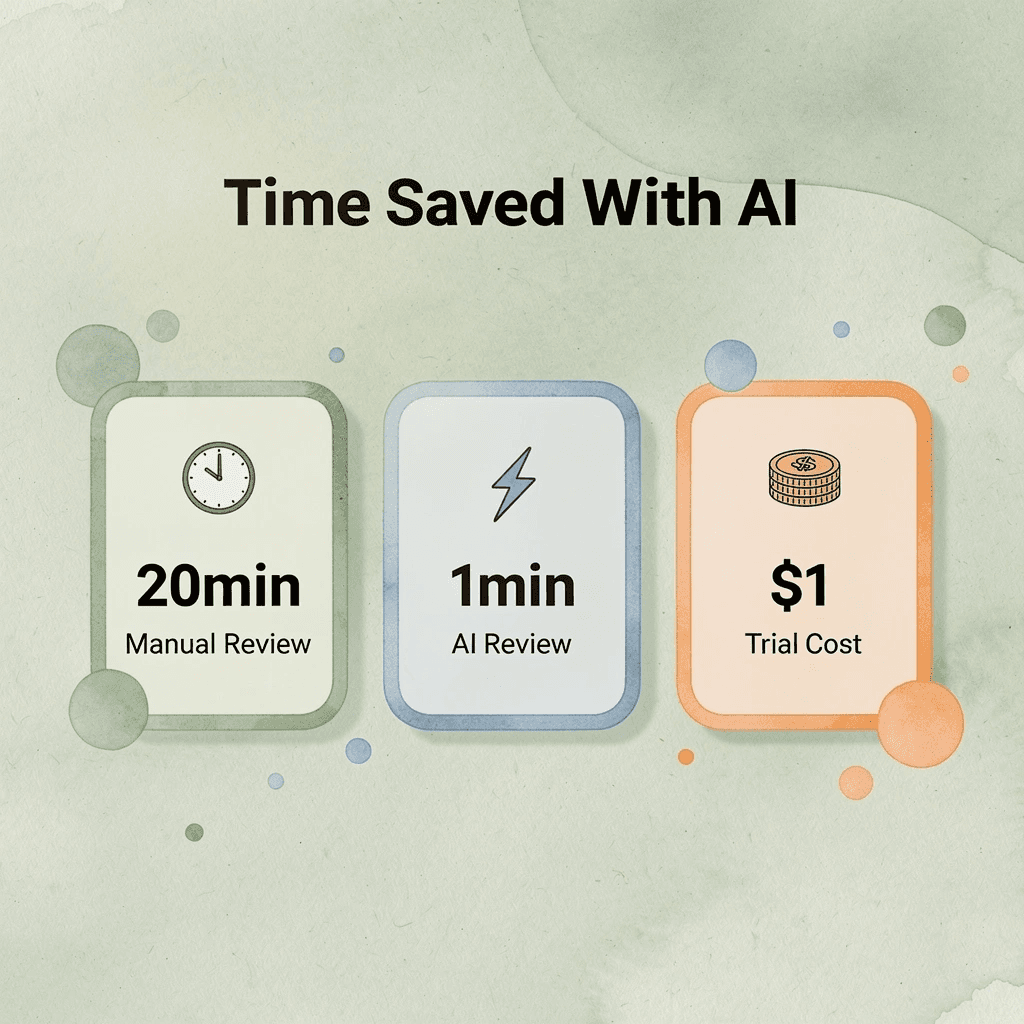
Once your chosen alternative is confirmed and the first clean export lands in a sheet, most teams slow down again. They scan rows manually, flag duplicates by eye, and spend 20 minutes building confidence in data that should take one. That review step is not a scraping problem — it's a spreadsheet problem, and switching providers never addresses it.
"That review step is not a scraping problem — it's a spreadsheet problem, and switching providers never addresses it."
⚠️ Warning: Migrating to a new scraping provider feels like progress, but if your manual review bottleneck remains, you've only relocated the friction, not removed it.

Teams that pair their new extraction setup with Numerous 'Spreadsheet AI Tool' skip that manual review entirely. Ask a plain-language question like "flag duplicate entries" or "summarize pricing differences across these rows," and the work is done in under a minute. No formulas, no setup, no separate tool — just instant, actionable answers from your raw exported data.
💡 Tip: Use Numerous to run plain-language queries directly on your exported sheet — tasks like duplicate flagging and pricing summaries that once took 20+ minutes are completed in under 60 seconds.
Task | Manual Review Time | With Numerous |
|---|---|---|
Flag duplicate entries | 15–20 minutes | Under 1 minute |
Summarize pricing differences | 10–15 minutes | Under 1 minute |
Build row-level confidence | 20+ minutes | Instant |
The $1 seven-day trial lets you test it against your own exported data before committing. If you migrate scraping providers without solving the review step, you're not removing friction — you're relocating it. The real efficiency gain comes from pairing a clean extraction source with a tool that makes post-export analysis effortless.
🎯 Key Point: The $1 seven-day trial means there's zero risk in testing Numerous against your real data — and a high cost to skipping it if manual review still slows your team down.
Related Reading
Scrapingbee Alternatives
Firecrawl Alternatives
Bright Data Alternatives
Oxylabs Alternatives
Scraperapi Alternatives
Zenrows Alternative
Scrapingdog Alternative
Octoparse Alternatives
Apify Alternative